Is the Defense Sector Gearing Up Again?... Profits Rise Despite Market Downturn
KOSPI Drops 3%, But Defense ETFs Rise 2-3%
Hanwha Aerospace Secures 650 Billion Won Order from Croatia
Stock Prices Fall 40% From Early-Year Highs
"Air Defense Weapon Shortage... Rising Expectations for Orders"
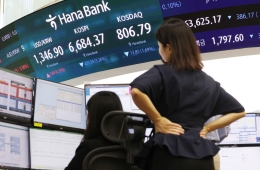
On September 14, while the KOSPI index fell by over 3%, defense-sector themed Exchange Traded Funds (ETFs) made a significant rebound. This appears to have been fueled by renewed investor interest in air defense weapons, in part driven by recent orders from Croatia.
According to ETFCheck on September 14, TIGER K-Defense & Space rose by 3.29%, ranking second in returns among the 1,168 ETFs listed domestically. PLUS K-Defense climbed by 2.68% to take fifth place, ACE K-Defense TOP5+ was up 2.51% for eighth, and KODEX Defense TOP10 gained 2.48% to finish ninth, resulting in a considerable presence of defense ETFs among the top performers.

Even as the KOSPI index declined by 3.26%, defense stocks surged sharply on the day. Hanwha Aerospace soared by 5.18% and Hanwha Systems rose by 5.78%, both with substantial gains, while LIG Nex1 increased by 3.98%, Korea Aerospace Industries by 1.92%, and Poongsan by 1.16%. Most of the leading stocks included in these ETFs posted gains.
The long-standing war in the Middle East, along with a recent positive order, was a key factor stoking investor sentiment. On September 10, Hanwha Aerospace signed a contract to export an advanced multi-launch guided missile system, “Chunmoo,” to Croatia, valued at 418 million euros (about 650.7 billion won). This marks the third export to Europe this year, following Norway and Estonia. It is also the first time that a Korean weapons system will be delivered to Croatia.
Analysts in the securities industry say this contract goes beyond a one-off export and has deeper significance. Namhyun Jang, a researcher at Korea Investment & Securities, commented, "This Croatian project also involves Poland’s WB Electronics supplying a command and control system. The cooperative framework established in Poland is now being applied to third-country business. As the number of Chunmoo operating countries in Europe increases, utilization of the Poland-centered production base will also rise, boosting competitiveness for additional orders."
Previously, in early March immediately after the outbreak of the U.S.-Iran war, defense ETFs reached new 52-week highs. However, with the war dragging on and orders being delayed, they have gradually declined. Among domestic defense ETFs, PLUS K-Defense, the largest by size, hit a yearly high of 88,030 won on March 4 but closed on September 14 at 53,400 won, marking a 39.34% drop.
Nevertheless, with next year’s budget proposal including national defense spending surpassing 70 trillion won for the first time, and announcements regarding the strengthening of drone and anti-drone capabilities, the defense industry has seen new momentum. Taeho Kang, a researcher at DS Investment & Securities, stated, "Currently, research and development for mobility-mounted laser anti-aircraft weapon Block-II is underway, with output reportedly improved from the previous 20kW to 30kW. Countries that have operationalized this system include only the United States, Israel, and Korea, which highlights the strong export competitiveness of Chun Gwang."
Hot Picks Today
 "You Can't Settle for Less Just Because You're Eating Alone" Dining Alone for 100,000 Won a Meal... Solo Buffet Reservations Soar by 216%
- "Each 10-Won Drop in Exchange Rate Boosts Profit by 2.5 Billion Won"...Stocks Benefiting from the Strong Won at 1,340 Won Level
- "Unimaginable in Korea"...Koreans Surprised by Secondhand Smoke in Japan and China Restaurants
- Music Industry Moves to Block AI 'Fake Streaming'... Joint Guidelines Established
- "Canceled After Five Days and Lost 770,000 Won"... Hit by Steep Fees After Pressing the Cancel Button
A changing atmosphere towards air defense weapons was also cited as a reason for stock price gains. In fact, companies showing strength in the domestic defense sector on this day had well-developed air defense weapon portfolios. Yongcheol Kim, manager of the ETF management team at Hanwha Asset Management, explained, "As the war drags on, the global shortage of air defense weapon systems has worsened. With the United States’ supply of weapons constrained, Korean air defense systems are emerging as a practical alternative. There is growing anticipation for Korean air defense system orders from many countries, including those in the Middle East and Europe, and as the global shortage of air defense systems is expected to persist for several years, demand for Korean air defense weapon systems should continue."
© The Asia Business Daily. All rights reserved. Unauthorized AI training and use prohibited.


![How Did Tacos Come to Have Two Shells [Delicious Stories]](https://cwcontent.asiae.co.kr/asiaresize/307/2026091410392626963_1789349966.jpg)