Space Risk Response Plan Cycle Cut from 10 to 5 Years as Satellite Collision Threats Rise
Amended Space Development Promotion Act Enters into Force on September 15
Third Basic Plan to Be Formulated in 2029
As the number of low Earth orbit satellites increases and private space activities expand, the government will reduce the interval for formulating space risk response policies from every 10 years to every 5 years.
The Korea Aerospace Administration (KASA) announced on September 15, 2026, that an amendment to the Space Development Promotion Act, which shortens the formulation cycle of the "Basic Plan for Space Risk Preparedness" from 10 years to 5 years, has been promulgated and enacted.

The Basic Plan for Space Risk Preparedness is a government plan designed to address risks in space, such as the fall or collision of artificial space objects and changes in the space environment due to solar activity. The previous Space Development Promotion Act mandated the government to establish this plan every 10 years.
However, with the recent increase in satellite launches at low Earth orbit and the expansion of private space activities, the space environment is changing rapidly. As the number of operating satellites and space debris grows, the risk of collisions between space objects is also rising. Furthermore, there is a growing need to respond more quickly to changes in the space environment caused by solar activity. The National Assembly's Science, ICT, Broadcasting and Communications Committee also pointed out during budget review that there is a need to examine whether the current planning cycle is appropriate.
With this amendment, the government will now establish the Basic Plan for Space Risk Preparedness every 5 years. The new cycle will also apply to plans already in place. Accordingly, the third Basic Plan, which will succeed the second plan established in 2024 (2024–2033), is scheduled to be formulated and enacted in 2029, ahead of the original schedule.
The Korea Aerospace Administration plans to use this legislative revision as an opportunity to strengthen its space situational awareness (SSA) capabilities and advance its space risk forecasting and warning systems. The agency will also work to build stronger cooperation frameworks with relevant domestic and international organizations.
Hot Picks Today
 "Please Pay Me at Least 3 Million Won a Month": More Than Half of Young People Today Prioritize "Working Conditions" Over Company Size
- Selling Like Crazy Every Year... 30-Year-Old Hetbahn Takes on a New Challenge: Tastes Better Than "Mom's Home Cooking" [On-Site Report]
- "It's so popular you can't get it": 'Legendary liquor' returns after 11 years, causing a stir... 'Newtro' craze takes over convenience stores [How We Shop Today]
- "Hey, Lady, Teach Your Kids to Behave!" ... 300,000 Won in Cash and a Bodily Injury Claim Demanded Over Child's Door Ding
- "Don't Trust This Woman": Documentary on 'Investment Scammer' Earns KRW 22 Billion in One Week
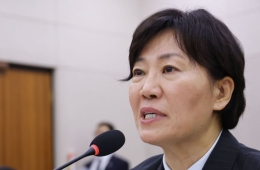
Tae seog Oh, Administrator of KASA, stated, "Space risks are directly connected to public safety and the protection of national space assets. We will continue to strengthen our policy framework so that we can respond more swiftly and flexibly to rapidly changing space environments."
© The Asia Business Daily. All rights reserved. Unauthorized AI training and use prohibited.