Delivery Platform Earned 1 Trillion Won in Korea Without Paying Taxes... National Tax Service Launches Investigation
Tax Probe Launched into 41 Companies Suspected of Fueling Price Instability
Delivery Platform Accused of Illegally Transferring Hundreds of Billions of Won in Profits
The National Tax Service (NTS) has launched a tax investigation into delivery platform operators that unfairly transferred more than 1 trillion won in profits generated in South Korea to overseas controlling shareholders without tax liability. The NTS assessed that the amount suspected of tax evasion is in the range of hundreds of billions of won.
On September 14, the NTS announced that it has begun tax investigations into a total of 41 companies, including one delivery platform operator, as well as businesses in sectors closely related to food prices such as agricultural and livestock products, processed foods, and food service franchises.

Seonggeul Lee, Commissioner of the National Tax Service Investigation Bureau, is briefing on the 'Tax Investigation of Suspects Causing Price Instability Related to Essential Living Expenses for the Public' at the Government Complex Sejong on the 14th. National Tax Service
View original imageSunggeul Lee, Director of the Tax Investigation Bureau at the NTS, stated, "We are launching tax investigations after detecting suspicions of tax evasion by market-disrupting businesses, including those engaging in unfair practices such as collusion and monopoly/oligopoly, and those passing increased cost burdens to consumers by inflating costs." He emphasized, "Instead of responding to external uncertainties such as increased raw material costs through cost reductions, these companies increased product prices, received false tax invoices, and intentionally understated profits by falsely recording costs. The amount suspected of tax evasion reaches approximately 1 trillion won."
The investigation targets a total of 41 companies. Among them, 38 operate in sectors closely tied to consumer pricing, such as agricultural and livestock products, processed foods, and food service franchises. The remaining three are platform firms dealing in consumer goods such as fashion accessories.
This latest investigation includes delivery platform operators that, in pursuit of market share expansion, have continued large-scale cutthroat competition while leading to price increases for end consumers. According to the NTS, these businesses, which have wielded widespread influence over the daily lives of the public, have offloaded massive promotional expenses onto merchant partners, such as restaurants and supermarkets, in the form of commissions and advertising fees. Especially noteworthy is one platform operator that has transferred more than 1 trillion won in profits generated locally to overseas controlling shareholders without incurring domestic tax obligations. This company was found to have provided business support services free of charge to overseas affiliates and unjustly received VAT input tax deductions.
The current investigation also targets importers of sesame, pineapples, and premium beef and chicken, who have benefited from quota tariff concessions but intentionally inflated expenses and omitted sales from their reports. One firm, which imported pork under a zero-percent quota tariff, inserted a shell company under the name of the CEO's child as an intermediary in business transactions to pocket distribution margins before quickly closing the business to exploit the quota tariff benefit. False expense reporting was also identified, such as disbursing tens of millions of won in salaries to non-working relatives of the CEO through related-party companies. Another sesame importing firm established a shell company to secure additional TRQ quotas, funneled sales to this shell firm, and had the CEO's spouse use corporate funds to purchase multiple apartments and give cash gifts to their children, despite not having significant income.

Processed food manufacturers and food service franchise headquarters that raised retail prices for consumers, using rising raw material prices as justification, were also selected for investigation. Some sauce and dumpling producers that recently hiked prices were found to have excessively paid commissions to related-party companies established by former executives and to have covered warehouse fees on behalf of companies controlled by the owner’s children, thereby siphoning off profits. There were also indications of the creation of offshore slush funds by sending large sums claiming to be investments to overseas subsidiaries run by the owner’s children as executives.
One comprehensive food company drastically raised processed food prices, citing higher raw material and logistics costs. In reality, however, the company included costs that should have been borne by both domestic and overseas related parties in the product cost, shifting the burden to consumers. The NTS found additional suspicions, including the improper spending of funds, such as covering costs unrelated to actual work incurred by companies controlled by the owner’s family or lending large sums to foreign affiliates without collecting any interest.
Certain franchise headquarters increased the prices of key raw materials and burdened both franchise owners and consumers, revealing lax internal management and deliberate tax evasion. For example, one franchise group with around 2,000 outlets nationwide disguised the personal expenditures of the owner as franchisee support costs and unreasonably transferred profitable direct-managed outlets in amusement parks to companies controlled by the owner’s children for free, then supplied ingredients at below-market prices, thereby incurring unnecessary losses.
Another franchise headquarters saw the owner operate franchise outlets under employees’ names to disperse income, and acquired three supercars under the corporate name, each worth hundreds of millions of won, for personal use. This headquarters also hid supervisory fees and various rebates received from contractors responsible for franchise interior construction, and unfairly counted startup consulting fees paid by prospective franchisees as deductible expenses, thereby underreporting revenue.
Additionally, some fashion platform operators that leveraged their superior market dominance to drive up prices in the broader fashion marketplace are under scrutiny. These companies shifted the burden onto merchants by imposing high commission rates or suddenly increasing prices, and were found to have intentionally omitted sales through unconventional accounting methods. The NTS also uncovered excessive payments of advertising and service fees to related parties, inflated purchase prices of inventory, and classic cases of private benefit-taking, such as renting luxury apartments in the company’s name for the personal use of the owner.
Hot Picks Today
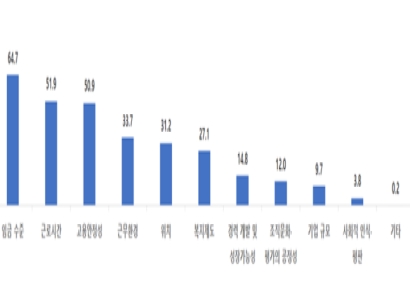 "Please Pay Me at Least 3 Million Won a Month": More Than Half of Young People Today Prioritize "Working Conditions" Over Company Size
- Selling Like Crazy Every Year... 30-Year-Old Hetbahn Takes on a New Challenge: Tastes Better Than "Mom's Home Cooking" [On-Site Report]
- "It's so popular you can't get it": 'Legendary liquor' returns after 11 years, causing a stir... 'Newtro' craze takes over convenience stores [How We Shop Today]
- "Hey, Lady, Teach Your Kids to Behave!" ... 300,000 Won in Cash and a Bodily Injury Claim Demanded Over Child's Door Ding
- "Don't Trust This Woman": Documentary on 'Investment Scammer' Earns KRW 22 Billion in One Week
Director Lee stated, "Since a link has been confirmed between tax evasion and rising consumer prices through this 'Tax Investigation of Suspects Causing Inflation Anxiety,' the NTS will thoroughly investigate all suspects for the stability of everyday living costs." He added, "The NTS will continue to rigorously respond by constantly monitoring closely related sectors for tax evasion in line with government-wide efforts to stabilize prices and support public welfare."
© The Asia Business Daily. All rights reserved. Unauthorized AI training and use prohibited.





![[Market ING] KOSPI Seeks Rebound in Superweek Packed with Corporate Earnings and FOMC](https://cwcontent.asiae.co.kr/asiaresize/307/2026102514484873155_1792907327.jpg)