Central Asia's Value Rises Amid Great Power 'Courtship'... Korea Joins Resource Diplomacy
First Multilateral Summit with Five Central Asian Countries in Seoul
Diplomatic Ties Upgraded to Summit Level Since 1992
Fierce Diplomatic Competition Between U.S. and China
Presidential Office: "Combining Our Supply Chain Strategy to Estab
The Korea-Central Asia Summit, which begins on September 14, marks the first multilateral summit hosted by the Korean government with countries from the region. This event signifies the elevation of diplomatic relations, which began with the establishment of diplomatic ties in 1992 and progressed to a ministerial-level cooperation forum in 2007, to the summit level. As global powers engage in a fierce battle for critical minerals, Korea also appears to be ramping up its "resource diplomacy" with Central Asia.
The five Central Asian countries visiting Seoul for three days starting today are regarded as "strategic strongholds" endowed with key resources. Kazakhstan, for example, has the world’s second-largest uranium reserves, accounting for 12 to 15 percent of the global supply, and is rich in oil and gas resources. Uzbekistan is endowed with significant reserves of natural gas and oil, while Kyrgyzstan holds substantial amounts of coal and gold. Located at the crossroads of Asia and Europe, the region holds considerable geopolitical value.

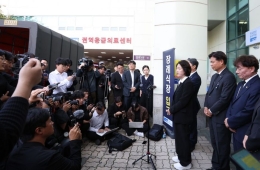
On August 26, at Cheonggye Square in Seoul, visitors are writing support messages at the offline event "Silk Road, Meeting" commemorating the 1st Korea-Central Asia Summit in 2026. 2026.8.26 Yonhap News Agency
View original imageAgainst this backdrop, major powers such as the United States and China have recently engaged in an intense diplomatic contest in Central Asia. Chinese President Xi Jinping held a summit with the five Central Asian countries in June of last year and signed a treaty stipulating that "no party will participate in any alliance or group targeting other parties." On July 31, President Xi personally visited Bishkek, the capital of Kyrgyzstan, for the Shanghai Cooperation Organization summit, where he pledged cooperation on infrastructure projects such as railroad construction in Central Asia. The summit is reported to have covered a wide range of topics, including regional security and logistics.
The United States is also paying special attention to Central Asia. U.S. President Donald Trump dispatched key allies including Republican Senator Steve Daines to coincide with President Xi’s visit to Bishkek. It is unusual for foreign officials to visit during an ongoing summit. The Central Asian side emphasized the importance of a consultative body with the United States in an official statement and said that discussions on cooperation in energy and critical minerals had taken place. In November of last year, President Trump personally invited the leaders of the five Central Asian countries to the White House for a summit and dinner.
Hot Picks Today
 "I Ate It Often Because It Tasted Good"... This Eating Habit Linked to 40% Higher Odds of Asymptomatic Cerebrovascular Damage
- "Booked a Cheap Flight, Only to Get Blindsided"... Travelers' Complaints "Explode" Over Extra Fees
- Woman in Her 70s Assaults Sister in Her 80s: “She Had an Affair with My Husband”
- “Dad Just Gave It to Us as a Gift”... Scratched a Lottery Ticket at a Family Gathering and Hit a 1 Billion Won Jackpot
- "We've gone this far to save on lunch"... Where office workers are flocking instead of restaurants
Korea also plans to deepen cooperation by upgrading its relationship with Central Asia to the summit level through this summit. The government aims to link critical minerals from Central Asia with Korea’s exploration and processing technologies. Efforts are also being made to support Korean companies’ entry into the region and participation in projects by improving customs clearance, regulatory processes, and infrastructure. Kang Yoo-jung, Senior Presidential Spokesperson, stated, "We plan to establish a mutually beneficial growth base by combining Central Asia’s growth demands with our supply chain and market expansion strategies," adding, "We aim to build a sustainable regional partnership that goes beyond a one-off summit diplomacy."
© The Asia Business Daily. All rights reserved. Unauthorized AI training and use prohibited.


!["Please, Just Take Them Off" - They Made It All the Way to Bed... Then Fecal Bacteria Struck [Deep Scroll]](https://cwcontent.asiae.co.kr/asiaresize/307/2026101610053063338_1792112730.png)