KOSPI Plunges, But Beneficiary Stocks of Stronger Won Draw Attention (Comprehensive)
Lowest Exchange Rate in Two Years... Rising Interest in Beneficiary Stocks of a Stronger Won
Profitability Expected to Improve for Airlines, Food, and Banks as the Won Strengthens

Recently, the rapid decline in the KRW/USD exchange rate has heightened interest in "beneficiaries of a stronger won." In the securities industry, food & beverage, banking, and airline sectors are cited as representative industries expected to benefit from this currency trend. However, ongoing external issues such as geopolitical tensions in the Middle East and persistently high interest rates are weighing on the KOSPI as it undergoes a correction.
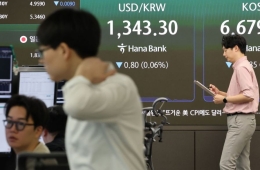
As of 10:18 a.m. on September 14, the KOSPI was trading at 6,665.36, down 3.54% from the previous trading day. KOSDAQ was also down 1.88% at 805.22. Despite a rise in the New York Stock Exchange last Friday following the release of the U.S. Consumer Price Index (CPI) for August that matched expectations, renewed concerns over the Middle East during the weekend have dampened sentiment in the Korean stock market.
According to foreign media, the foreign ministers' meeting scheduled for that day between Iran, Iraq, and Gulf countries was postponed. This was reportedly due to Bahrain's decision to withdraw, citing Iran's attacks on infrastructure around the Gulf. Additionally, over the weekend, major Big Tech CEOs calling for a slowdown in AI development has weakened investor sentiment for technology stocks such as Samsung Electronics (-3.85%) and SK hynix (-5.30%).
Lowest Exchange Rate in Two Years... Focus on Beneficiary Stocks of Stronger Won
Although the KOSPI is experiencing a correction, the securities industry is actively seeking out stocks that will benefit from a stronger won. The KRW/USD exchange rate, which stood at 1,555 won on July 2, has recently fallen by about 13% to the 1,340 won range. On this day as well, the market opened at 1,343.1 won and, as of 10:15 a.m., was trading in the 1,345 won range. The analysis is that the continued decline in the exchange rate is driven by major semiconductor companies such as Samsung Electronics and SK hynix converting large amounts of US dollars into won.
The airline sector is a representative beneficiary of a stronger won. Airlines pay a substantial portion of their main expenses such as fuel costs, aircraft leasing fees, and interest on foreign currency debt in US dollars, so a drop in the exchange rate leads directly to lower costs and reduced burden from foreign currency debt. In addition, when the won strengthens, the demand for outbound travel among domestic travelers increases significantly, creating a virtuous cycle for the industry. Despite the KOSPI dropping more than 3% on the day, shares of airlines like Korean Air Lines and Asiana Airlines showed resilience with slight gains.
Je-Hyun Ryu, a researcher at Mirae Asset Securities, explained, "When the won strengthens, airlines experience alleviated cost pressures and improved passenger demand. The decline in the KRW/USD exchange rate is a positive development for the aviation sector." Ryu identified Korean Air Lines as his top pick, stating, "Although there is some burden from high oil prices, Korean Air Lines is poised to benefit from the effects of a stronger won, peak season momentum in the cargo business, merger effects with Asiana Airlines, and enhanced defense business value among other positives."

Profitability Improves for Airlines, Food Companies, and Banks as the Won Strengthens
The food and beverage sector is also considered a leading beneficiary of a stronger won. Since the Korean food industry is highly dependent on imported key raw materials such as wheat, corn, soybeans, and sugar, a rising won value results in significant cost savings for imported goods. Among food and beverage companies, those with relatively small overseas sales and a strong domestic market are expected to benefit even more from a falling exchange rate.
According to Kyobo Securities, based on projections for 2025, the ratio of overseas business for food and beverage companies is as follows: Samyang Foods (80%), Orion (65%), CJ (51%), Nongshim (44%), Lotte Wellfood (23%), Binggrae (20%), and HiteJinro (10%).
Woojeong Kwon, a researcher at Kyobo Securities, identified Lotte Wellfood as the top pick among them. Kwon explained, "Every 10-won decrease in the KRW/USD exchange rate is estimated to improve Lotte Wellfood's annual operating profit by about 2.5 billion won (KRW 2.5 billion). With recent high growth rates of over 20% in the India subsidiary and improvements in domestic operations, the company's valuation appeal is also increasing."
In the financial sector, bank stocks are expected to benefit significantly from the stronger won. When the exchange rate falls, banks see a substantial rise in foreign exchange translation gains as they revalue their non-won assets and liabilities. Furthermore, a reduction in risk-weighted assets (RWA) leads to a higher Common Equity Tier 1 (CET1) ratio, an important indicator of banks' capital adequacy.
Hot Picks Today
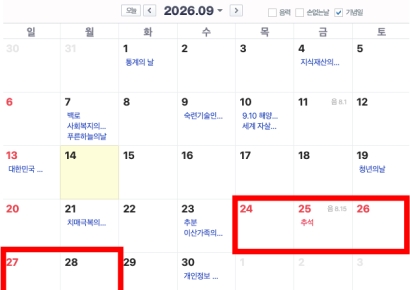 "This Chuseok Feels Too Short, Let's Take Monday Off Too"... Anticipation Grows for Surprise Designation of September 28 as a Temporary Public Holiday
- "Each 10-Won Drop in Exchange Rate Boosts Profit by 2.5 Billion Won"...Stocks Benefiting from the Strong Won at 1,340 Won Level
- "She Held Out With No Regard for the President"... Sharp Criticism Pours In Over Yong Hyein's Resignation
- "The First Thing You Do at a Restaurant May Expose You to Harmful Substances While Trying to Be Polite"
- '12 Billion Bottles of Surplus' – Enough for the World to Drink for 3 Years... Wasn't MZ Just Trending Recently?
Shinhan Securities is focusing on Hana Financial Group. Kyungwan Eun, a researcher at Shinhan Securities, estimated that Hana Financial Group will record 150 billion won (KRW 150 billion) in foreign exchange translation gains in the third quarter due to the drop in the KRW/USD exchange rate. "Based on this strengthened capital position, additional shareholder return policies, such as around KRW 300 billion worth of share buybacks and cancellations in the fourth quarter, are expected," he said.
© The Asia Business Daily. All rights reserved. Unauthorized AI training and use prohibited.