[Why&Next] If Chinese Automakers Produce in the U.S., the 'Korea-China War' Spreads Overseas as Well as at Home
Trump Says "Chinese Automakers Can Open U.S. Factories"
Surprise Statement Ahead of Xi Jinping's Visit to the U.S. on the 24th
China's Push Sparks Korea-China Rivalry in Europe as Well
Chinese EV Market Share Overtakes Korean Brands
Many Overlapping Models in U.S. Market
Hyundai's Largest Sales Market Faces Uncertainty
Concerns are rising that Hyundai Motor and Kia could face direct competition from Chinese automakers in the U.S., following speculation that Chinese automotive companies may begin local manufacturing in the United States. As Chinese firms rapidly ramp up overseas sales to offset sluggish domestic demand, securing a production base in the U.S. could further accelerate their foray into global markets.
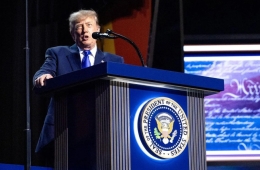
According to the automobile industry on September 14, U.S. President Donald Trump recently stated in a Fox News interview that he could allow Chinese automakers to enter the U.S. market if they build factories in America and hire local workers. However, he expressed opposition to the practice of Chinese firms producing vehicles in Mexico and then importing them to the United States.
Although no concrete policy changes have been finalized, it is anticipated that the upcoming U.S.-China summit scheduled for the end of this month may discuss the possibility of permitting Chinese automakers to establish manufacturing operations in the U.S. Local production in America would allow them to avoid tariffs imposed on Chinese-made finished vehicles and to establish parts procurement and sales networks.

U.S. President Donald Trump and Chinese President Xi Jinping are seen leaving the meeting venue and conversing after concluding the U.S.-China summit on the 30th at Naraemaru in the 5th Air Mobility Wing of Busan Air Force Base. Photo by Yonhap News.
View original imageChinese Cars: Sluggish Domestic Demand Drives Rapid Overseas Sales
According to the China Passenger Car Association (CPCA), China exported 894,000 passenger vehicles in August, up 77.5% compared to the same month last year. In contrast, domestic sales fell for the 11th consecutive month. Notably, while sales of electric vehicles and plug-in hybrids in China decreased, their exports more than doubled.
China continues to expand its vehicle manufacturing capacity. The International Energy Agency (IEA) reports that China produced around 16 million electric vehicles last year, which is about 20% more than domestic demand. During the same period, China's electric vehicle exports surpassed 2.5 million units. As Chinese electric vehicle production exceeds local demand, overseas markets are becoming increasingly important.
It is also noteworthy that Chinese companies are not just offloading surplus production overseas. They are securing in-house capabilities for batteries and electronic components, strengthening price competitiveness, and building local manufacturing and sales networks abroad.
BYD is a representative example. BYD's overseas sales in the first half of this year reached about 790,000 vehicles, a 67.8% year-on-year increase.

Expanding Market Share in Korea and Europe
The aggressive expansion of Chinese automakers has already become prominent in Korea and Europe.
In the first half of this year, 12,178 Chinese brand electric vehicles were newly registered in Korea, more than four times the number from the same period last year. The majority are BYD vehicles. Geely Automobile Group’s premium EV brand Zeekr has also entered the domestic market.
Chinese brands continue to expand their presence in the European market as well.
According to market research firm Dataforce, as of July this year, the combined market share of Korean car brands in Europe was 7.6%, lower than the 11.2% share held by Chinese brands. This is the first year Korean brands have trailed Chinese brands in European market share. As recently as 2022, Chinese brands’ share was in the 1% range. Despite tariffs of up to 45% in Europe, cost competitiveness has allowed Chinese automakers to overtake Korean competitors.
Chinese firms are not only increasing their market share despite high tariffs, but are also speeding up local market penetration by establishing production bases in countries such as Hungary and Spain.

On the 15th, export vehicles are parked at Pyeongtaek Port in Gyeonggi Province. Photo by Yonhap News Agency
View original imageIf the U.S. Opens its Doors, Head-on Battle with Hyundai and Kia
If Chinese automakers begin production in the U.S., many of their models would directly overlap with those from Hyundai and Kia. Small and midsize sport utility vehicles (SUVs) and electric vehicles, such as Hyundai Kona and Tucson, Kia Seltos, Sportage, Niro, and EV3, would compete head-to-head with Chinese models like the BYD Atto 2 and Atto 3, Geely EX5, and Chery Omoda 5.
Hybrids and extended-range electric vehicles (EREVs) would also enter direct competition. Chinese firms are expanding sales of not only electric vehicles but also plug-in hybrids and EREVs, while Hyundai Motor Group is preparing to launch these models to strengthen its presence in the North American electric vehicle market.
Hyundai Motor Group sold 1,836,172 vehicles in the U.S. last year, surpassing its domestic sales of 1,258,730. The U.S. is Hyundai Motor Group’s largest market. While the group is expanding its production capacity in America, mainly at Meta Plant America in Georgia, the combination of local manufacturing and independent supply chains by Chinese automakers could intensify competition in terms of both price and profitability.
Hot Picks Today
 "Let's Hit It Big in Korea"... Foreigners Flock to 'This Place' [Weekend Money]
- “What Now for Samsung and SK hynix?” ... Could News from China Rattle the KOSPI? Shareholders Anxious
- "I Had Just Lain Down to Sleep..." Woman in Her 30s Sets Fire to Songpa Villa Parking Lot, Destroying 3 Cars
- Large Cruise Ship Spotted off Wonsan, North Korea... "With a Pool and Even Water Slides"
- 'Little BoA,' They Said... Apology Over Unpaid Wages Fails to Quell Fury: "Do They Have Money to Debut Their Daughter?"
An automotive industry official said, "In order to compete with Chinese companies, it is necessary to enhance cost competitiveness of electric and hybrid vehicles while securing policy support from the government, such as tax incentives for domestic production, expanded EV subsidies, and improved regulations on autonomous driving. It is also essential to devise strategies that support local manufacturing and supply chain building in line with changes in U.S. trade policy."

© The Asia Business Daily. All rights reserved. Unauthorized AI training and use prohibited.