Alaska LNG as a U.S. Investment Candidate: Commercial Viability in Doubt Even Locally
Total Project Cost Could Reach $54.5 Billion,
With $16.9 Billion Needed Just for Pipelines
Tax Incentives Facing Hurdles in Alaska Legislature
Securing External Financing Remains a Challenge
Questions are mounting over the commercial viability of the Alaska liquefied natural gas (LNG) project, which has emerged as a last-minute variable in South Korea–U.S. investment negotiations. Although the project has resurfaced as a potential candidate for investment into the U.S. at the request of the U.S. government, substantial hurdles such as massive tax incentives and funding challenges continue to impede its progress locally. Whether the project can meet the “commercial viability” requirement set by the Korean government as a precondition for such investment is now seen as the critical factor that will determine a final decision.
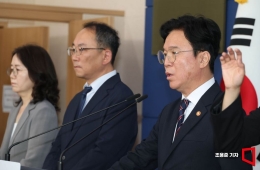
Kim Jungkwan, Minister of Trade, Industry and Energy, stated upon returning from his U.S. visit on September 13 that "we have reached consensus on many issues" in the investment negotiations, although "several issues remain." The government is planning additional virtual talks with the U.S. side early this week, aiming to conclude and announce the negotiations before week’s end. Minister Kim also reaffirmed that neither the total strategic investment in the U.S., set at 200 billion dollars, nor the annual remittance cap of 20 billion dollars would be exceeded.
With the negotiations effectively at their final stage, attention has shifted towards the allocation of the 200 billion dollar investment fund. Alongside candidates such as the Texas Encinal gas-fired power plant and large-scale nuclear power plants within the U.S., the Alaska LNG project is also on the table. Especially for Alaska LNG, local unresolved issues regarding tax incentives and financing remain significant concerns for project implementation.
The project from Glennparn Group is viewed as directly linked to Korea’s investment in the U.S. This colossal project involves transporting natural gas produced in Alaska’s northern North Slope through around 1,300 kilometers of pipeline to Nikiski on the southern Kenai Peninsula, where it will be liquefied and exported to Asia and elsewhere.

Glennparn is pursuing a two-phased approach: In the first stage, a gas pipeline will supply natural gas from the North Slope to in-state demand in Alaska. In the second phase, the plan is to build an LNG liquefaction facility and related infrastructure in Nikiski, achieving an annual export capacity of 20 million tons of LNG. Glennparn holds a 75% equity stake, while the Alaska Gasline Development Corporation (AGDC), an affiliate of the state of Alaska, owns the remaining 25%.
The total project cost may exceed the initially reported 44 billion dollars. According to estimates released by Glennparn to the Alaska State Senate Finance Committee in June, the overall cost is forecast to be between 44.5 billion and 54.5 billion dollars. Of this, an estimated 13.2 billion to 16.9 billion dollars will be needed specifically for pipeline construction. The maximum total project cost of 54.5 billion dollars far surpasses 70 trillion won. Foreign and local media have reported that the total size of LNG projects underway in Alaska could reach as much as 80 billion dollars.
Uncertainty has further escalated as key tax incentive measures intended to support the project failed to clear the Alaska state legislature. This year, discussions continued in Alaska on reducing tax burdens for LNG pipelines, with proposals considered to provide up to 16 billion dollars in tax breaks over several decades. Glennparn has stated that a stable tax regime is essential for securing bank loans and attracting external investors.
The Alaska state government also attempted to switch from assessing property tax to a method based on gas volumes transported, but could not overcome differences within the legislature. The Financial Times (FT) also reported that the project’s progress is being hampered as the state assembly failed to pass critical tax incentives.
Given the sustained uncertainty over the project's commercial value at the local level, the Korean government is also carefully evaluating the economics of the Alaska LNG deal. Last year, Minister Kim referred to the project as “high risk” in the National Assembly. The judgement is that both the long-distance pipeline and new LNG liquefaction facilities require such massive upfront investment that careful assessment is needed on whether the investment can be reliably recouped through LNG sales.
Nevertheless, since the U.S. continues to request Korea’s participation in Alaska LNG, the project remains under review and is not entirely excluded as an investment candidate.
Calculation of the potential Korean investment amount is also complex. The total strategic investment fund pledged by Korea for the U.S. stands at 200 billion dollars. The first-priority candidate, the Texas Encinal gas-fired power plant, alone requires over 20 billion dollars, while construction of eight large-scale nuclear reactors in the U.S. is estimated at around 120 billion dollars. A simple addition including the Alaska LNG project could bring the total close to or even beyond 200 billion dollars.
Of course, these overall project costs do not equate to the actual Korean government investment amounts, since U.S. or private entities may also participate in investment and financing. The government emphasizes that, in accordance with the strategic investment memorandum of understanding, actual Korean investment into the U.S. will not surpass 200 billion dollars and annual remittances likewise will not exceed 20 billion dollars.
Hot Picks Today
 "Why Is the Amount in My Account So Low?"... Why Pension Savings Subscribers Were Surprised
- "SK hynix to Hit 4.7 Million Won, Samsung 670,000 Won"... Why Nomura's Bold Forecast justifies it
- "After Sleeping Well with Strangers"... Who Is the 24-Year-Old Woman Who Won 19 Million Won?
- Lee Meets WHO Chief: "Expand Contributions by Korean Talent to Global Health"... Strengthen AI and Biotech Cooperation
- "Even Underwear Has to Be Cut Up with Scissors"... China Hit by Rise of "Trash Hunters" in an "If You're Slow, You're Out" Scramble
An official from the Ministry of Trade, Industry and Energy said, "Our principle is that investment into the U.S. will only target projects that are commercially viable," adding, "We will carefully evaluate the commercial viability and investment terms of each individual project before making a final investment decision."
© The Asia Business Daily. All rights reserved. Unauthorized AI training and use prohibited.