Trump and Obama Differ on AI: 'Calls for Moderation' Spread, Weighing on Semiconductor Stocks
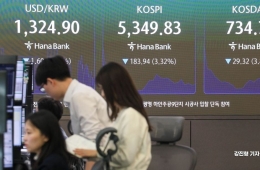
As U.S. President Donald Trump continues to emphasize the need to accelerate artificial intelligence (AI) development, arguing that the U.S. cannot afford to fall behind China, former President Barack Obama has voiced a contrasting stance. With the debate over the speed of AI development now spreading from the industry to the political arena, some predict that this could increase short-term pressure on related stocks.

According to the New York Times (NYT) on the 13th local time, former President Obama warned at a closed-door Democratic fundraising event in Manhattan on September 10 that AI technology could be "dangerous" if not properly managed. The NYT reported that Obama cautioned, "Because AI is advancing very quickly under private sector leadership, if government and society fail to properly manage it, it could become dangerous," while also emphasizing the fundamental importance of both the risks and benefits of AI, rather than offering concrete regulatory proposals. Obama explicitly stated that he considers himself neither an "accelerationist"—someone who believes in rapidly pushing AI development—nor a "pessimist" who sees AI as posing a serious threat.
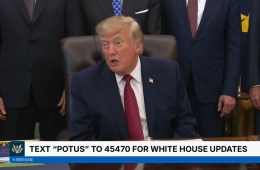
In contrast to Obama, President Trump voiced skepticism about such concerns. During his visit to Ireland, Trump met with reporters at his Doonbeg golf course and responded to questions about whether the AI industry should slow its pace of development or increase regulations by stating, "We are ahead of China in AI," adding, "Frankly, I want to keep things as they are because the winner in the AI race is the one that comes out on top." He continued, "We are the most technologically advanced country in the world," and emphasized, "Whoever wins in AI will be the winner."
However, he did not completely dismiss the necessity for AI safety measures. President Trump said, "We can establish safety measures and take various actions," but also argued, "There are too many negative forces highlighting problems that don't need to be raised. They are raising issues that are not going to happen."

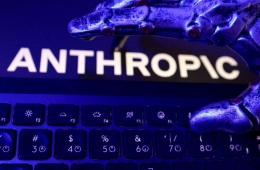
The debate surrounding the speed of AI development versus safety is now spreading to the political arena. Recently, CEOs of OpenAI and Anthropic, as well as AI researchers, have argued that the pace of AI technological advancement could outstrip the implementation of safety mechanisms and controls, and that the wider industry may need to moderate the speed of development.
While some worry that this growing controversy could impact the market by leading to reduced investment, experts expect any such effects to be short-lived. Gary Tan, portfolio manager at Allspring Global Investments, commented, "There may be some short-term pressure, but it is unlikely to undermine the long-term AI investment trend," adding, "AI technology is still in its early stages and developing rapidly, so other companies are unlikely to slow down their current competitive efforts." Billy Leung, investment strategist at Global X Management, pointed out, "Just because CEOs have agreed to adjust the pace of AI development doesn't mean that investments in semiconductors, power, and infrastructure will decrease. It just means the development period will be longer."
Hot Picks Today
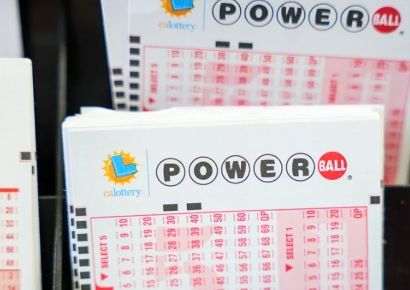 He Left It in the Car and Forgot... "I Nearly Collapsed with Joy": Man Wins $1.48 Million Lottery
- Goldman Sachs Cuts KOSPI Target by 25%... "Excessive Pessimism, Still Attractive"
- "'Nodding Off' on the Subway? Here's Why Koreans Are Getting Even Less Sleep"
- "Please Pay Me at Least 3 Million Won a Month": More Than Half of Young People Today Prioritize "Working Conditions" Over Company Size
- Beachgoer Finds 'Plastic' That Turns Out to Be Perfume Ingredient Worth More Than Twice as Much as Gold
Charu Chanana, chief investment strategist at Saxo Markets, noted that ongoing data center and infrastructure projects would likely continue to support demand for memory, networking, cooling, and power equipment providers. Chanana said, "Adding safety measures does not eliminate demand for computing resources or AI adoption," and argued that, "Even if AI progress slows somewhat, responsible development could actually enhance the sustainability of the AI investment theme."
© The Asia Business Daily. All rights reserved. Unauthorized AI training and use prohibited.