North Korea Conducts Cooperative Firepower Drill with Drones and Ballistic Missiles, Showcases Complex Strike Network
North Korea Reports Drill Two Days Later
On September 14, North Korea announced that it had carried out a large-scale coordinated firepower drill, utilizing a variety of strike assets including attack drones, strategic cruise missiles, large-caliber thermobaric multiple launch rocket systems, and tactical ballistic missiles simultaneously. North Korea, which has recently opposed the South Korea-U.S.-Japan multi-domain exercise "Freedom Edge," appears to be responding with a firepower drill that incorporated multiple new combat systems.

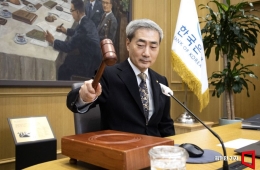
On this day, the Korean Central News Agency (KCNA) reported, "The coordinated firepower assault exercise involving long-range artillery and missile units from various combined units of the Korean People's Army was conducted on September 12." North Korean leader Kim Jong Un did not attend the drill. Pak Jongchun, Vice Chairman of the Central Military Commission of the Workers' Party, and Yu Changsun, Chief of the Artillery Bureau of the General Staff of the Korean People's Army, oversaw the exercise.
Units selected from five artillery and missile combined formations participated in the drill. Newly developed combat systems such as attack drones, strategic cruise missiles, large-caliber thermobaric multiple launch rocket systems, and tactical ballistic missiles were mobilized. North Korea claimed that all strike weapon systems demonstrated "complete harmony and simultaneity" in firepower assaults and succeeded in hitting their designated targets with a "100% hit rate."
North Korea emphasized its ability to integrate and operate multiple combat systems during this exercise. Artillery Chief Yu stated that one of the main objectives was to "master the operational procedures for the integrated fire command system—a component of the strategic weapon comprehensive management framework—and further enhance expertise in realizing integrated automated fire command with multiple combat systems." Additionally, North Korea aimed to improve rapid response capabilities for contingencies by conducting joint training between missile and long-range artillery units.
Im Eulchul, professor at the Kyungnam University Institute for Far Eastern Studies, commented, "Unlike in the past, North Korea has not launched a single weapon system but has instead demonstrated automated fire control and a complex strike network based on C4I (command, control, communications, computers, and intelligence)," adding, "A so-called 'North Korean kill chain' has emerged, capable of controlling drones, cruise missiles, and ballistic missiles simultaneously via the C4I network."
Professor Im further explained, "By simultaneously operating weapon systems with completely different flight characteristics and speeds, North Korea is developing tactics to paralyze South Korea-U.S. air defense networks' target calculation and interception capabilities. There also appears to be a technical purpose, such as testing software operation of integrated fire control systems and examining data transmission interference and communication overload among different weapon types, to collect data for real-world deployment."
Kim Yeolsoo, security strategy director at the Korea Institute for Military Affairs, analyzed, "I believe North Korea conducted this drill to showcase its strong deterrent power by demonstrating the firepower of multiple launch rocket systems, cruise missiles, and drones in order to bolster regime security and to exert deterrence against South Korea and the United States." He added, "The Freedom Edge exercise concluded on September 11, and North Korea launched another ballistic missile on September 12. I see this as a countermove in response to the South Korea-U.S.-Japan drill."
The Joint Chiefs of Staff announced that at approximately 5:20 a.m. on September 12, North Korea fired several short-range ballistic missiles into the East Sea from the Wonsan area. North Korea has launched ballistic missiles four times in the past month or so. On August 6, it fired one ballistic missile into the East Sea, and on August 20, while the South Korea-U.S. joint exercise "Ulchi Freedom Shield" (UFS) was underway, it launched about 10 short-range ballistic missiles (SRBM) from the Pyongyang area.
Hot Picks Today
 Despite "Insufficient Balance" Notices, They Board Anyway... Reports of Foreign Fare Evasion Mounting
- "If It Helps My Child's Studies, It's Worth Every Penny"... U.S. Parents Open Their Wallets for $10,000 Tests
- [Exclusive] "We Came for a KRW 140,000 Trip": Following Chinese Tourists in Korea Uncovers a 'Suspicious' Tour
- "I'm paying to stay, and you want me to do the laundry and dishes too?" ... Airbnb bans excessive cleaning demands
- "Baek Jongwon Had Been Quiet, Then Hit It Big"... Waits in the 100s in U.S. Despite KRW 46,000 Pork Belly
Meanwhile, news of this exercise was not reported by domestic media such as the Rodong Sinmun or Korean Central Broadcasting Service, which are available to North Korean residents, but was only released through the externally directed KCNA.
© The Asia Business Daily. All rights reserved. Unauthorized AI training and use prohibited.