"Unimaginable in Korea"...Koreans Surprised by Secondhand Smoke in Japan and China Restaurants
Korea Bans Smoking in All Restaurants Since 2015
Loose Enforcement of Smoking Bans Overseas
Unlike Korea, where indoor smoking is fully banned, it is still common to see people smoking in restaurants in Japan and China. Since both countries are popular travel destinations for Koreans, some travelers are surprised by the local smoking culture.

According to immigration statistics from the Ministry of Justice, out of 29.55 million Korean departures last year, 9.46 million visited Japan—the most popular destination—and 1.5 million visited China, which ranked fourth. This means more than 11 million Koreans travel to these two countries annually.
However, the indoor smoking culture in these countries is very different from that of Korea. According to the Ministry of Health and Welfare, since 2015, Korea has enforced a total ban on indoor smoking in all restaurants, regardless of size, under the National Health Promotion Act. Violators are fined up to KRW 100,000, and business owners can be fined up to KRW 1,700,000.
In contrast, Japan revised its Health Promotion Act in 2020 in conjunction with the Tokyo Olympics and generally banned indoor smoking in restaurants and bars with employees. However, an exception was made for small establishments with capital of 50 million yen or less and a seating area of 100 square meters or less.
As a result, smoking indoors is still allowed in many local izakayas and small pubs. It is common to see customers smoking right next to other diners.
However, while Japan is relatively permissive about indoor smoking, it is strict about smoking while walking on the street. Since a 2001 incident where a child was blinded after colliding with a smoker's lit cigarette in Tokyo, crackdowns on street smoking have intensified, and today, it is rare to find anyone smoking while walking in major city centers.

China began banning indoor smoking in public places and restaurants in 2014, starting with Beijing. Violators can be fined up to 200 yuan, and business managers who are lax in enforcement face fines of 10,000 to 30,000 yuan (about 1.89 million to 5.67 million won).
However, in China's case, there is a significant gap between the law and reality. In small and regional cities, insufficient enforcement means indoor smoking is often tolerated. Restrictions are tightening in major cities like Shanghai and Beijing, but there is still a long way to go for consistent national-level enforcement.
Hot Picks Today
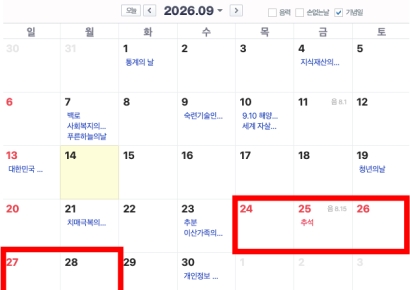 "This Chuseok Feels Too Short, Let's Take Monday Off Too"... Anticipation Grows for Surprise Designation of September 28 as a Temporary Public Holiday
- "Each 10-Won Drop in Exchange Rate Boosts Profit by 2.5 Billion Won"...Stocks Benefiting from the Strong Won at 1,340 Won Level
- '12 Billion Bottles of Surplus' – Enough for the World to Drink for 3 Years... Wasn't MZ Just Trending Recently?
- "I Actually Have No Friends": After This Confession, 500,000 People Rushed In With Empathy
- "What Did They Put on the Porsche?"...The Story of a 27-Year-Old Chinese Owner Who Covered Their Car with Photos of 90 Missing Children
For this reason, foreign tourists visiting Korea are often surprised to find that restaurants are completely free of cigarette odors. Conversely, many Koreans returning from Japan or China express discomfort at encountering cigarette smoke while dining in restaurants.
© The Asia Business Daily. All rights reserved. Unauthorized AI training and use prohibited.