[Inside Chodong] Investing 104 Trillion Won Raised Through Debt
![[Inside Chodong] Investing 104 Trillion Won Raised Through Debt](http://www.asiae.co.kr/news/img_view.htm?img=2026090108123299882_1788217952.gif)
In a column dated June 10 last year, I wrote, "I hope the expansive fiscal policy of the Lee Jaemyung administration does not descend into excessive politicization or populism." Unfortunately, it seems those hopes have not been met so far. As soon as the government received control of the national coffers, it kicked off a round of supplementary budgets totaling in the range of 30 trillion won, then opened the era of 700 trillion won in total expenditures with its first budget proposal, which was skewed toward one-off spending such as local currency initiatives. Recently, the government unveiled next year's budget, which increases spending by another 100 trillion won to approximately 820 trillion won—a massive budget. This marks two consecutive years of unchecked expansion in government spending. The budget fully embodies President Lee Jaemyung's spending philosophy, previously summed up as, "Why shouldn't we accept free money from the state?" and "Worries about national debt are ignorant."
This government's increased spending relies on optimistic forecasts for semiconductor tax revenues. The government projects that next year's tax revenues will increase by 170 trillion won (40.7%) compared to this year, and expects tax income to rise by more than 3% every year thereafter. It predicts the average annual growth rate over the next five years through 2030 will exceed 13%. However, the semiconductor industry has gone through boom-and-bust cycles every 3 to 5 years, and tax revenues have also fluctuated widely from year to year. While the windfall from companies like Samsung Electronics and SK hynix is expected to bring in as much as 200 trillion won today, just two years ago, these companies paid no corporate taxes at all due to a semiconductor downturn, causing a major revenue shortfall for the country. Even as the government admits that the semiconductor boom could fade after next year, it has nonetheless built everything upon the peak of this temporary supercycle. The government's rosy projections may be shattered the moment there is a substantial adjustment in either memory prices (P) or quantities (Q).
That still seems insufficient, as the government now plans to create a separate fund outside the general budget. While decorated with grand phrases like "strategic investment platform for the future," nearly half of the approximately 45 trillion won earmarked for expenditures is dedicated to Lee Jaemyung-branded welfare projects: cash support for youth policies (a persistent Achilles' heel for this administration), the universal child benefit, or basic income for rural and fishing villages. Setting aside the "30% discretionary authority" controversy, it is difficult to find justification for classifying these initiatives under a separate fund and drafting their budgets accordingly.
Hot Picks Today
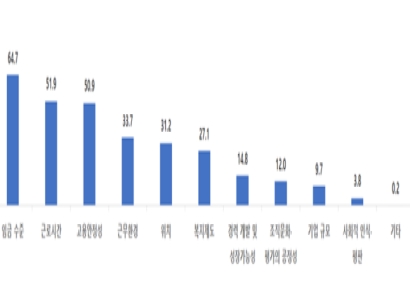 "Please Pay Me at Least 3 Million Won a Month": More Than Half of Young People Today Prioritize "Working Conditions" Over Company Size
- Selling Like Crazy Every Year... 30-Year-Old Hetbahn Takes on a New Challenge: Tastes Better Than "Mom's Home Cooking" [On-Site Report]
- "Is This Really Possible?" The World Is Watching... Could My Car Become a "Mobile ESS"? [Energy Odyssey] 15
- "Hey, Lady, Teach Your Kids to Behave!" ... 300,000 Won in Cash and a Bodily Injury Claim Demanded Over Child's Door Ding
- "Don't Trust This Woman": Documentary on 'Investment Scammer' Earns KRW 22 Billion in One Week
Perhaps the most puzzling point is the 104 trillion-plus alpha won in surplus funds slated to be left in this fund. The government says it will borrow an additional 106 trillion won next year and invest a similar amount in high-return assets such as stocks and bonds. The government's target annual rate of return is said to be 3.85%. However, the yield on Korea Treasury Bonds has already risen to the 4.10% range. If the investment yield fails to exceed the cost of issuing government bonds, the more the funds are managed in this way, the greater the losses to the state. With a sharp climb in borrowing costs, the pace of growth in interest payments already outstrips the rate at which national debt is rising, and this year's interest expenses have overtaken the R&D budget and are rapidly closing in on defense spending. Even now, Korea Treasury Bond yields continue to rise. This rosy design based on a semiconductor boom could quickly morph into a double-risk scenario of soaring interest expenses and principal losses the moment the cycle shifts to a downturn. This is why, during National Assembly deliberations, it is crucial to clarify the genuine purpose and responsibility for the management of the 104 trillion won fund, as well as to establish mechanisms to ensure a minimum rate of return.
© The Asia Business Daily. All rights reserved. Unauthorized AI training and use prohibited.




![[Market ING] KOSPI Seeks Rebound in Superweek Packed with Corporate Earnings and FOMC](https://cwcontent.asiae.co.kr/asiaresize/307/2026102514484873155_1792907327.jpg)