The Jackpot Opportunity vs. Volatility Trap: All-Stock Trading Battle Begins After Work
From Today: After-Market Stock Trading Begins
Expanding Trading Opportunities and Responding to Global Liquidity Competition
Concerns About Increased Price Volatility Due to Liquidity Dispersion
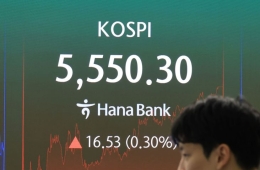
Korea Exchange will open an after-market for stock trading even after the regular trading session closes on the 14th. In order to expand trading opportunities for investors and to compete in liquidity with major global exchanges, the existing after-hours single price trading will be abolished, and post-market real-time trading will be introduced.

Korea Exchange will open an after-market for stock trading even after the regular trading session closes on the 14th. Getty Images
View original imageHowever, there are concerns that the exchange still faces significant challenges, such as increased price volatility due to liquidity dispersion, growing fatigue for investors and securities industry workers, and the exclusion of exchange-traded funds (ETFs) from after-market trading.
After-market operation begins today
Starting today, the exchange will operate the after-market for the KOSPI and KOSDAQ markets from 4:00 p.m. to 8:00 p.m. After the regular trading session (9:00 a.m. to 3:30 p.m.) ends, after-hours trading at the closing price will be held for 30 minutes, followed by the opening of the after-market at 4:00 p.m.
Accordingly, the existing after-hours single price trading, which ran from 4:00 p.m. to 6:00 p.m., will be discontinued. In after-hours single price trading, orders were accumulated every 10 minutes and executed at a single price. However, in the after-market, orders are executed in real time using a continuous auction method, just like the regular session. This makes stock trading much more convenient for investors. Only limit orders, best limit orders, and most advantageous limit orders are allowed, and market orders are not permitted.

Unlike NextTrade (NXT), an alternative trading system where only a limited number of stocks can be traded, all KOSPI and KOSDAQ stocks will be tradable after the close of the regular session. Currently, approximately 600 stocks are traded in NextTrade's after-market (from 3:40 p.m. to 8:00 p.m.).
The exchange explained that the after-market was established to respond to liquidity competition with major U.S. exchanges and to expand trading opportunities for investors. The New York Stock Exchange (NYSE) and NASDAQ in the United States have also announced plans to extend current daily trading from 16 hours to 23 hours to cater to Asian investors.
An exchange official emphasized, "With the extension of trading hours, investors can now immediately reflect information occurring after the regular session into prices, enabling quicker investment decisions. Enhancing investor accessibility and market competitiveness will be a first step for our stock market to reach a global level."
Concerns about increased price volatility due to liquidity dispersion
Despite the high expectations, there are also concerns. Initially, the exchange aimed to launch both the pre-market (before-hours trading) and after-market simultaneously, but postponed the introduction of the pre-market out of concerns that securities firms would face a sharp increase in work burden. The Securities Industry Headquarters of the Korean Financial Industry Union continued protests in front of the Korea Exchange in Yeouido, Seoul, opposing the extension of trading hours. While the exchange is promoting not only pre-market trading but also 24-hour trading like major U.S. exchanges, securities firms have responded negatively due to the potential increase in workload.
There is also some disappointment that, due to concerns over market volatility, ETFs and exchange-traded notes (ETNs) have been completely excluded from after-market trading. With the recent rise in ETF investment among individual investors, the inability to trade these products after the market close has become a pressing issue for the exchange to address.
Additionally, the risk of liquidity being dispersed and price volatility increasing due to insufficient trading volume is a problem that must be solved. The Korea Capital Market Institute pointed out that if trading volume does not increase sufficiently after the after-market opens, liquidity will become dispersed across different times of day and price stability in the night market could deteriorate.
Hot Picks Today
 "The Transfer Failed, but 'Ding-Dong,' Money Came In"... KRW 32.5 Billion Financial Incident at Toss Bank
- Shark 'Bukkangi' Missing... Oil Spill off Busan North Port Raises Concerns
- "Made 12 Billion Won Cleaning Up Other People's Dog Poop With Just a Rake"... 'Poop Scoop Millionaire' Is All the Rage in the U.S.
- [2026 National Assembly Audit] Concerns over harm to fishers if South Korea joins CPTPP... Minister Hwang Jongwoo: "Will outline support measures for fishers next week"
- Woman Who Bought Economy Ticket Causes Uproar, Demands "Put Me in Business Class," Delays Flight
Yeom Il-lim, Senior Research Fellow at the Korea Capital Market Institute, explained, "During time periods with low participation from investors and market makers, bid-ask spreads may widen and small orders may have a large impact on prices. The gap between the price at the close of the regular market and the after-market could grow, or after-market prices could distort the opening prices of the next regular session."
© The Asia Business Daily. All rights reserved. Unauthorized AI training and use prohibited.