President Lee: "Illegal Investments Can't Be Protected... Will Firmly Respond to Unjust Claims" After ISDS Victory Over Chinese Investor
All Annulment Requests by Chinese Investor Fengzhen Min Dismissed
Final Defense Against 264.1 Billion Won Compensation Claim
Initial Claim Amount Reached 2 Trillion Won
Government Recovers 1.5 Billion Won in Legal Costs from Annulment Proce
On September 13, President Lee Jaemyung commented on the final confirmation of the government’s victory in the annulment procedure concerning an international investment dispute (ISDS) filed by a Chinese investor against the Korean government. He stated, "Foreign investors cannot expect protection for investments that violate the laws of the Republic of Korea."

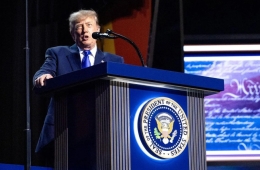
President Lee Jae-myung is speaking at the senior secretaries meeting held at the Blue House on the 11th. September 11, 2026. Photo by Yonhap News Agency
View original imagePresident Lee posted on X (formerly Twitter) the same day, saying, "This victory in the ISDS annulment procedure reaffirms the principle already established in international arbitration." He added, "I am grateful to everyone at the Ministry of Justice for their efforts to protect the national interest," and emphasized, "We will continue to respond firmly to any unfair claims in the future."
This case involves a Chinese national, Fengzhen Min, who invoked the Korea-China investment agreement in 2020 to file an ISDS claim against the Korean government. On September 12, the annulment committee of the International Centre for Settlement of Investment Disputes (ICSID) dismissed all requests by Fengzhen Min to annul the arbitration award. As a result, the original arbitral ruling in May 2024 in favor of the Korean government was finally confirmed.
In 2007, Fengzhen Min established Pi Korea in Korea to secure funds for purchasing the Huafu Building in Beijing and obtained project financing loans totaling 380 billion won from local financial institutions. After he defaulted on the loans, the financial institutions disposed of company shares held as collateral. Min filed a civil lawsuit over this action but lost in the Supreme Court in 2017. That same year, he was also convicted for providing money and valuables to employees of the financial institutions during the loan process.
Fengzhen Min argued that the execution of collateral rights by the financial institutions, together with civil and criminal procedures by Korean courts, amounted to "illegal expropriation," "denial of justice," and "violation of the obligation of fair and equitable treatment" under the Korea-China investment agreement and thus filed an ISDS claim. The initial claim amount was approximately 2 trillion won, and he ultimately demanded around 264.1 billion won.
However, the original arbitral tribunal in May 2024 accepted the Korean government's claim that the establishment of Pi Korea and the acquisition of shares were part of an illegal scheme to obtain project financing by bribing financial institution employees. The panel concluded that such investment was not subject to protection under the Korea-China investment agreement and dismissed the claims entirely. At that time, Fengzhen Min was also ordered to reimburse approximately 4.9 billion won in legal costs incurred by the Korean government, as well as interest.
Fengzhen Min filed for annulment in September of the same year, but the annulment committee found no fault in the tribunal’s interpretation of the investment agreement or in the proceedings. The committee also ordered Fengzhen Min to pay about 1,512.83 million won in additional legal costs and interest incurred by the Korean government during the annulment process.
Hot Picks Today
 "Please Pay Me at Least 3 Million Won a Month": More Than Half of Young People Today Prioritize "Working Conditions" Over Company Size
- Selling Like Crazy Every Year... 30-Year-Old Hetbahn Takes on a New Challenge: Tastes Better Than "Mom's Home Cooking" [On-Site Report]
- "Americans Would Be Amazed If They Came": Wide-Eyed at a Sight They've Never Seen Before... Foreigners Also Fall for K-Baseball [K-Holic]
- "Hey, Lady, Teach Your Kids to Behave!" ... 300,000 Won in Cash and a Bodily Injury Claim Demanded Over Child's Door Ding
- Beachgoer Finds 'Plastic' That Turns Out to Be Perfume Ingredient Worth More Than Twice as Much as Gold
The Ministry of Justice evaluated the decision as a reaffirmation of the principle that "investments deemed illegal under domestic law cannot be protected by investment agreements." The ministry also explained that the victory has prevented attempts to overturn decisions already rendered in Korean civil and criminal proceedings through ISDS, and, by winning both the original arbitration and the subsequent annulment procedure, has blocked the possibility of further arbitration.
© The Asia Business Daily. All rights reserved. Unauthorized AI training and use prohibited.