Amid U.S.-China Tensions, Korea Leverages Connector Countries Like Vietnam; "Supply Chain Risks Rise if Regulations Tighten"
Despite Geopolitical Fragmentation, Cross-Border Economic Linkages Remain Intact
Korea Leverages Connector Country Production Networks Rather Than Scaling Down U.S. or China Ties
Maintaining Connections with Both Major Markets
Risks Could Rise If U.S. Supply Chain Regulations Are Tightened
Use Connector Countries' Buffering Effect but Reduce Reliance on Specific Production Hubs
Recent research has confirmed that despite geopolitical fragmentation resulting from factors such as U.S.-China tensions and the Russia-Ukraine war, economic linkages between countries have continued—rather than being severed—through the reorganization of pre-existing global supply chain routes. It was also found that Korea, instead of drastically reducing ties with either the U.S. or China, has maintained connections with both markets by leveraging production networks in so-called "connector countries" such as those in ASEAN.
This approach can broaden the range of production and export routes available in the event of geopolitical shocks; however, it has been pointed out that risks may rise if the U.S. strengthens supply chain-related regulations, such as rules of origin or investigations into circumvention of export restrictions. Therefore, the study suggests that while it is important to utilize the buffering effect of connector countries, it is also necessary to manage the risk of policy changes in major economies or supply chain shocks propagating domestically through third-country production networks, and to diversify supply chains so as to reduce dependence on specific production hubs and routes.

According to the BOK Issue Note published by the Bank of Korea on the 13th, titled "How Are Global Economic Linkages Being Restructured Amid Geopolitical Fragmentation?" (Minjae Park, Sunyoung Chung, and Eun Chong Jun), the study examined changes in major countries' relations with the U.S. and China during recent geopolitical conflicts, the routes through which global economic linkages persist, and the ways these changes are reflected in Korea’s supply chain.
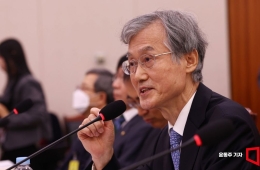
Sunyoung Chung, Head of the Asia-Pacific Economic Team at the BOK's Research Bureau, stated, "By analyzing UN General Assembly voting data, we examined whether each country became closer to the U.S. or China from both geopolitical (political and security) and geo-economic (economic and development) perspectives since the intensification of U.S.-China tensions in 2017. Most countries have moved closer to the U.S. in geopolitical terms, while showing decoupling tendencies in the geo-economic realm, with directions varying by country and region." She pointed out that this suggests that even amid increasing geopolitical tension, geo-economic alignments do not always move in tandem with geopolitical ones, and that each country's alignment is adjusted differently depending on their industrial structure, external relations, and position within global supply chains.
As direct trade between the U.S. and China declines, connector countries have functioned as intermediate hubs in production and procurement networks, sustaining global economic linkages. These connector countries are closely tied to both the U.S. end-market and China-centric production networks, playing a pivotal role in maintaining economic connections between the two sides even as direct trade shrinks. Vietnam, India, and Mexico are prominent examples. Recent studies show that their role is no longer limited to simple third-country transshipment, but is evolving into genuine production bases, as local manufacturing and foreign direct investment (FDI) increase.
Chung added, "In these connector countries, the direction of U.S.-China relations—in both political-security and economic-development terms—has moved differently compared to non-connector countries. Geopolitically, they became closer to the U.S., while in geo-economic terms, they maintained or even strengthened ties with China." In contrast, Korea, Japan, and Australia—which have traditionally sustained high economic linkages with both the U.S. and China—have generally maintained an intermediate position in both geopolitical and geo-economic alignments, showing a different trend from countries where connector roles have recently expanded.
It was found that Korea’s supply chain connections to both the U.S. and China, via connector countries such as Vietnam, have strengthened. Analysis using the OECD Inter-Country Input-Output (ICIO) tables from 2016 to 2022 showed that the share of Korean value added—generated through exports to Vietnam—linked to U.S. final demand (consumption and investment) rose from 11.1% in 2016 to 18.5% in 2022. The share linked to Chinese final demand also increased from 7.3% to 13.9%. Chung explained, "Especially in the semiconductors and computer, electronics, and optical device industries, the share linked to the U.S. rose sharply from 12.8% to 21.0%, and the share linked to China climbed from 11.2% to 19.4%." This demonstrates that the share of Korean export value added connected to the final demand of both the U.S. and China has grown via production networks in connector countries such as Vietnam.
The routes through which Korean value added reaches U.S. final demand have also changed. While the share of direct linkages with the U.S. has remained largely stable, the role of ASEAN production networks in indirect linkages through third countries has expanded. This trend is most pronounced in Korea’s leading industries. The direct linkage share—from Korea to the U.S.—was almost unchanged, moving from 73.1% in 2016 to 72.4% in 2022. However, the share of Korean intermediate goods reaching the U.S. via third-country production bases shifted: the China-based share fell from 10.7% to 6.8%, while the share routed through Vietnam and four other ASEAN countries increased from 4.9% to 8.3%. Chung analyzed, "Specifically in semiconductors and computer, electronics, and optical device sectors, the ASEAN-5 route consistently grew to reach 18.6% in 2022, exceeding the China route at 17.0%."
On the investment side, the period also saw a significant increase in Korean companies' direct investment in the U.S., while continued investment in traditional ASEAN production bases, such as Vietnam, shows that direct entry into end markets and the use of connector country production networks have proceeded in parallel.
Hot Picks Today
 "Koreans Spend 1 Million Won Each and Come Back"... 'They Said They Were Going for Value for Money,' but Open Their Wallets Wide in Japan
- "You Mean Only Middle-Aged Men Got to Enjoy This?"... Where Japanese Women in Their 20s and 30s Are Flocking
- Man in His 60s Arrested for Dumping Body in Guro-gu, Man in His 80s for Ordering It (Updated)
- "Naked Again?" Controversial Actress Crosses a Line... Slammed for Sexualizing 'Child Characters'
- "They Get a Good Night's Sleep and Earn Twice My Salary... Honestly, I'm So Jealous I Could Die": Civil Servant's Post Targeting Firefighters Sparks Outrage
Chung emphasized, "It is necessary to leverage the buffering role of connector countries, but at the same time, we must manage the potential for policy shifts, local production condition changes, and supply chain shocks in major economies to be transmitted domestically via third-country production networks, and work to diversify supply chains to reduce dependence on specific production hubs or routes."
© The Asia Business Daily. All rights reserved. Unauthorized AI training and use prohibited.