Kim Minseok Visits Pyeongtaek: "The Era of Dividing Up Political Stakes Is Over"
Song Young-gil Targets Cho Kuk
Says He "Created Zero Democratic Party"
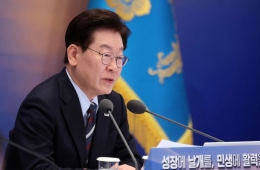
Minseok Kim, Leader of the Democratic Party of Korea, stated on the 12th, "Our party will pursue the path of grand integration, embracing progressive parties and individuals, centrist individuals, as well as those who are conservative but rational and competent."

On this day, Kim attended the 'Open Day' event of the Pyeongtaek-eul Regional Committee in Gyeonggi Province and said, "The Democratic Party will take the lead among progressive parties by embracing structural majorities, including conservatives and centrists. We will build solidarity and dialogue with progressive reform parties and centrist-conservative forces."
Kim also stated, "We will form alliances with parties such as the Social Democratic Party, the Progressive Party, and the Basic Income Party, and will discuss whether to merge with the Innovation Party of Cho Kuk or to maintain an alliance, making a decision after discussions." He emphasized, "Whether it is a merger or an alliance, the fundamental principle is competitiveness." He added, "The era of dividing up stakes is over. That was old politics. Even if our party forms alliances with other parties, unification will be achieved based on competitiveness, and within the party, candidates will be chosen for their competitiveness."
Pyeongtaek-eul is an area where, during the June 3 by-election, opposition votes were split due to the candidacies of Yongnam Kim, Regional Chairman of the Democratic Party's Pyeongtaek-eul Committee, and Cho Kuk, Head of Policy Research at the Innovation Party of Cho Kuk, which resulted in Yoo Eui-dong of the People Power Party being elected. After becoming leader, Kim has repeatedly expressed his support for Chairman Kim, who was appointed to the position of Executive Deputy Chair of the party's Policy Committee immediately after Kim assumed the party leadership.
Kim said, "The intention of the government and the party is not to use those from the conservative camp in the last presidential election and then discard them, but to invite competent, outstanding individuals to broaden the political horizon." He continued, "Our goal is to create a large field that includes progressive reformists as well as centrist conservatives."
Kim commented, "The current national political situation is a bit more difficult than a year ago when the presidential term had just begun. The approval ratings for the president and the government-ruling party have fallen compared to the beginning." He added, "Ultimately, the foundation of politics is public livelihood, and improving public livelihood is the only and most accurate way to overcome current difficulties."
Song Young-gil, a member of the Democratic Party of Korea, sharply criticized Cho Kuk—who ran in the last by-election under the slogan 'Zero People Power'—saying, "Someone suddenly showed up, claiming they would establish 'Zero People Power' because it was considered difficult ground for the Democratic Party, but ended up creating 'Zero Democratic Party' and left."
Hot Picks Today
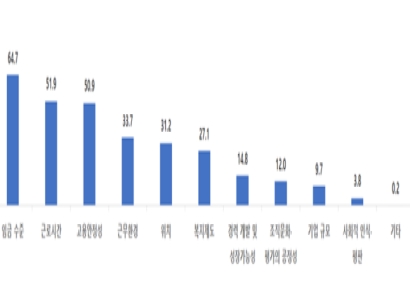 "Please Pay Me at Least 3 Million Won a Month": More Than Half of Young People Today Prioritize "Working Conditions" Over Company Size
- Selling Like Crazy Every Year... 30-Year-Old Hetbahn Takes on a New Challenge: Tastes Better Than "Mom's Home Cooking" [On-Site Report]
- I Thought Only 'Old Guys' Ate It... Young People Are Hooked on This 'Unusual Food' at Risk of Disappearing? [Delicious Stories]
- "Hey, Lady, Teach Your Kids to Behave!" ... 300,000 Won in Cash and a Bodily Injury Claim Demanded Over Child's Door Ding
- Beachgoer Finds 'Plastic' That Turns Out to Be Perfume Ingredient Worth More Than Twice as Much as Gold
Song also referred to author Yumi Yu's 'ABC Theory,' remarking, "At a time like this, it's crucial to show who the real core supporters are and to clarify what the real Group B is."
© The Asia Business Daily. All rights reserved. Unauthorized AI training and use prohibited.