[Interview] U.S. 10-Year Treasury Yield Surpasses 5%: "Stabilization Coming Soon"
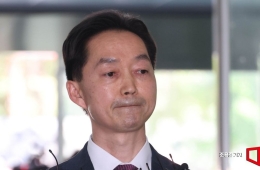
U.S. Investment Expert Lee Chungkwang, CEO of Legnum Investment Advisory
"Uptrend Expected Until End of September... Still Too Early to Invest in Treasuries"
"Many Policy Tools Left, Including U.S. Government Buybacks and Fed Operation Twist
"Currently, U.S. long-term Treasury yields are at a highly pressurized level. However, this upward trend is expected to settle down soon."
Lee Choongwang, CEO of Regnum Investment Advisory and a U.S. investment expert who previously worked at J.P. Morgan Asset Management, recently appeared on The Asia Business Daily's economic YouTube channel "Money Mani." He stated, "This (Treasury yield) uptrend is likely to continue until the end of September," but also shared the above outlook.
The U.S. 10-year Treasury yield, which serves as a global benchmark interest rate, has surpassed the so-called psychological threshold of 5%. On the morning of September 15th (local time), one day before the Federal Open Market Committee (FOMC) meeting, the yield rose to 5.041%, marking the highest level since July 2007. The 30-year yield, which is especially sensitive to geopolitical risks, briefly exceeded 5.4% during intraday trading, hitting the highest point since June 2007.
Lee cited five reasons for the sharp rise in U.S. long-term Treasury yields: fiscal burden and debt, an increase in corporate bond issuance due to investments in artificial intelligence (AI), concerns over inflation expectations stemming from the Middle East war, policy uncertainty, and support from real interest rates.
First, Lee pointed out, "The U.S. fiscal deficit has been a longstanding issue, but when the national debt exceeded 40 trillion won last month, the market was caught off guard." He added, "The more direct reasons are AI investment and the Middle East war." According to Lee, hyperscalers are making large-scale investments to secure an early lead in the AI market, which has led to a surge in corporate bond issuances to raise funds.
He explained, "Companies like Microsoft and Google have higher credit ratings than even U.S. Treasuries," and "Google’s 100-year bond offers a higher yield than Treasuries. As a result, investors end up selling Treasuries and buying corporate bonds, which directly pushes up long-term yields."
Additionally, the recent rise in international oil prices due to the Middle East war has intensified concerns over inflation, leading to further selling of Treasuries. Amid expectations of prolonged tension in the Middle East, Brent crude futures surpassed $108 per barrel, while West Texas Intermediate (WTI) hovered around $105 per barrel.
However, Lee stated, "I agree that expectations for higher inflation have arisen because of the oil price surge caused by the Middle East war," but noted, "If you look at actual inflation, the impact from rising oil prices hasn’t materialized yet." He stressed that investors need to distinguish between expected inflation—which represents market participants’ subjective forecasts about future price increases—and the actual inflation rate.
He went on to point out, "Uncertainty over policy has also increased as Kevin Warsh, former Fed Governor, has stepped in, and the so-called 'bond vigilantes' on Wall Street have tried to discipline the market. Coincidentally, these four or five factors combined have driven the increase in long-term Treasury yields."
Lee emphasized that this upward trend in government bond yields is not limited to the U.S. In Japan, 10-year government bond yields stood at 3.04%, while in Germany they hovered around 3.54%. In Seoul’s bond market, the 10-year yield reached 4.555%, which is an increase of over 1 percentage point from 3.386% on January 2nd this year. He cautioned that investors should pay attention to the fact that not only U.S. but also major countries’ government bond yields have all risen.

Lee Choongwang, CEO of Regnum Investment Advisory, recently appeared on The Asia Business Daily's economic YouTube channel "Money Mani" and shared his insights.
View original imageConcerns are growing inside and outside the market that a further rise in government bond yields could deal a blow to the stock market and the broader economy. In response, Lee assessed, "This upward trend is expected to continue until the end of September, so it’s still too soon to invest in Treasuries," but projected, "Long-term yields will soon enter a stabilization phase." While further increases are possible, he believes yields are already near their upper limit. With respect to 10-year Treasury yields, even if they break above 5%, he does not expect the uptrend to be sustained for long.
Lee explained, "If long-term yields keep rising, there will be various side effects, but the one that the U.S. is most concerned about is its national stature being shaken. The U.S. will not sit idly by and watch yields rise to that extent. There are still many policy tools left." He also mentioned that although the U.S. Treasury could not stave off the selling pressure in the market, its recent announcement to expand long-term Treasury buybacks (early purchases) was also a measure aimed at stabilizing the bond market.
In addition, Lee mentioned that the Fed could also step in, citing quantitative easing (QE), Operation Twist, and Yield Curve Control (YCC) as representative tools. He predicted, "Among these, Operation Twist is the most likely option." Operation Twist, where the Fed sells short-term Treasuries and buys long-term Treasuries to lower long-term yields, is a policy similar to the Treasury’s buyback of already issued bonds in the market. He also pointed out that, contrary to Governor Warsh’s announcement of balance sheet reduction, in reality the balance sheet is actually expanding, noting that "the Fed is quietly buying up bonds in the market."
On that day, Lee also addressed the so-called stock market seasonality saying, "Buy in September, sell in November," calling it a statistical bias. Historically, September has been known as the worst month for U.S. stock returns, but except for major events such as the Global Financial Crisis and the Fed’s aggressive rate hike in 2022, returns have generally been favorable.
Hot Picks Today
 "Why Work a White-Collar Job? This Chinese Occupation Now Earns Over 5 Million Won a Month"
Lee expects that the uptrend in the memory semiconductor sector, which has driven this year’s stock price gains, will continue through the first half of next year. "If you look at hyperscalers’ CAPEX investment on a year-on-year basis, quarterly investment growth peaks in 2027," he observed. "After the first half of next year, volatility may increase (due to this), but I believe there won’t be any issues with memory semiconductor investment through the first half." He emphasized that amid rapidly growing uncertainty such as high market interest rates and the Middle East war, what investors should ultimately focus on is "corporate earnings."
© The Asia Business Daily. All rights reserved. Unauthorized AI training and use prohibited.