Lee Eonju Calls for Production Tax Credits for EVs, Citing Concerns Over Industrial Ecosystem Collapse
Koo Yooncheol: "Tax Credits Should Focus on High Value-Added Batteries"
Lee Eonju: "Tax Credits Ineffective for Battery Companies Operating at a Loss"
Assemblywoman Eonju Lee of the Democratic Party of Korea urged on September 11 that the support policy for the domestic electric vehicle industry should be shifted from purchase subsidies to production-stage support in order to protect the domestic electric vehicle ecosystem.
During the government’s economic affairs Q&A session at the National Assembly on the same day, Assemblywoman Lee pointed out to Deputy Prime Minister and Minister of Economy and Finance Yooncheol Koo, "The market share of Chinese electric vehicles in Korea is rapidly increasing," adding, "At this rate, it is only a matter of time before it exceeds 50% next year."
She continued, "Electric vehicles are linked to the battery, steel, and parts industries, as well as the physical AI and robotics sectors. If the automotive parts ecosystem collapses, it will be difficult to secure competitiveness even with large-scale investment in physical AI." She insisted that the influence of purchase subsidies, which are also provided to Chinese electric vehicles, should be reduced, and that the support scheme must transition to reinforce the domestic production base.

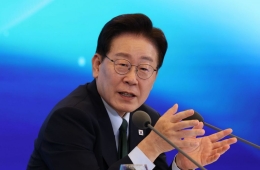
Rep. Eonju Lee of the Democratic Party of Korea is questioning Prime Minister Seongsuk Han during the government inspection on economic affairs held at the National Assembly on September 11, 2026. Photo by Dongju Yoon
View original imageIn response, Deputy Prime Minister Koo stated that it would be more appropriate to focus support on batteries, which add high value, rather than applying production tax credits to electric vehicles as a whole. He explained, "The core of electric vehicles is the battery," and noted that the government has included measures to apply production tax credits to batteries in the legislative bill from next year.
Assemblywoman Lee rebutted that not only batteries, but the entire value chain—such as steel and automotive parts—needs support. She particularly highlighted, "Korean battery companies are not making operating profits, so it is questionable what tax credits they would benefit from," pointing out that tax credits are not effective for loss-making companies.
Deputy Prime Minister Koo replied, "We will make even greater efforts for parts that are core to the electric vehicle and autonomous vehicle industries," and added, "We will seek reasonable solutions on the issue of electric vehicle tax credits through inter-agency meetings."
Hot Picks Today
!["You Thought Restrictions Would Stop Homebuyers?" 84-Square-Meter Mixed-Use Unit Sells for 2.14 Billion Won... Workaround Buying Spreads [One Year of Seoulwide Land Transaction Permit Rules]](https://cwcontent.asiae.co.kr/asiaresize/93/2026100916270855867_1791530828.jpg) "You Thought Restrictions Would Stop Homebuyers?" 84-Square-Meter Mixed-Use Unit Sells for 2.14 Billion Won... Workaround Buying Spreads [One Year of Seoulwide Land Transaction Permit Rules]
"You Thought Restrictions Would Stop Homebuyers?" 84-Square-Meter Mixed-Use Unit Sells for 2.14 Billion Won... Workaround Buying Spreads [One Year of Seoulwide Land Transaction Permit Rules]
- "Busan Is in Big Trouble"... One Cockroach Can Produce 350 Nymphs; Establishment Confirmed, Causing Alarm
- [Exclusive] "We Warned You Four Times"... Another Defect Found in Bathroom at LH Happy Housing Site
- [Energy Odyssey] 11: Molten Iron Made with Hydrogen, Naphtha Made with Electricity
- "I Hate Dog Meat and Skate, Love Pizza" ... "Let's Meet" Frenzy Over Beautiful 41-Year-Old Nurse, But There's a Twist
Assemblywoman Lee emphasized, "Mother factories and critical supply chains must remain in Korea," and stressed, "We must not use taxpayers' money to support foreign-made vehicles, destroy domestic jobs, or give up data sovereignty and economic security."
© The Asia Business Daily. All rights reserved. Unauthorized AI training and use prohibited.