'Dongdasong' Was Originally Titled 'Dongdahaeng'... 86 Letters of Choi Eui Seonsa Translated
National Gwangju Museum Publishes Collection in Two Volumes, Featuring 155 Letters
Legacy of Jeong Yak-yong's Friendship with Choi Eui Seonsa Carried on by His Grandson
The correspondence of Choi Eui Seonsa (1786–1866), who established the tea culture of late Joseon, has revealed that his renowned treatise "Dongdasong" was initially titled "Dongdahaeng."

A letter sent around 1837 by Byeon Jihwa to Choi Eui Seonsa. Byeon Jihwa requested Choi Eui Seonsa to correct and return the hastily copied "Dongdahaeng," pointing out many errors. Through this letter, it can be confirmed that the original title of "Dongdasong" was "Dongdahaeng," and that the title changed during the process of revision and supplementation. National Gwangju Museum
View original imageOn September 11, the National Gwangju Museum announced the publication of the academic compendium "The Collection of Choi Eui Seonsa's Manuscripts Donated by Park Dongchun: Letters," which contains translations and compilations of 155 items from 86 letters exchanged between Choi Eui Seonsa and his contemporaries. The collection is presented in two volumes.
Choi Eui Seonsa was a monk at Daedun Temple (present-day Daeheungsa) in Haenam, known for carrying on the spirit of Seon tea and revitalizing tea culture during late Joseon. In 2021, the National Gwangju Museum received a donation of 364 artifacts from 169 cases related to Choi Eui Seonsa from Park Dongchun, director of the East Asian Tea Culture Institute, and has since undertaken a project to translate these writings. Following the publication of "Garyeon Yusa" in 2023, "Poetic Works" in 2024, and the first volume of "Letters" last year, the museum has completed the translation project with the release of the second and final volume this year.
Notably, a letter sent around 1837 by Byeon Jihwa to Choi Eui Seonsa offers insight into the early form of "Dongdasong." Byeon pointed out numerous errors in the hastily copied "Dongdahaeng" that was sent to Seoul and marked questionable parts, asking for each one to be corrected and returned. According to the translation collection, this letter confirms that Choi originally wrote under the title "Dongdahaeng," and that the title changed to "Dongdasong" during the process of revision and supplementation.
The letters also reveal the continued relationship between Dasan Jeong Yak-yong and Choi Eui Seonsa. In a letter from 1860, Jeong Dae-mu, Jeong Yak-yong's grandson, thanks Choi for sending him tea and mentions reciprocating with an ink stick from China. The collection notes that this demonstrates the friendship between Choi and Dasan extended into the next generations, including their sons and grandsons.
The senders of these included letters are diverse, ranging from Confucian scholars and monks to regional officials and local functionaries. Covering everything from greetings and updates to academic exchanges and the exchange of goods, the content provides insights into Choi Eui Seonsa's human relationships and the society of his time—details not easily found in anthologies or official records. Mentions of tea are found throughout, highlighting Choi’s commitment to the study, production, and distribution of tea.
Hot Picks Today
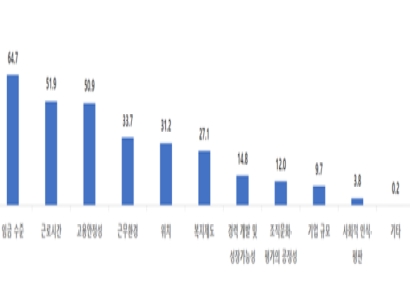 "Please Pay Me at Least 3 Million Won a Month": More Than Half of Young People Today Prioritize "Working Conditions" Over Company Size
- Selling Like Crazy Every Year... 30-Year-Old Hetbahn Takes on a New Challenge: Tastes Better Than "Mom's Home Cooking" [On-Site Report]
- "Americans Would Be Amazed If They Came": Wide-Eyed at a Sight They've Never Seen Before... Foreigners Also Fall for K-Baseball [K-Holic]
- "Hey, Lady, Teach Your Kids to Behave!" ... 300,000 Won in Cash and a Bodily Injury Claim Demanded Over Child's Door Ding
- Beachgoer Finds 'Plastic' That Turns Out to Be Perfume Ingredient Worth More Than Twice as Much as Gold
The National Gwangju Museum stated, "With the publication of this letter collection, we now provide concrete materials that shed light on Choi Eui Seonsa’s relationships, philosophy, and cultural activities," and added, "Based on these research results, we plan to publicly exhibit the donated items in the future." The translation collection can be found under the research and report section of the National Gwangju Museum's official website.
© The Asia Business Daily. All rights reserved. Unauthorized AI training and use prohibited.