[Changing Landscape of Overseas Construction⑧] "No Specialized Workforce...Need to Foster Versatile Talent with International Permitting and Networking Skills"
"Investment and Development Projects Must Create Value from Nothing"
Louisiana FLNG Project Conceived 12 Years Ago
Comprehensive Understanding Needed: Construction, Financial Engineering, and Local Culture
Persistence Needed: Enduring
There is a general consensus that the overseas construction market needs to shift its structure toward investment and development projects. However, there are still many practical challenges to resolve. Industry insiders point out that there is an urgent need to cultivate talent specializing in development projects.
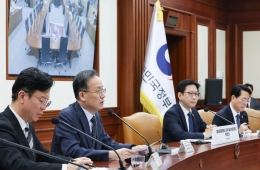
According to industry sources on September 11, the recent 4 trillion won floating liquefied natural gas (FLNG) offshore plant project, which was secured by our government, companies, and public institutions working together as a "one team," is seen as a case that demonstrates how investment and development projects require a long-term perspective. This project, which involves processing LNG at an offshore plant near the coast of Louisiana, United States, and exporting it, is an investment and development initiative in which the Ministry of Land, Infrastructure and Transport; Ministry of Climate, Energy and Environment; Ministry of Oceans and Fisheries; public institutions; and companies formed "Team Korea" to participate.

Conceptual diagram of the Louisiana FLNG project by the U.S. energy company Delfin. Delfin website
View original imageDecades from Conception to Results: The Importance of a Long-Term Perspective
The developer responsible for implementing the project at Delfin, the U.S. energy company, reportedly first came up with the initial idea for the project 12 years ago. Considering that actual LNG production is expected to start around 2030 after the construction of the facility, it will take nearly 20 years from conception to actual results. It took over a decade to attract investors for the first phase, while the recruitment of investors for the second FLNG unit was reportedly completed in about half a year. Although the project nearly collapsed while securing the first facility, evaluations from stakeholders changed as soon as the project got on track. This was thanks to anticipating long-term demand and securing specialized personnel in advance.
However, there is a shortage of qualified professionals in this field domestically. The organizational and personnel structure of major construction companies is typically divided strictly by function or stage of the project. While construction company staff are accustomed to reviewing blueprints or specifications required for construction work, they lack experience in financial engineering for raising funds or building networks to match end users. Conversely, financial institutions participating as investors are adept at identifying risk factors to make investment decisions but lack understanding of the entire construction process.
Furthermore, flexibility in handling contracts that frequently change, as well as a high level of understanding of legal systems, languages, and cultures specific to each country, are cited as essential qualities for investment and development professionals. Kang Hyunkyoo, attorney at Yulchon LLC, said, "Investment and development projects require the creation of something from nothing, so it is critical to flexibly respond and adapt to constantly changing circumstances during the preparation phase," adding that "it is difficult to achieve this with the segmented organizational and personnel structure typical of domestic large-scale construction companies."

Government Recognizes Need for Talent: University Department Established
The government has also begun to shift its focus from financial support and consulting to nurturing specialized talent. Anticipating that the investment and development market will expand, especially in advanced economies, the government decided to support the creation of specialized university departments. The goal is to foster talent with a broad range of capabilities, including infrastructure engineering, theory and policy related to investment and development, understanding of market dynamics, practical business experience, and the ability to manage global projects. According to recent applications, a university in Seoul is known to have applied, aiming to launch a three-semester master’s program in the second half of next year.
An official from the Ministry of Land, Infrastructure and Transport stated, "In the case of investment and development projects for large-scale infrastructure, it is necessary to lead the project even in its early stages when there may not be a clear business model, and later to overcome numerous hurdles such as permits and approvals, as well as securing consent from local residents. Therefore, fostering multidisciplinary talent with broad perspectives and networks is essential."
Need to Accumulate Overseas Investment and Development Experience
Perspectives on investment and development projects vary. Some view it as a speculative field attracting opportunists hoping to profit without real substance, similar to the legendary fraudster Kim Seondal. Others see it as a highly complex, high-risk, and high-reward field that leverages vision or ideas to build a business from scratch.
Attorney Kang stated, "While domestic construction companies were competitive in the 1970s and 1980s in the Middle East and Southeast Asia through contract-based projects, rising labor costs have made them less competitive than latecomers from China or Turkey. Therefore, it is time to transition to investment and development projects where companies either originate projects themselves or participate in equity by linking with external financial assets."

A panoramic view of the Roy Hill mine in Western Australia. Samsung C&T’s first investment and development project in Australia suffered significant losses. However, the company has since participated in various investment and development projects locally. Courtesy of POSCO
View original imageInvestment and development projects are an unfamiliar model for domestic large construction companies that place a high priority on risk management. In conventional contract-based projects and even in EPC (Engineering, Procurement, and Construction) contracts, risks are clearly divided among participants such as clients and contractors and remain within predictable limits. By contrast, investment and development projects begin with uncertainty about whether the project will materialize, requiring much to be considered from the planning stage and incurring significant upfront costs before formal construction even starts. It is difficult to predict when or how risk will emerge during preparation.
Hot Picks Today
 "Even so, it's a hospital—is this really okay?" ... Japan in uproar over 37,000-won "fast pass"
- "It's Never Too Late in Life": 50-Year-Old Grade 9 Civil Servant Shares His First-Day-at-Work Experience
- [Earnings Call] SK hynix's Kwak Nojung: "Fundamental Shift in Business Environment"... "DRAM and HBM Sold Out Through 2029" (Update)
- "A Jolt for the Leering Gaze That Sizes Up Women?"... British Researchers' Clever Experiment
- "I Have 9 Billion Won, but I Still Can't Quit"... The Unexpected Worry of a Major-Company Employee in His 40s Who Hit It Big with Investments
This is why there are growing calls to nurture construction startups (contech) that have specialized knowledge in particular areas. Since expertise needs to be accumulated by participating in various projects in key markets, even when chances of success are low, it is important to raise the capabilities not only of major construction companies but also of small-scale enterprises. An industry insider commented, "There is a tendency for the government and public institutions to adopt a conservative approach, but even if projects fall through and there are initial losses, it is important to keep participating and building a reputation."
© The Asia Business Daily. All rights reserved. Unauthorized AI training and use prohibited.