Louis Vuitton Faces Ongoing Backlash Over Tea Logo Lawsuit, China Sales Drop
Louis Vuitton is facing a boycott from Chinese consumers. Although it won a trademark lawsuit against the popular Chinese tea brand Molly Tea, the controversy over traditional patterns has stirred up patriotic sentiment. As Chinese consumer backlash continues, local sales have declined.
According to Bloomberg on September 10 (local time), the trademark dispute with the local tea brand has triggered patriotic backlash, further exacerbating lackluster sales for Louis Vuitton, which is LVMH's largest revenue generator.

In July, the court ruled that Molly Tea’s four-leaf flower logo was excessively similar to the Louis Vuitton monogram. However, backlash against Louis Vuitton grew across Chinese social media. Some Chinese consumers defended Molly Tea, arguing that its logo resembled the ‘baoxianghua’ pattern, a traditional design from the Tang Dynasty. Online critics argued that it was excessive for a large luxury brand like Louis Vuitton to file a lawsuit against a small local tea company that isn’t even a direct competitor.
This worsening public sentiment has had a direct impact on Louis Vuitton sales. JL Warren Capital estimated that Louis Vuitton’s sales in China dropped by approximately 30% in July and declined a further 20–25% in August. While the rate of decline has moderated somewhat, a double-digit decrease has persisted. CEO Li Junheng explained that the lawsuit, by sparking a debate over the ownership of traditional cultural elements, had a significant negative impact on Louis Vuitton’s performance.
Other luxury brands have also been hurt by China’s economic slowdown, but their performance was relatively better compared to Louis Vuitton. JL Warren estimated that Gucci’s sales in China fell by about 20% in July and 10% in August, while Hermès’ sales dropped by approximately 5% and 13%, respectively.
Experts pointed out that in China, a legal victory does not always align with public sentiment. Patriotic sentiment in China has previously affected Western brands such as Nike, Adidas, and H&M, and Dolce & Gabbana likewise experienced a prolonged boycott after an advertising controversy back in 2018.
Robert Wu, CEO of Shanghai-based market research firm Baiguan, said, “For foreign brands, the Chinese market is a complex environment filled with conflicting interests. Even with a court victory or government approval, the court of public opinion is powerful, and it can move independently of any official stance.”
However, Chinese consumer backlash seems to be easing somewhat recently. Although Louis Vuitton’s sales in China are still declining, the rate of decline is expected to narrow. JL Warren projected a 13% drop in Louis Vuitton’s China sales this month, an improvement compared to an estimated 30% drop in July and 20–25% in August.
HSBC also expects the impact of the controversy to be short-term. Analysts at HSBC Holdings, led by Anne-Laure Bismuth, downgraded their recommendation on LVMH to ‘hold’ this week, stating, “We believe the effects of negative social media sentiment will be short-lived.” However, they added, “While temporary, it is highly likely that Louis Vuitton’s sales in China were negatively impacted during the third quarter of 2026.”
China has long been a key market for the luxury goods industry. As incomes have risen, Chinese consumers have eagerly purchased global luxury brands like Louis Vuitton, Hermès, and Gucci. However, amid the recent economic slowdown and the consumer backlash over the Molly Tea lawsuit, Bloomberg predicted that a quick rebound in Louis Vuitton’s China sales would not be easy. UBS estimates that Chinese consumers account for about 30% of LVMH’s total revenue.
Hot Picks Today
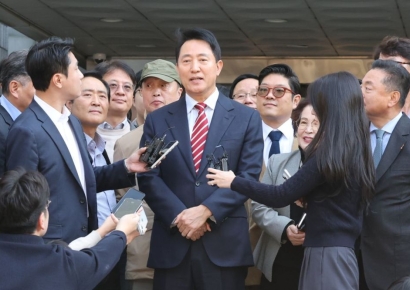 Tearful Oh Sehoon Acquitted on Appeal: "Thanks to Those Who Believed in My Innocence" (Update)
- "The Transfer Failed, but 'Ding-Dong,' Money Came In"... KRW 32.5 Billion Financial Incident at Toss Bank
- "People with money have already moved," they say... 1,700-ton underground vault full as the wealthy flock to this country
- "Matcha Has Run Out": Why Japan Can't Celebrate Its Global Popularity
- 'Hangover Legend' Returns After 11 Years... Lee Sunmin Hyung's 'Captain Q' Sells Out
Meanwhile, Molly Tea plans to appeal the court ruling ordering it to pay Louis Vuitton 10.3 million yuan in damages.
© The Asia Business Daily. All rights reserved. Unauthorized AI training and use prohibited.