"Don't Use Chinese-Made Products": One U.S. Warning Triggers a 5 Trillion Won Jackpot for Korean Batteries [Weekend Money]
Possibility of Restrictions on Adoption of CATL Technology in U.S. Rises
“Korean Battery Companies Expected to Benefit”
Securities analysts have stated that Korean companies are expected to benefit as a result of potential U.S. sanctions against Chinese battery manufacturer CATL. Among them, LG Energy Solution, Samsung SDI, and L&F—companies with lithium iron phosphate (LFP) energy storage system (ESS) supply pipelines—are viewed as having strong prospects for growth.
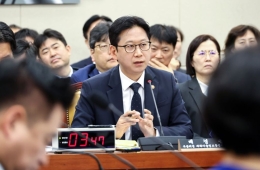
On September 8 local time, U.S. Secretary of Transportation Sean Duffy sent a warning letter to Ford, an American automaker strengthening its partnership with China's CATL. According to a Wall Street Journal report, Secretary Duffy pointed out in his letter to Ford CEO Jim Farley that cooperating with Chinese companies constitutes “reliance on the technology of foreign adversaries.”
!["Don't Use Chinese-Made Products": One U.S. Warning Triggers a 5 Trillion Won Jackpot for Korean Batteries [Weekend Money]](http://www.asiae.co.kr/news/img_view.htm?img=2025121709393659037_1765931975.jpg)
In response, Daol Investment & Securities raised its target prices for three companies included in the U.S.-bound LFP value chain, which are expected to benefit from Secretary Duffy’s comments. The target price for LG Energy Solution was increased from 5.5 million won to 6.2 million won, for Samsung SDI from 8.2 million won to 9 million won, and for L&F from 2 million won to 2.2 million won. Yoo Ueng, a researcher at Daol Investment & Securities, explained, “Each previous valuation multiple was raised by 7–10 percent, reflecting the potential rise in the asset value of currently supplied or operating assets.”
The contents of the letter point to a high likelihood that Ford’s use of CATL technology could be fundamentally blocked. “Ford has pursued a strategy of indirectly importing only CATL’s technology to secure LFP battery manufacturing know-how. However, following the usage restrictions, Korean cell and material companies are now expected to emerge as the sole viable alternative for LFP supply,” Yoo stated.
He added, “The combined production capacity at Ford’s major production hubs and factories is about 30GWh. If reliance on Korean-made materials increases, potential asset value could be estimated at approximately 5 trillion won. This is expected to serve as a factor in expanding the valuation premium for domestic cell and LFP cathode material suppliers.”
The analyst also raised the possibility that, following these statements, the market may shift from a single-company-centered supply structure to a more diversified one. “Domestic companies began supplying the procurement system for cathode materials used in LFP batteries starting from the third quarter of this year,” Yoo said. “Previously, the market was heavily weighted toward Tesla Energy as the sole client, but considering the latest comments, there is now a premium for the market’s growth potential.”
Hot Picks Today
 "Wow, Have Middle-Aged Men Had This All to Themselves?"... Women in Their 20s and 30s Find Comfort in a Standing Drink
- "A Cream Costing 15,000 Won to Make Sells for 350,000 Won"... The 'Break-Even Point' That Fits Strangely Well
- [Weather] "10 Degrees Colder Than Yesterday"... Below-Freezing Morning Commute; Cold Wave Advisories in Effect Nationwide
- "Naked Again?" Controversial Actress Crosses a Line... Slammed for Sexualizing 'Child Characters'
- "Koreans Spend 1 Million Won Each and Come Back"... 'They Said They Were Going for Value for Money,' but Open Their Wallets Wide in Japan
He further interpreted that the content of the letter could apply not only to Ford but also to other related companies. “The aim of these comments appears to be to block any attempt to circumvent the current PFE regulation under OBBBA,” Yoo stated. “Because this affects not only Ford, but also automakers and ESS manufacturers such as GM and Rivian, the strategic importance of Korean battery companies—which are currently the only ones able to manufacture and supply LFP cells in the United States—may increase,” he added.
© The Asia Business Daily. All rights reserved. Unauthorized AI training and use prohibited.