Bank of Korea to Restructure FISL Focusing on Regional SMEs, Phased Rollout from Next Year
Bank of Korea Releases September Monetary and Credit Policy Report
The Bank of Korea will restructure its Financial Intermediary Support Loan (FISL) program to strengthen support for small and medium-sized enterprises (SMEs) outside the greater Seoul area, with a phased implementation starting next year.
On September 10, the Bank of Korea announced this plan in its Monetary and Credit Policy Report.

The FISL program is a system in which the central bank provides funds to financial institutions at low interest rates in proportion to their actual loans to SMEs and others that meet the Bank of Korea's criteria. Currently, the total limit for the program is KRW 30 trillion, with a loan interest rate of 1.25% per annum.
The objective of operating the FISL is to encourage financial institutions to expand loans to SMEs, thereby improving their funding conditions, and to supplement the policy effect of the base interest rate through the credit channel. Ultimately, this helps achieve the monetary policy objectives of price and financial stability. Since SME loans are more sensitive to economic conditions than large corporate loans—due to a high reliance on bank lending, low financial accessibility, a vulnerable funding structure, and the risk aversion of financial institutions—the impact of interest rate policy may not be transmitted sufficiently. The FISL thus serves as a supplementary measure to address these issues.
The Bank of Korea evaluated that the FISL has contributed to improving financial access for SMEs and thereby mitigating economic volatility. Notably, during the COVID-19 pandemic, the FISL limit was significantly expanded, supporting credit supply to SMEs and alleviating the sharp economic contraction.
However, concerns have been raised about diminished effectiveness because the existing program selectively supports specific sectors, with support remaining fixed for extended periods—restricting flexibility to adjust limits and support targets according to changes in the economic environment. There is also an increasing need to strengthen the FISL's role in complementing the base interest rate, prompting a sweeping overhaul by the central bank.
This restructured FISL is focused on strengthening its role as a monetary policy tool and enhancing support for regional SMEs facing financial accessibility constraints.
The quasi-fiscal "Trade Finance Support" and "Innovation & Job Creation Support" programs, which have operated in a fixed way for a long time, will be discontinued, while support for regional SMEs will be expanded. A new "SME Credit-Linked Support" program will be introduced to flexibly adjust limits and interest rates for SMEs—including all sectors—according to economic changes.
In the second half of this year, the program will maintain the existing limit of KRW 30 trillion, but from next year, the funds from expiring programs will be redirected to expand the "Regional SME Support" program. According to the Bank of Korea and the Ministry of Data and Statistics, the allocation for regional SME support as a percentage of local gross regional domestic product (GRDP) decreased from 0.46% in 2014 to 0.29% last year.
Hot Picks Today
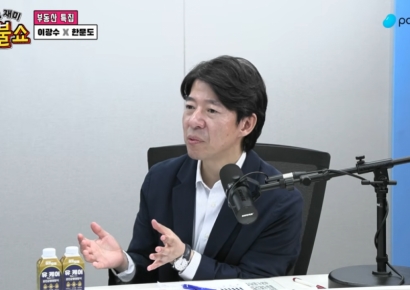 "If Home Prices Continue Rising Like This... I Will Stop Commenting" Even the Real Estate Expert Personally Tapped by President Lee Has Turned Critical
- "Travel Abroad with Zero Accommodation Cost"... The Secret Method Savvy Travelers Are Using
- U.S. Triples Long-Term Treasury Buybacks, but Yields Rise Instead (Comprehensive)
- A Warm Cup of Coffee in Chilly Weather... Drinking It Very Hot Raises Esophageal Cancer Risk Threefold
- "Still Mocked as 'Mistress'... Tears of Injustice" Attorney's Post After Kim Keon-hee's Tearful Statement
The Bank of Korea stated, "We have strengthened support for regional SMEs whose financial access is relatively limited and whose funding conditions are more vulnerable to economic changes than those in the greater Seoul area. The restructuring will be implemented in stages, carefully considering not only consistency with interest rate policy but also consultation with financial institutions and infrastructure development."
© The Asia Business Daily. All rights reserved. Unauthorized AI training and use prohibited.