Seoul City Bus Strike on the 16th Becomes Likely... Union Proposes 10.32% Wage Increase, Labor Union Rejects
Union Demands Application of 176 Hours for Ordinary Wage and 7.85% Hourly Wage Increase
Management Proposes 10.32% Increase Based on 209 Hours
With No Common Ground, Possibility of Strike on the 16th Grows
As the Seoul city bus union has announced a strike for the 16th, the likelihood of a walkout is increasing due to the failure of labor and management to find common ground in the wage negotiations.

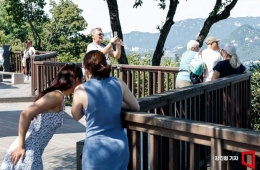
On the 14th, the second day of the Seoul city bus strike, the Seoul Station subway platform was crowded with passengers. 2026.01.14 Photo by Dongjoo Yoon
View original imageAccording to the Seoul Bus Transportation Business Association on the 10th, during the 9th round of wage negotiations on the 28th of last month, the association proposed a 10.32% wage increase through a wage system reform plan that calculates the base wage using 209 hours as the standard working hours.
However, the Seoul City Bus Union is insisting that the base wage be calculated based on 176 hours and that unpaid wages be paid retroactively. In a briefing the previous day, the union stated, "The issue is simply whether the back pay, already confirmed by a Supreme Court decision, will be paid or not."
Previously, in April, the Supreme Court recognized regular bonuses as part of the base wage and set the calculation standard at 176 hours per month in a lawsuit filed by bus drivers of Donga Transportation against management. The union asserts that this ruling should be applied to all Seoul city buses.
In contrast, management argues that because the Donga Transportation case was remanded by the Supreme Court and is currently under retrial at the Seoul High Court, they are unable to make any payments at this time.
Management claims that if all union demands were to be met, the additional annual cost would amount to 539.4 billion won. This figure reflects 117.5 billion won annually for the 7.85% hourly wage increase demanded by the union, as well as 277.6 billion won in costs stemming from applying the 176-hour standard for base wage calculation. Furthermore, management estimates that retroactive pay for six years (2020–2025) using the 176-hour base wage calculation would total 1.0214 trillion won.

On the 14th, the second day of the Seoul city bus strike, citizens are using taxis at the Seoul Station taxi stand. Photo by Dongju Yoon, January 14, 2026.
View original imageIf the union goes ahead as planned, this will be the second Seoul city bus strike of the year. The union previously staged a two-day walkout on January 13–14 due to the breakdown of collective wage agreement negotiations for 2025.
In Seoul, over 7,000 city buses operate daily, with an average of more than 3.79 million passengers per day.
Hot Picks Today
![[Exclusive] "My paycheck fell short, and I couldn't get a card loan either" More people in their 40s and 50s turn to 'cash advances'; "debt-investing woes" put long-term delinquency among those in their 20s and 30s on red alert](https://cwcontent.asiae.co.kr/asiaresize/93/2026102011173167293_1792462652.jpg) [Exclusive] "My paycheck fell short, and I couldn't get a card loan either" More people in their 40s and 50s turn to 'cash advances'; "debt-investing woes" put long-term delinquency among those in their 20s and 30s on red alert
[Exclusive] "My paycheck fell short, and I couldn't get a card loan either" More people in their 40s and 50s turn to 'cash advances'; "debt-investing woes" put long-term delinquency among those in their 20s and 30s on red alert
- “I Thought It Was Just Inflammation”: 70 Men Have Died of Breast Cancer in This Country in 5 Years
- Free Three Meals, Botox with a 1.69 Million Won Allowance... Japanese Firms Boost Benefits Instead of Wages
- "Come Live With Me on My Farm": Man Sells Everything and Travels 1,930 km, Trusting a Beautiful Woman
- "Korean Beef for Dinner Tonight" - Drawn in by Half-Price Deals, but... "What Else Is There to Buy?" at 'Empty' Homeplus
The Seoul Bus Transportation Business Association is working with the Seoul Metropolitan Government to arrange alternative transportation for the strike scheduled for the 16th, and plans to ensure that drivers who wish to continue normal operations are not hindered by union interference. If the union attempts to obstruct the normal operations of non-participating bus drivers, the association intends to cooperate with the police and the city government to take legal action.
© The Asia Business Daily. All rights reserved. Unauthorized AI training and use prohibited.