Tracking Global Mangrove Changes from Space: TelePIX Uses Google AI for Worldwide Monitoring
Selected as One of 16 Out of 680 APAC Applicants, Only Korean Company Chosen
Over 90% Detection Accuracy in Untested Countries Using 'AlphaEarth'
South Korean space company TelePIX is set to develop technology that leverages Google DeepMind's artificial intelligence (AI) to monitor and track the destruction and changes in mangrove forests worldwide via satellite.
On September 10, TelePIX announced that it was the only Korean company selected for the inaugural cohort of Google DeepMind’s Asia-Pacific (APAC) accelerator program “AI for the Planet.” Sixteen companies and institutions were chosen from approximately 680 APAC-based applicants, with TelePIX recognized in the field of “Nature Conservation and Climate Resilience Enhancement.”

Telepix executives and employees who participated in the bootcamp held in Singapore from September 7 to 10, selected as the inaugural cohort of the Google DeepMind Accelerator. From the left, Youngje Park, Head of Future Innovation Technology Research Center; Darong Kwon, Chief Data Scientist (CDS); and Sangchul Shim, Senior Researcher. Courtesy of Telepix.
View original imageThe project TelePIX is pursuing is called “Global Mangrove Monitoring” and aims to track the distribution and changes of mangroves globally using satellite data and AI. Mangroves serve as major reservoirs of “blue carbon” that marine and coastal ecosystems absorb and store, and also play a crucial role in reducing coastal erosion and mitigating damage from storm surges.
The company explained that currently available global mangrove maps are typically updated annually, making it difficult to quickly detect changes caused by illegal logging, conversion to aquaculture, or coastal development. TelePIX has established a system in which AI automatically analyzes mangrove changes each time new satellite images are collected.
Over 90% Accuracy in Untested Countries… Enhanced Performance Through ‘AlphaEarth’
The core of the project is Google DeepMind’s geospatial AI model “AlphaEarth Foundations.” By combining geospatial information provided by AlphaEarth with optical satellite images taken at specific points in time, the system ensures consistent mangrove detection even when observation conditions vary due to tides, water turbidity, haze, or seasons.
Verification conducted using TelePIX’s own data showed that even in countries not included in training, both the Intersection over Union (IoU) and F1 scores indicating mangrove detection performance surpassed 90%. The validation process utilized 1,300 satellite images from five regions.
Generative AI will also be integrated into the platform. By utilizing Google’s Gemini, TelePIX plans to automatically generate natural language reports on mangrove detection and change analysis results, as well as develop features that allow users to ask questions about the analysis results using natural language. This is to ensure that government officials and environmental agency managers, even those without expertise in satellite imagery or geographic information systems (GIS), can easily utilize the analysis outputs.
TelePIX will receive about three months of technical mentoring from Google researchers until December, during which it will validate a system on Google Cloud for real-time, country-level mangrove detection. The company also intends to conduct demonstration projects with public agencies and environmental conservation organizations in Southeast Asia, directly targeting real coastal areas.
Hot Picks Today
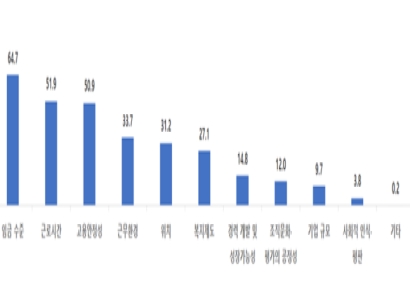 "Please Pay Me at Least 3 Million Won a Month": More Than Half of Young People Today Prioritize "Working Conditions" Over Company Size
- Selling Like Crazy Every Year... 30-Year-Old Hetbahn Takes on a New Challenge: Tastes Better Than "Mom's Home Cooking" [On-Site Report]
- Ran 18 km With 9-Year-Old Tied to Him at the Waist... "Man Banned From Competing for 3 Years"
- "Hey, Lady, Teach Your Kids to Behave!" ... 300,000 Won in Cash and a Bodily Injury Claim Demanded Over Child's Door Ding
- Beachgoer Finds 'Plastic' That Turns Out to Be Perfume Ingredient Worth More Than Twice as Much as Gold
Youngje Park, Director of the Future Innovation Technology Research Institute at TelePIX, stated, “With accurate and continuous monitoring, mangroves can be harnessed in climate policy and carbon markets. We will work with Google researchers to validate this technology in real-world settings and complete a monitoring system that enables officials to utilize the analytical results immediately.”
© The Asia Business Daily. All rights reserved. Unauthorized AI training and use prohibited.





![[Market ING] KOSPI Seeks Rebound in Superweek Packed with Corporate Earnings and FOMC](https://cwcontent.asiae.co.kr/asiaresize/307/2026102514484873155_1792907327.jpg)