Regional R&D Once Set by the Central Government, Now Locally Designed... 78.9 Billion Won Invested in 7 Zones
"Four Zones, Three Special Regions" Regional Autonomous R&D Initiative Launched
Eighteen Priority Technologies Selected
National Science Institutes and Research Organizations Lead Projects
From Planning to Proof-of-Concept and Commercialization
The era of "regional autonomous R&D" is set to begin, shifting away from the central government designating and distributing research and development (R&D) projects to individual regions. Now, each region will be able to design and implement its own R&D investments in line with its growth strategies and technological demands. This year, a total of 7.89 billion won will be invested in seven regions nationwide to foster strategic regional technologies such as semiconductors, advanced biotechnology, artificial intelligence (AI), robotics, and energy.
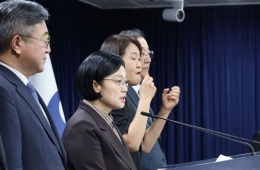
The Ministry of Science and ICT announced on September 10 that it will officially launch the "Four Zones, Three Special Regions Regional Autonomous R&D Initiative" at the Korea Advanced Institute of Science and Technology (KAIST), marking the full commencement of this year’s project. The four major zones (Four Zones) are the Central Zone (Daejeon, Sejong, North Chungcheong, South Chungcheong), Honam Zone (Gwangju, South Jeolla), Daegyeong Zone (Daegu, North Gyeongsang), and Southeastern Zone (Busan, Ulsan, South Gyeongsang), while the three special regions are Gangwon, North Jeolla, and Jeju Special Autonomous Province.

Priority Technology Areas and Development Models by Region for the 3rd Industrial Revolution Sector. Provided by the Ministry of Science and ICT
View original imageThe core change lies in how R&D investment is structured. Previously, regional R&D was centered around individual tasks planned by the central government. Under this new program, each zone identifies its own key technologies and research projects by analyzing its industrial and scientific capabilities and business needs. Each of the Four Zones has selected three priority technology fields, while each of the Three Special Regions has selected two, totaling eighteen priority technology sectors. The Ministry of Science and ICT aims to establish region-specific, science and technology-based growth models by 2030 and expand funding beyond next year.
National institutes of science and government-funded research organizations will also serve as hubs for local R&D efforts. KAIST will lead the Central Zone, the Gwangju Institute of Science and Technology (GIST) will head the Honam Zone, the Daegu Gyeongbuk Institute of Science and Technology (DGIST) will oversee the Daegyeong Zone, and the Ulsan National Institute of Science and Technology (UNIST) will be responsible for the Southeastern Zone. For the special regions, the Gangneung branch and Jeonbuk branch of the Korea Institute of Science and Technology (KIST) will oversee Gangwon and North Jeolla, respectively, while the Jeju Technology Commercialization Headquarters of the Korea Institute of Industrial Technology will manage Jeju.
789 Billion Won Invested in Semiconductors, AI, and Robotics—Focusing on Regional Strengths
By region, the Central Zone will invest 13.1 billion won in semiconductors, advanced biotechnology, and advanced mobility, connecting Daejeon’s source technologies, Sejong’s policy and demonstration capacities, and the manufacturing strengths of North and South Chungcheong. The Honam Zone will allocate 13.1 billion won for semiconductors, energy, and mobility, while the Daegyeong Zone will invest 13.1 billion won to create a "robot belt" connecting mobility, robotics, and system semiconductors.
The Southeastern Zone will put 13.1 billion won into shipbuilding AX (AI transformation), power semiconductors, and cutting-edge aviation propulsion technology. Gangwon will invest 8.8 billion won in functional bio-materials and ceramic materials; North Jeolla will direct 8.8 billion won into composite materials and special-purpose machinery, microbe-based food, and health tech; and Jeju will invest 8.8 billion won in distributed energy and agricultural, livestock, and marine bio-sectors.
In particular, the new approach brings together research facilities, universities, companies, and talent—previously spread across individual cities and provinces—at the regional level, enabling the pursuit of large-scale, convergent R&D projects that would have been difficult for local governments to handle alone. The national science institutes and government-funded research organizations will link core technologies and research facilities with local businesses and universities, overseeing everything from project planning and management to proof-of-concept and commercialization.
Hot Picks Today
 "Why Owners Spend Hundreds of Thousands to Replace Working Air Conditioner Refrigerant with the Old Type"
- "If Home Prices Continue Rising Like This... I Will Stop Commenting" Even the Real Estate Expert Personally Tapped by President Lee Has Turned Critical
- "Why Do My Nails Look Like This?"...Doctor Highlights Signs of Heart Abnormalities
- [Breaking] Yong Hyein: "Difficult to Judge Dual Employment Controversy by Precedent"
- "Still Mocked as 'Mistress'... Tears of Injustice" Attorney's Post After Kim Keon-hee's Tearful Statement
Gu Hyuk-chae, the First Vice Minister of the Ministry of Science and ICT, stated, "This project is the first to be carried out as regionally autonomous R&D at the zone level. We will support the initiative so that research results drive business growth and good jobs, forming a virtuous cycle where new talent and investment further stimulate R&D rooted in the region."
© The Asia Business Daily. All rights reserved. Unauthorized AI training and use prohibited.