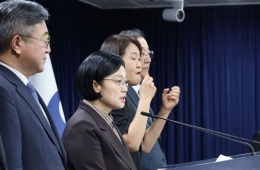
Kim Jonghwa Says Middle East Tensions and Semiconductor Spillover Will Determine Timing and Pace of Further Rate Hikes
Possible Renewed Cost Pressures from Military Tensions in the Middle East
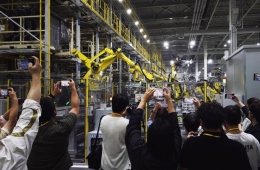
The Key Issue: To What Extent Semiconductor Export Boom Will Affect Domestic Demand and Demand-Side Inflationary Pressure
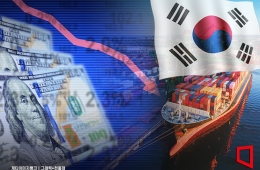
Risks Remain: Housing Prices, Household Debt, and Potential Resurgence of Exchange Rate Volatility
"Since robust growth and price increases exceeding the target level are expected to persist for a considerable period, it is necessary to determine the timing and pace of any further rate hikes while closely monitoring changes in both domestic and external conditions."

On September 10, Kim Jonghwa, Monetary Policy Committee Member at the Bank of Korea, made these remarks regarding future base rate policy while overseeing the preparation of the Monetary Policy Report (September 2026).
From the perspective of the real economy, he emphasized that the most crucial factors to consider are whether the recent resurgence of military tensions in the Middle East will again drive up cost pressures, and to what extent and at what pace the export boom led by the semiconductor sector will spread to domestic demand and demand-side inflationary pressure. In terms of financial stability, he pointed out that continued attention needs to be paid to risks in the Seoul metropolitan housing market and household debt, as well as the possible resurgence of exchange rate volatility stemming from shifts in the U.S. Federal Reserve's monetary policy stance.
Kim stated, "Due to the impacts of the Middle East war and the upturn in the semiconductor cycle, both inflation and growth exceeded expectations, and risks from a financial stability perspective persisted as well. Therefore, we preemptively raised the base rate in two consecutive moves in July and August." He added, "It will also be important to closely monitor the effects of these two recent rate hikes." Given that the burden on some vulnerable sectors is expected to increase in this process, he assessed that a policy mix utilizing macroeconomic policies would be required in response.
He further explained, "As policy conditions at home and abroad are changing rapidly, ongoing efforts are needed to enhance the effectiveness of monetary policy. We should continue to assess the effectiveness of the six-month-ahead conditional rate forecast introduced by the Monetary Policy Committee last February and seek communication strategies that are best suited to Korea’s circumstances."
Hot Picks Today
 "Why Owners Spend Hundreds of Thousands to Replace Working Air Conditioner Refrigerant with the Old Type"
- "If Home Prices Continue Rising Like This... I Will Stop Commenting" Even the Real Estate Expert Personally Tapped by President Lee Has Turned Critical
- 'Divorce of the Century': Kwon Hyuk-bin Ordered to Divide 2.55 Trillion Won in Assets... Ex-wife Responds
- [Aftermath of Restructuring] Obstacles to Public Institution Reform Arise Across Gas, Ports, and Finance
- "Still Mocked as 'Mistress'... Tears of Injustice" Attorney's Post After Kim Keon-hee's Tearful Statement
Kim added that, as population structure shifts and artificial intelligence (AI) technological transformation are underway, there is a growing need to examine how these changes will affect the environment for medium- to long-term policy implementation, including potential growth and the neutral interest rate. He concluded, "It is also necessary to continue research and policy proposals aimed at enhancing growth potential through reforms in the economic structure over the long term."
© The Asia Business Daily. All rights reserved. Unauthorized AI training and use prohibited.