Who Will Lead Sh Suhyup Bank's Holding Company Transition? 'Suhyup Man' Shin Hakgi vs. 'Bureaucrat' Lee Hyungjoo Face Off
Shin Hakgi Seeks Reappointment Backed by Non-Banking M&A and Growth in Performance
Lee Hyungjoo Leverages Financial Policy Expertise with a Strong Edge in Regulator Relations During Transition
Committee Vote as Deciding Factor: Three Government
The race for the next president of Sh Suhyup Bank, which is in the process of transitioning into a financial holding company, has officially begun. The competition has effectively narrowed to two candidates: the incumbent President, Shin Hakgi, who is an internal candidate, and Lee Hyungjoo, Director of the Financial Intelligence Unit (FIU) and a high-ranking official at the Financial Services Commission. Observers expect that the most suitable person to ensure a stable conversion to a holding company will be appointed as the next president.

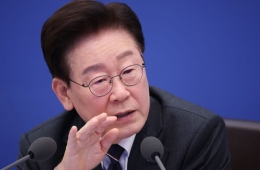
From the left, Shin Hakgi, President of Sh Suhyup Bank, and Lee Hyungjoo, Director of the Financial Intelligence Unit (FIU).
View original imageAccording to the financial sector on September 10, the Sh Suhyup Bank President Candidate Recommendation Committee (also known as the Nomination Committee) selected all six applicants for the next president position as interviewees the previous day. The Nomination Committee plans to conduct interviews on September 21 and announce the final candidate on September 22.
Internal candidates include the incumbent President Shin, as well as former Deputy Presidents Park Yangsoo and Jung Cheolkyun. External candidates are Director Lee, Kang Chulseung, head of the Korea Fisheries Policy Forum, and Lee Hyungseung, outside director at BNK Securities. Among these, the race has already solidified into a head-to-head competition between President Shin and Director Lee.
Sh Suhyup Bank aims to transition to a financial holding company structure by 2030, and is expanding its non-banking affiliates to achieve this goal. Accordingly, the next president’s main task will be how specifically and swiftly they can advance this transition to a holding company system over the next two years.
President Shin's strength lies in the continuity of the holding company transition and his previous achievements. Since taking office in November 2024, he has accelerated M&A efforts by launching new businesses and diversifying the bank’s portfolio. Last September, the bank acquired Trinity Asset Management to establish Sh Suhyup Asset Management. Last month, it secured a 14.95% stake in Infinite Block, a digital asset custody company, becoming the joint second-largest shareholder. Recently, the bank signed a memorandum of understanding (MOU) for the potential acquisition of Sangsangin Securities and is currently conducting due diligence, while also considering the acquisition of Dutch-based capital company DLL (De Lage Landen). The bank's business performance and scale have continued to grow. In the first half of this year, pre-tax net income reached 203.4 billion won, a 3.6% increase from the same period last year, while total assets increased by 6.7 trillion won from the end of last year to a record 70 trillion won.
Director Lee’s strength is his expertise in financial policy as an incumbent senior official. For Sh Suhyup Bank to push ahead with future M&As, such as the acquisition of Sangsangin Securities and the transition to a financial holding company, it will have to undergo various screenings and approval processes by financial authorities, including the review of eligibility for major shareholders. In this process, Director Lee's deep understanding of financial policy and supervisory frameworks, as well as his ability to communicate with regulators, is expected to be a strong advantage.
Director Lee has long been recognized as a leading financial policy expert with outstanding work capabilities and experience, even being mentioned as a possible future minister or vice minister-level appointee both inside and outside the Financial Services Commission. With the competitive gap between Sh Suhyup Bank and major commercial banks still significant, there are expectations that Director Lee’s policy expertise and external perspective could drive change in both the organization and business.
The final stage is the Nomination Committee vote. The committee consists of five members: three recommended by the Ministry of Economy and Finance, the Financial Services Commission, and the Ministry of Oceans and Fisheries, and two appointed by the Central Cooperative. More than four votes are required to appoint the next president, so support from only the government or only the Suhyup side will not be enough to secure the position.
One of the variables in the appointment process is that President Shin was appointed during the Yoon Suk Yeol administration, while opposition within the organization may arise if a bureaucrat is installed as president following the repayment of public funds in 2022.
Hot Picks Today
![[Exclusive] "Forecasts of Over 10 Billion, but Only 100 Million Earned"... 95% Followed This Pattern: Why Are KOSDAQ Special Exception IPOs Inflated? [KOSDAQ Inflated IPOs]①](https://cwcontent.asiae.co.kr/asiaresize/93/2026100609060151026_1791245160.jpg) [Exclusive] "Forecasts of Over 10 Billion, but Only 100 Million Earned"... 95% Followed This Pattern: Why Are KOSDAQ Special Exception IPOs Inflated? [KOSDAQ Inflated IPOs]①
[Exclusive] "Forecasts of Over 10 Billion, but Only 100 Million Earned"... 95% Followed This Pattern: Why Are KOSDAQ Special Exception IPOs Inflated? [KOSDAQ Inflated IPOs]①
- Lee Hyungil: "Virtual Asset Taxation Will Incorporate a Wide Range of Opinions" [2026 National Audit]
- "My Debt Is 73 Million Won"... Sharing Every Repayment Led to an Unexpected Turn
- "Drinking This in the Morning Is Like Drinking Alcohol"..."Doctors Warn: Never Consume It"
- Is 'KOGUMA' Coming Too?... "Japan in Serious Trouble" - Archipelago on High Alert Ahead of Holidays
A source from the financial sector stated, "In this presidential appointment, what matters most is not whether the candidate is internal or external, but who can most stably lead Suhyup Bank’s transition to a financial holding company. It seems the next president will be the one best suited to drive the tasks necessary for the conversion—such as expanding the non-banking portfolio and strengthening organizational competitiveness."
© The Asia Business Daily. All rights reserved. Unauthorized AI training and use prohibited.