Business Loans Used for Real Estate Purchases: 1,167 Cases of Misuse Detected Over Five Years
From 58 Cases in 2021 to 384 Last Year... Banks Lead with 746 Cases
Min-Kyu Park: "Financial Institutions Must Strengthen Internal Controls to Prevent Poor Screening"
Since 2021, more than 1,000 cases have been detected in which business loans were used for purposes other than initially intended—such as real estate purchases—by the financial authorities.

According to data submitted by Min-Kyu Park, a member of the National Assembly's Political Affairs Committee from the Democratic Party of Korea, which was provided by the Korea Credit Information Services on September 10, there were 1,167 cases of business loans issued since 2021 that were caught for “misuse of funds.” The total original amount for these detected loan contracts amounted to 389.1 billion won.
The number of detected cases by year increased annually: 58 cases in 2021, 125 cases in 2022, 135 cases in 2023, 198 cases in 2024, and 384 cases in 2025. This year alone, as of the 25th of last month, 267 cases have already been detected.
By type of financial institution, the banking sector had the highest number of misuse registrations, with 746 cases (totaling 205.5 billion won). This was followed by mutual finance institutions with 241 cases (135.6 billion won), savings banks with 163 cases (43.5 billion won), insurance companies with 10 cases (1.9 billion won), and specialized credit finance with 7 cases (2.6 billion won).
When looking at the loan amount per detected case, mutual finance recorded the highest, with 563 million won per case, which is more than twice the average of 275 million won for the banking sector. The average for specialized credit finance was 371 million won, savings banks had 267 million won, and insurance companies had 190 million won per case.
Among individual financial institutions, BNK Kyongnam Bank had the highest number of misuse detections and registrations with 171 cases (total original loan amount 45.6 billion won). KB Kookmin Bank followed with 134 cases (34 billion won), Saemaul Geumgo with 133 cases (72.7 billion won), Shinhan Bank with 130 cases (30.8 billion won), Hana Bank with 100 cases (27.4 billion won), and IBK Industrial Bank of Korea with 94 cases (32.5 billion won).
Examining the average loan amount per detected case by institution, Korean Federation of Community Credit Cooperatives (Shinhyup) topped the list at 960 million won, followed by Saemaul Geumgo (550 million won), Nonghyup (Regional) at 460 million won, and Aequon Capital at 400 million won.
Park emphasized that many instances of inadequate internal controls at financial companies have been found, such as omitting post-loan monitoring, failing to thoroughly verify fund usage, and not conducting on-site inspections during Financial Supervisory Service audits.
Park stated, “(Financial institutions) must rigorously examine whether loan funds are being used for their intended purpose and strengthen internal controls to prevent poor screening from the loan approval stage.”
Hot Picks Today
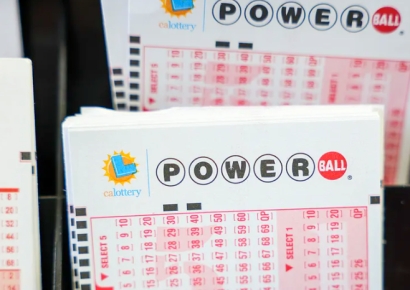 He Left It in the Car and Forgot... "I Nearly Collapsed with Joy": Man Wins $1.48 Million Lottery
- Goldman Sachs Cuts KOSPI Target by 25%... "Excessive Pessimism, Still Attractive"
- "'Nodding Off' on the Subway? Here's Why Koreans Are Getting Even Less Sleep"
- "Please Pay Me at Least 3 Million Won a Month": More Than Half of Young People Today Prioritize "Working Conditions" Over Company Size
- Beachgoer Finds 'Plastic' That Turns Out to Be Perfume Ingredient Worth More Than Twice as Much as Gold

Member of the National Assembly's Political Affairs Committee, Min-Kyu Park of the Democratic Party of Korea. Office of Min-Kyu Park
View original image© The Asia Business Daily. All rights reserved. Unauthorized AI training and use prohibited.