Explosions Rock Southern Iran and Hormuz Area... Oil Prices Top $100 Amid Escalation Threat (Comprehensive)
Explosions Reported in Sirik and Qeshm Island
Iran: "Retaliation Will Intensify if U.S. Attacks Continue"
Trump: "War Will End After the Midterm Elections"
Brent Crude Surpasses $100
With another series of explosions heard in southern Iran and around the Strait of Hormuz, concerns are mounting that armed conflict between the United States and Iran may escalate further. Iran has warned it will launch even stronger retaliation if U.S. attacks continue. However, U.S. President Donald Trump claimed that Iran would no longer be able to endure, predicting the war would end immediately after the U.S. midterm elections in November. As tensions rise in the Middle East, international oil prices have surpassed $100 per barrel.

In a video released on the 8th (local time) by the United States Central Command, an Iranian oil tanker in the Gulf of Oman is shown being struck by a U.S. military airstrike. Photo by Yonhap News Agency
View original imageAccording to Iran’s semi-official Fars News Agency on the 10th (local time), several explosions were heard earlier that morning in Sirik and Minab in southern Iran, as well as on Qeshm Island in the Strait of Hormuz.
The southern Hormozgan provincial authorities stated that the explosions near Qeshm Island originated from the direction of the sea. Iran's state-run IRNA News Agency reported, "Several areas in Sirik, southern Iran, have been attacked by the enemy." However, the perpetrator of the attack, as well as the extent of casualties or damage to facilities, has not been confirmed.
This latest round of explosions occurred as the United States and Iran have been escalating their attacks on tankers and military installations around the Strait of Hormuz. The two sides have exchanged retaliatory strikes ever since the U.S. military struck Iranian rocket launchers for naval mines in the Strait of Hormuz on the 30th of last month.
The previous day, Iran claimed to have attacked two U.S. naval vessels and eight tankers near the Strait of Hormuz as retaliation for the U.S. military's attack on five of its oil transport ships. The Islamic Revolutionary Guard Corps (IRGC) also reported having attacked ten vessels attempting to pass through prohibited or high-risk zones. The United States stated that its vessels had not suffered any damage, and thus Iran’s claims could not be independently verified.
Iran also launched approximately 20 ballistic missiles toward the U.S. airbase in Al-Azraq, Jordan. Iran claimed to have struck fighter jet maintenance facilities and hangars, but both Jordan and the United States stated that the majority of the missiles were intercepted and that there were no casualties among U.S. military personnel.

Iran: "Preparing for a Higher-Intensity War"... Trump: "Ends After the Midterms"
Iran has warned that it will raise the level of retaliation if U.S. attacks continue. According to Bloomberg News, a senior Iranian official, who requested anonymity, said, “If the United States continues attacks on Iranian territory and infrastructure, Iran will escalate its retaliatory response,” adding that Iran is ready for a higher-intensity war.
The official emphasized that Iran has no intention of backing down even in the face of U.S. maritime blockades and tanker attacks, saying, “Although the economic pain is growing, the Iranian leadership views the war with the United States as a threat to the country's very existence.”
Mohsen Rezaee, Iran’s new security chief, also revealed that military postures against U.S. vessels and bases have been “fundamentally restructured.” Mohammad Bagher Ghalibaf, the speaker of Iran’s parliament and chief negotiator in ceasefire talks with the United States, declared, “The era of proportional response is over,” signaling even stronger retaliation.

In contrast, President Trump asserted that the war would end immediately after the midterm elections. Speaking to reporters before departing for the Republican midterm convention in Dallas, Texas the previous day, he stated, “The war will end right after the election,” adding, “That’s because Iran can no longer hold out.”
President Trump argued that Iran is dragging out the conflict to try to force the Republican Party to lose the midterm elections. He said, “They are desperate to influence the election,” adding, “They believe that by ushering in a weaker administration, they’ll be left alone and allowed to maintain their nuclear weapons.”
Regarding the recent spike in oil prices, he also said, “Oil prices will crash right after the election,” pledging to bring gasoline prices in the United States down to below $2 per gallon. However, he added that, realistically, it might take a little longer than the midterm elections for prices to actually fall.
Brent Crude Breaks $100 Amid Rising Tensions in Strait of Hormuz

With attacks from both sides intensifying, crude oil transport through the Strait of Hormuz has plummeted. According to Rystad Energy, the volume of oil passing through the strait fell from about 8 million barrels per day in the last week of last month to about 1 million barrels per day this week. Before the war, approximately 20% of global oil and gas supplies transited this waterway.
Supply concerns were further amplified when Yemen’s pro-Iran Houthi militants attacked Saudi Arabian energy facilities with missiles and drones. The Saudi Ministry of Energy announced that the operation of several facilities has been temporarily suspended, and authorities are working on extinguishing the fires and assessing the damage. The Houthis are also threatening to blockade the Bab el-Mandeb Strait, a key oil transport route for Saudi Arabia.
International oil prices surged more than 3%. On the ICE Futures Exchange, November Brent crude climbed as high as $101.55 per barrel during the day before settling at $101.21, a 3.36% increase from the previous session. This is the first time since July 24 that Brent crude has topped $100 per barrel.
On the New York Mercantile Exchange, October West Texas Intermediate (WTI) crude also rose 3.25% to close at $96.05 per barrel. So far this year, Brent crude is up about 65%.
Hot Picks Today
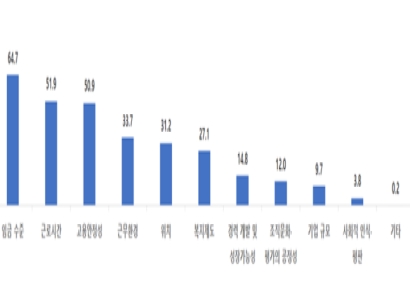 "Please Pay Me at Least 3 Million Won a Month": More Than Half of Young People Today Prioritize "Working Conditions" Over Company Size
- Selling Like Crazy Every Year... 30-Year-Old Hetbahn Takes on a New Challenge: Tastes Better Than "Mom's Home Cooking" [On-Site Report]
- Sleep Is Koreans' 'No. 1' Health Interest, but They Averaged Under 7 Hours a Night This Year
- "Hey, Lady, Teach Your Kids to Behave!" ... 300,000 Won in Cash and a Bodily Injury Claim Demanded Over Child's Door Ding
- "Don't Trust This Woman": Documentary on 'Investment Scammer' Earns KRW 22 Billion in One Week
Jorge Leon, Head of Geopolitical Analysis at Rystad Energy, commented, “Although oil prices have again reached $100 per barrel, the situation is more severe this time as buffer capacity is steadily decreasing. Crude oil stocks are declining, and in particular, inventories of petroleum products such as diesel are becoming a major problem.”
© The Asia Business Daily. All rights reserved. Unauthorized AI training and use prohibited.






![[Market ING] KOSPI Seeks Rebound in Superweek Packed with Corporate Earnings and FOMC](https://cwcontent.asiae.co.kr/asiaresize/307/2026102514484873155_1792907327.jpg)