44% of Knowledge Industry Centers Sit Vacant, to Be Converted to Youth and Newlywed Rental Housing...Occupancy Restrictions Effectively Lifted
"Vacancy Countermeasures and Institutional Reform Plans for Knowledge Industry Centers"
Allowing All Industries Except Certain Restricted Sectors to Occupy Centers to Address Existing Vacancies
Establishing a Supply-Demand Adjustment System
The government has decided to address the problem of vacant and unsold units in knowledge industry centers by reducing new supply through a supply-demand adjustment process, while alleviating existing inventory by easing occupancy regulations. In addition, new regulations restricting resale will be introduced to block speculative demand, such as splitting and reselling pre-sale rights.
On September 10, the Ministry of Trade, Industry and Energy announced the "Measures for Vacant Units in Knowledge Industry Centers and Institutional Improvement Plan" at a joint meeting of the Emergency Economic Headquarters and the Structural Innovation Ministers' Meeting.

A ministry official explained, "As oversupply and market stagnation continue, vacancies and unsold units in knowledge industry centers have accumulated, and the risks of payment default and bankruptcy for buyers due to loan suspensions and falling market prices are becoming more visible. Although measures such as allowing officetels in support facilities of knowledge industry centers and expanding the range of knowledge and IT industries eligible to move in have been pursued, these fundamental issues remain unresolved, so we have prepared these new measures."
According to the ministry, of the 1,553 knowledge industry centers approved nationwide, the average vacancy rate for those completed in the past three years (2023-2025) reached 43.5%, and the unsold rate stood at 26.9%. As the risks of loan suspensions and price drops have grown, the number of auctions last year reached an all-time high of 3,876 cases.
In response, the government will overhaul the related system for knowledge industry centers in four main directions: establishing a supply-demand adjustment process, stimulating demand to utilize vacant units, converting to a "negative" list for occupancy eligibility, and improving management systems.
◆Establishing a Supply-Demand Adjustment Process to Restrict Indiscriminate Supply The government will first establish a supply-demand control system to prevent indiscriminate approval of new knowledge industry centers. Until now, local (city, county, or district) governments have granted approvals primarily based on formal requirements, often without sufficient consideration of the economic realities.
To address this, the ministry will prepare a "Guideline for Reviewing Approval of Knowledge Industry Center Establishment" in the second half of this year. This will require local government heads to comprehensively examine the distribution and vacancy/unsold status of nearby knowledge industry centers, the impact on nearby retail sales or rental markets, and the capacity of basic infrastructure such as power and water supply when considering approval applications.
In particular, a new process will be introduced requiring local governments to notify the Minister of Trade, Industry and Energy prior to approval and allowing the minister to provide an opinion. While the minister cannot ultimately block approval, the ministry expects that simply being able to give feedback will help discourage excessive approvals. Local governments will also be required to investigate the vacancy and unsold rates of knowledge industry centers within their jurisdiction and report them publicly every six months.
◆Vacant Units to Be Used as Rental Housing for Youth and Newlyweds The government will stimulate demand by expanding the use of vacant and unsold inventory. Through public projects, vacant knowledge industry centers in the Seoul metropolitan area will be purchased and repurposed as public rental housing for youth and newlyweds through Korea Land and Housing Corporation’s (LH) "Non-Residential Remodeling Rental Housing" program. In non-metropolitan areas, knowledge industry centers with vacancies will be included as eligible properties in public rental center construction projects (Ministry of SMEs and Startups) and idle or closed factory remodeling projects (Ministry of Trade, Industry and Energy).
Additionally, the portion of support facilities that can be used for various purposes will be temporarily expanded for two years, limited to existing approved knowledge industry centers. This is aimed at relieving vacancy and unsold inventory in centers that have already been approved or completed.
The government will also actively support converting highly vacant or unsold knowledge industry centers into quasi-residential facilities. Last month, the government allowed temporary conversion of officetels within general industrial zones and temporarily waived the requirement to provide additional parking spaces upon changing use, in order to ease location restrictions. Furthermore, when converting a knowledge industry center to a quasi-residential purpose after approval cancellation, the previously exempted acquisition tax (up to 35%) becomes subject to collection. However, to reduce the financial burden on project developers and facilitate smooth conversion, local governments will be asked to actively use the tax deferral system under the Local Tax Collection Act.
Financial support for conversion to quasi-residential use will also be strengthened, including a new non-residential remodeling fund that provides loans of 70 million won (for 14 years) per officetel or dormitory unit at an annual rate in the 3% range, and the introduction of a quasi-residential mortgage guarantee program by the Housing and Urban Guarantee Corporation (HUG).
◆Allowing All Eligible Businesses Except Specifically Restricted Ones The government will fundamentally shift the occupancy model for production facilities in knowledge industry centers to a "negative list" approach. Previously, only those business types specifically listed in the Korean Standard Industrial Classification (KSIC) were permitted, restricting entry for unlisted sectors and especially for convergent new industries with ambiguous classification. To address this, the new rule will allow all business types to move in except for certain restricted categories such as gambling and harmful facilities, environmentally burdensome industries, and hazardous materials facilities. For example, previously it was difficult for sectors like app development using artificial intelligence (AI), micro-fulfillment centers (MFCs) acting as urban logistics hubs, or drone filming services, which have ambiguous classification, to gain entry. Moving forward, a wider range of new businesses will be accommodated.
The scope of eligible support facilities will also be clarified. The government plans to issue a consistent and definitive interpretation that, except for restricted business types, any facility can move in, and users are not limited to employees of tenant businesses.
◆Introducing Pre-Sale Restrictions and Management Authority for Inspections Installation of sales promotion centers before official sales announcements will be prohibited to prevent false or exaggerated advertising. Local governments and management agencies will be granted authority to investigate and inspect the organizers and occupants. Resale of units to more than one person prior to occupancy approval will be banned, and the transfer, brokerage, or mediation of illegal use for restricted purposes will also be prohibited.
The government intends to implement these measures to reduce vacant units in knowledge industry centers quickly, closely monitor the market, and promptly introduce supplementary measures—such as re-examining deregulation—if unexpected problems like market overheating are later detected.
Hot Picks Today
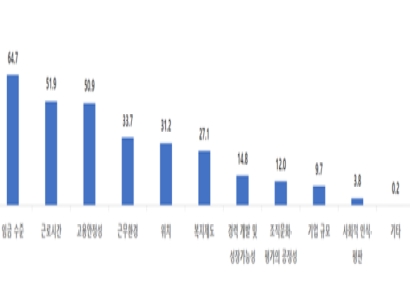 "Please Pay Me at Least 3 Million Won a Month": More Than Half of Young People Today Prioritize "Working Conditions" Over Company Size
- Selling Like Crazy Every Year... 30-Year-Old Hetbahn Takes on a New Challenge: Tastes Better Than "Mom's Home Cooking" [On-Site Report]
- He Left It in the Car and Forgot... "I Nearly Collapsed with Joy": Man Wins $1.48 Million Lottery
- Ran 18 km With 9-Year-Old Tied to Him at the Waist... "Man Banned From Competing for 3 Years"
- Beachgoer Finds 'Plastic' That Turns Out to Be Perfume Ingredient Worth More Than Twice as Much as Gold
Minister of Trade, Industry and Energy Kim Jungkwan stated, "As knowledge industry centers face challenges due to oversupply and accumulation of vacancies, we will establish a thorough supply-demand adjustment system while boldly innovating occupancy regulations to respond to industrial changes, including AI and digital transformation. Through these reforms and legal amendments, we will promptly implement the announced policies so that their effects are clearly felt on the ground."
© The Asia Business Daily. All rights reserved. Unauthorized AI training and use prohibited.