[Beyond the Scene] Oceans Ministry Stresses "Succession of Employment and Ban on Disadvantageous Treatment"
![[Beyond the Scene] Oceans Ministry Stresses "Succession of Employment and Ban on Disadvantageous Treatment"](http://www.asiae.co.kr/news/img_view.htm?img=2023062214280672931_1687411686.jpg)
The remarks from an official at the Ministry of Oceans and Fisheries capture another challenge that the government must address as it pursues the integration of public institutions. On September 3, the government announced a plan to integrate five state-owned power generation companies and four port authorities in its “Plan for Reforming Public Institution Functions.” Following this, each ministry formed dedicated task forces to promote integration and started drafting concrete roadmaps for unification. The Ministry of Climate, Energy and Environment held a “Public Power Company Integration Roundtable” with company CEOs and labor unions the day after the plan’s announcement. Major power generation companies, including Korea Southern Power, also held sessions to share the integration policy with all their employees.
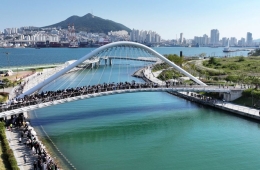
The Ministry of Oceans and Fisheries stands out in this process. In order to address overlapping functions, the ministry intends to merge the four port authorities located in Busan, Incheon, Ulsan, and Gwangyang into a single entity called “Korea Port Authority” (tentative name). However, the ministry is not limiting itself to explaining the rationale and efficiency of integration; it is investing significant effort in alleviating the concerns of employees and executives that may arise during this process. At the “Public Institution Function Reform Task Force” meeting held on September 8, attended by the heads of all four port authorities, the ministry repeatedly emphasized succession of employment, prohibition of disadvantageous treatment before and after the merger, and the provision of incentives for integration. An official who attended the meeting commented, “The prohibition of disadvantageous treatment and succession of employment are not limited to organizations under the Ministry of Oceans and Fisheries but represent the government’s overall policy direction. Since discussions on integration have just begun and concerns among employees are considerable, we made a point to clearly reiterate the core principles of the integration process.”
This also reflects the minister’s commitment. At a press briefing in May, Minister Hwang Jong-woo stated that, regarding the relocation of affiliated organizations, “It is best to prepare support plans in advance to ensure a smooth transition, and to achieve labor-management consensus before making any moves to prevent conflict.” The current integration plan follows the same reasoning: only by engaging in sufficient communication to address members’ anxieties and disagreements can integration proceed swiftly and smoothly.
The ministry has urgent reasons to draft an integration plan quickly. Not only must it coordinate differing opinions among the four organizations, it also needs to confirm the integration plan and pass the necessary legislation. However, it did not set a specific deadline for completion. Instead, the ministry established the goal of formulating an integration roadmap “by early next year.” This is intended to dispel suspicions that the government is rushing the integration or forcing a hasty process according to a set schedule.
Hot Picks Today
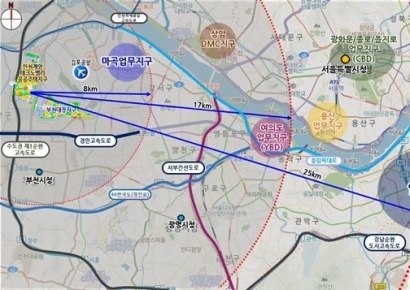 "Why Live in Seoul When You Can Pay Half Here?" 30 Minutes to Gangnam... Private Sales Begin in Gyeyang New Town
- "Living Becomes Easier Thanks to SK Hynix, But Conservative U.S. Cities Remain Torn Inside [U.S. Midterm Election D-40]②-2"
- "I Went for the Cheap Coffee, but Now I Feel Uneasy"... Major Coffee Franchises Cited for Violations One After Another
- "Once You've Been Here, It's Hard to Leave"... 9 Out of 10 Foreigners in Korea Say They Want to Stay
- "After Spending 170,000 Won on Hanwoo, This Is What I Got": Why Webtoon Artist Kim Gyusam Decided to Give Cash Instead
To gather feedback from each organization about the integration, the ministry plans to form an integration task force. It will secure office space in a temporary building in Busan or nearby, and assign a designated number of staff members from each port authority to serve as liaisons and communication channels. The direction of integration—merging similar or overlapping public bodies to enhance institutional competitiveness—has already been determined. Now, the challenge lies beyond physically merging the organizations: the key is achieving “chemical integration” by uniting different organizational cultures and interests. While institutions can be merged by law or system, organizations themselves cannot be forcibly unified. The success or failure of integrating public bodies hinges not on speed, but on the organization members’ willingness to accept the changes.
© The Asia Business Daily. All rights reserved. Unauthorized AI training and use prohibited.