[Inside Chodong] Entropy Capitalism

An isolated system will move from order to disorder unless energy is supplied from outside (the law of entropy). The process of ice melting into water is a classic example. The devastating floods in Nepal, too, serve as a reminder of the law of entropy in the human world, as they were caused by melting glaciers.
By analogy, the current capitalist system appears to be in a similar predicament. Although, unlike physical entropy, this cannot be proven with equations, the point is that if the system loses its openness and the "energy" of innovation decreases, it too will head toward disorder.
With Trump's "America First" (MAGA) policies and escalating U.S.-China tensions, the global economy is increasingly becoming fragmented into blocs. The world economy, which once operated as an open system that exchanged the "energy" of capital and technology, is now shifting toward an "isolated system" with reduced interaction.
![[Inside Chodong] Entropy Capitalism](http://www.asiae.co.kr/news/img_view.htm?img=2026090308350213442_1788392102.png)
The U.S. national debt, now exceeding 40 trillion dollars, is accelerating this trend. As interest payments snowball, the U.S. government has been increasingly relying on artificially suppressing interest rates. This undermines the market's primary price discovery function. In fact, there has been speculation in the U.S. recently over whether the government and central bank might revisit Yield Curve Control (YCC) policies, which were used to keep interest rates artificially low around the end of World War II.
The operating principle of YCC is simple: the key is to suppress U.S. Treasury yields below the nominal economic growth rate. All other things being equal, this can reduce the government’s debt-servicing costs and the debt-to-GDP ratio. Even if a policy goes by a different name, the essence is the same: artificially lowering Treasury yields to gradually dilute the burden of debt over time.
This kind of capitalism, where the "visible hand" intervenes, raises the very uncertainty (disorder) that free markets most dislike. This risks structurally entrenching inflation, along with distorting resource allocation. Soaring costs for raw materials, logistics, and labor intensify the pressure on companies.
This disorder poses a great threat to South Korea’s export-driven economy. Fortunately, however, within a system that has not yet fully closed, Korea has managed to benefit from its competitive advantages. In the first half of this year, the total operating profit for all KOSPI-listed companies reached 388 trillion won, far surpassing last year's annual figure of 245 trillion won. This is thanks to major companies in the semiconductor and electrical equipment sectors that possess strong pricing power.
However, other large enterprises cannot afford to be complacent. The importance of research and development (R&D) and capital expenditure (CAPEX) is higher than ever. They must secure absolute technological superiority like Samsung Electronics or SK hynix or achieve exceptional productivity through smart factories and similar innovations.
In a system where entropy (disorder) is accumulating, the survival strategy is to generate "external energy" internally to maintain vitality. Now, when free cash flow (FCF) is relatively abundant, is the time to maximize R&D and CAPEX investments.
Hot Picks Today
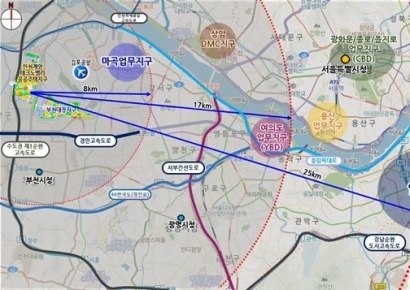 "Why Live in Seoul When You Can Pay Half Here?" 30 Minutes to Gangnam... Private Sales Begin in Gyeyang New Town
- "Living Becomes Easier Thanks to SK Hynix, But Conservative U.S. Cities Remain Torn Inside [U.S. Midterm Election D-40]②-2"
- "I Went for the Cheap Coffee, but Now I Feel Uneasy"... Major Coffee Franchises Cited for Violations One After Another
- "Once You've Been Here, It's Hard to Leave"... 9 Out of 10 Foreigners in Korea Say They Want to Stay
- "After Spending 170,000 Won on Hanwoo, This Is What I Got": Why Webtoon Artist Kim Gyusam Decided to Give Cash Instead
Ultimately, it is the only way to avoid facing a fate of melting away into oblivion.
![[Inside Chodong] Entropy Capitalism](http://www.asiae.co.kr/news/img_view.htm?img=2026081210132677833_1786497205.jpg)
© The Asia Business Daily. All rights reserved. Unauthorized AI training and use prohibited.