Former Foreign Minister Yoon Young-kwan: "Troop Deployment Should Be Approached as a Korea-U.S. Security 'Package Deal'"
Former Foreign Ministers from Both Progressive and Conservative Administrations
Lend Support to Troop Deployment for the Korea-U.S. Alliance
Yoon Youngkwan, chairman of the Asan Institute for Policy Studies and a former foreign minister during the Roh Moo-hyun administration, stated on September 9 regarding the issue of Korean troop deployment to the Strait of Hormuz, “When cooperating with the United States in response to their request, it is better for Korea to approach this as a ‘package deal’ in terms of security.” His comment implied that it would be practically difficult to outright refuse this deployment request from the United States. Ultimately, he argued that deployment should be used as leverage to secure the best possible outcome for Korea through security-related negotiations.

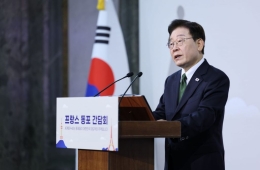
On the 9th, at the Press Center in Jung-gu, Seoul, former foreign ministers are speaking at an international conference hosted by the Seoul International Law Institute and Eunsung International Research Foundation. (From the left) Former Foreign Ministers Yoon Byungse, Yoon Youngkwan, Song Minsoon, Yoomyung Hwan, and Park Jin. Photo by Son Sunhee
View original imageAt an international conference jointly hosted by the Seoul International Law Institute and the Eunsung International Research Foundation at the Seoul Press Center in Jung-gu on the morning of September 9, Chairman Yoon responded to a related question, “I hope we can clearly put forward what we want to demand,” reiterating his point. Yoon served as foreign minister in 2003, when the United States asked for troop deployment to the Iraq War during the Roh Moo-hyun administration. At that time, he also argued that Korea should not miss the opportunity to strengthen the Korea-U.S. alliance by making a timely decision on deployment, and actively advocated for sending troops.
Chairman Yoon did not specify what Korea should demand in return for agreeing to deploy troops. However, he explained, “When we weigh the risks we will bear by deploying troops against the various consequences we will face if we do not, the latter seems far greater. That is likely why troop deployment is now being discussed in earnest.” He also added, “There are so many difficult issues in Korea-U.S. relations right now, such as investment and the stationed U.S. Forces Korea.”
In particular, he noted, “Currently, U.S. President Donald Trump has not officially stated that the United States should provide ‘extended deterrence’ to Korea.” Yoon continued, “In 2024, Deputy Secretary Colby said in an interview that ‘extended deterrence is a fiction.’” Elbridge Colby, former U.S. Deputy Assistant Secretary of Defense for Strategy and Force Development, is known as a leading skeptic on North Korea’s denuclearization within the U.S. administration and played a central role in spearheading so-called “alliance modernization” measures, including changes to U.S. Forces Korea. Yoon’s remarks suggest that, amid the upcoming deployment, Korea should use the opportunity to reconfigure its overall security strategy with the U.S., beyond merely addressing immediate security issues, and especially in terms of North Korea deterrence.
Chairman Yoon also addressed the form and purpose of deployment, emphasizing, “It is better to act jointly in international solidarity with like-minded countries such as France and the United Kingdom.” He stressed, “From the perspective of global public goods, Korea should form a coalition with other countries to maintain freedom of navigation in the Strait of Hormuz.” He added, “Our goal should be clearly set on contributing to the ‘international community’ and ‘Korean economic security,’ and the U.S. side must be clearly informed that we do not intend to directly participate in the war.”
This conference stood out as it featured the simultaneous presence of five former foreign ministers: Chairman Yoon (32nd), Song Minsoon (34th), Yoomyung Hwan (35th), Yoon Byungse (37th), and Park Jin (40th).
Song Minsoon, the last foreign minister under the Roh Moo-hyun administration, proposed expanding the operational area of the Cheonghae Unit, which is currently active in the Middle East. This was the approach taken by the Moon Jae-in administration during Trump’s first term. Song said, “We can expand the function of the Cheonghae Unit after obtaining the National Assembly’s approval. But the reason nothing is progressing is because the deployment issue is continuously interpreted politically.” He added, “It’s not so much about whether we help the United States, but about rallying national consensus under the greater cause of safe passage through international waters.” He mentioned the term “Astroturfing,” which refers to artificially manufactured public opinion by political powers or organizations. Song further underscored, “The Korean people are not actually that opposed to deployment,” and emphasized, “The government must take the lead and do something. Doing nothing is dangerous.”
Hot Picks Today
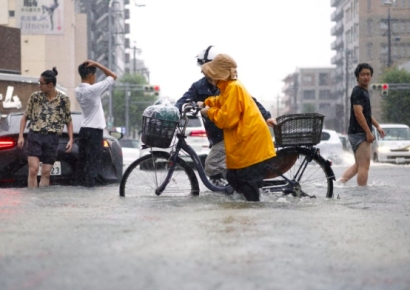 "I'm Scared, Please Don't Go to Japan Right Now"... Tourists on High Alert as Deaths Occur and Trains Halt
- "Receiving 3.8 Billion Won and Claiming 'High Pay Prevents Bribes'... The Country with the World's Top-Paid Prime Minister Plans 64% Salary Hike"
- "Works at a Major Corporation and Wins the Lottery Too"...Is the 1.2 Billion Won Prize Claim by 30s Employee Real?
- "Hardly Eating, Only Napping After the Ordeal"...Cats Felt 'Fear' During Kumamoto Earthquake
- "Over 300 People Gathering to Read in Nightclubs? Why the World Is Embracing Social Reading, Even If It's Just for Show"
Yoomyung Hwan, the first foreign minister of the Lee Myungbak administration, did not directly address the troop deployment but cited the ongoing Russia-Ukraine war as an example. He noted, “If Ukraine had formed a military alliance with the United States as Korea did, such a situation would not have occurred. Watching Ukraine fight alone in the face of the Russian invasion reinforced for me the importance of the Korea-U.S. military alliance.” He added, “As the issue of Korea’s ‘military contribution’ in the war with Iran surfaced, shouldn’t we play our role as well, if we truly believe in the importance of the Korea-U.S. alliance?” implying his support for the deployment as well.
© The Asia Business Daily. All rights reserved. Unauthorized AI training and use prohibited.