"Receiving 3.8 Billion Won and Claiming 'High Pay Prevents Bribes'... The Country with the World's Top-Paid Prime Minister Plans 64% Salary Hike"
Prime Minister’s Salary Raised to KRW 3.8 Billion, Up KRW 1.5 Billion
Government Cites Talent Attraction, but Faces Backlash
The salary of the Singaporean Prime Minister, who receives the highest annual salary among world political leaders, will be increased by more than 60%. While the government states that salary increases for public officials are necessary to attract talent, there is criticism amid public concerns over job insecurity and rising prices.

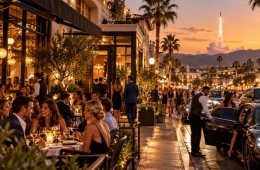
Marina Bay, Singapore. Photo is not related to specific content of the article. Photo by Singapore Tourism Board
View original imageAccording to the BBC on the 8th (local time), the Singaporean government plans to raise the salaries of the Prime Minister, ministers, and other public officials.
The salary increase for Prime Minister Lawrence Wong amounts to 1.4 million Singapore dollars (about 1.48 billion won). Prime Minister Wong announced that he will donate the increased portion of his salary for the next five years to charity.
Prime Minister Wong explained that ministerial salaries must be increased to attract talent. The Singaporean government has previously asserted that paying ministers high salaries helps prevent corruption.
However, criticism is emerging in Singapore over this salary increase proposal, as concerns grow about job stability and the rising cost of living.
Prime Minister of Singapore to Receive 3.8 Billion Won in Annual Salary...Highest Among World Political Leaders
Prime Minister Wong currently receives the highest annual salary among political leaders worldwide. His annual salary is 2.2 million Singapore dollars (about 2.326 billion won), and with this raise, it will increase by about 63.6% to 3.6 million Singapore dollars (about 3.8 billion won).
The next-highest paid political leader is John Lee, Chief Executive of Hong Kong, who earns approximately 719,000 dollars (about 961 million won). Swiss President Guy Parmelin follows with 606,000 dollars (approximately 810 million won).
U.S. President Donald Trump’s annual salary is 400,000 dollars (about 534 million won), while UK Prime Minister Andy Burnham receives 230,000 dollars (about 307 million won).

On this day, Prime Minister Wong acknowledged that the salaries of Singaporean ministers have been a subject of scrutiny and criticism because they are much higher than the incomes of most citizens. The average monthly income in Singapore is 5,775 Singapore dollars (about 610,000 won).
However, Prime Minister Wong explained that he has faced difficulties in persuading corporate executives and senior public officials to enter politics.
He stated, “While the government cannot match the previous incomes of some of these individuals, unnecessary economic barriers should not be raised when they give up their jobs to enter politics.” He added, “With this measure, I believe future prime ministers and I will be able to persuade talented Singaporeans to participate and assemble the strongest team for the nation.”
Currently, the basic annual salary for ministers is about 1.1 million Singapore dollars (about 1.163 billion won). Under the new pay scheme, this will increase to approximately 1.2 million Singapore dollars (about 1.27 billion won).
Prime Minister Wong anticipates that most ministers will receive about 1.35 million Singapore dollars (about 1.428 billion won) by the end of the current government term, as salaries rise based on performance. Part of ministerial compensation is determined by national targets such as the unemployment rate, income growth, and gross domestic product (GDP) growth.
“High Salaries Prevent Corruption,” But Public Sentiment Cool Amid Job Insecurity
The high salaries of Singaporean ministers have been a longstanding burden for the People’s Action Party (PAP), which has ruled continuously since Singapore’s independence. The BBC reported, “In the 2011 general election, the People’s Action Party recorded its lowest vote share in decades,” adding that voter dissatisfaction with ministerial salaries and immigration policy was among the contributing factors.
The Singaporean government has pointed to its consistently high ranking in Transparency International’s annual Corruption Perceptions Index as evidence that the ministerial salary system works effectively. The logic is that high pay reduces the temptation for ministers to accept bribes.
However, dissatisfaction remains as the average income of citizens falls far short of ministerial salaries.
Hot Picks Today
 "Domestic Eggs Face Strict Rules, Imports Get a Free Pass?" ... "Loophole" Exposed in KRW 120 Billion Egg Imports
- Despite "Insufficient Balance" Notices, They Board Anyway... Reports of Foreign Fare Evasion Mounting
- "With studio rent alone at 1.5 million won, discontent across all walks of life was bound to erupt"... France seethes over economic hardship
- "Photos of Kim Jong Un Released by North Korea Are a Deception"... Debate Over Death Rumors Continues
- [Exclusive] "We Came for a KRW 140,000 Trip": Following Chinese Tourists in Korea Uncovers a 'Suspicious' Tour
There has also been criticism regarding this latest salary increase announcement. On this day, locally online, criticism emerged that the salary increase was out of touch with reality, given concerns over layoffs, difficulties faced by new university graduates in finding jobs, and rising prices. According to government statistics, Singapore’s layoff numbers last quarter reached their highest level in more than five years.
© The Asia Business Daily. All rights reserved. Unauthorized AI training and use prohibited.