'Agree' Button Larger, 'Decline' Smaller... Most 'Dark Pattern' Cases Found in Banking Sector
775 Dark Pattern Cases Found in Industry Self-Inspection; 198 at Banks
Financial Supervisory Service Launches Permanent Consultative Body with Industry to Combat Dark Patterns
One out of every four cases of "dark patterns" (deceptive design practices) occurring in the financial sector was found to have taken place at banks. In response, the Financial Supervisory Service launched a permanent consultative body for dark pattern prevention in cooperation with eight financial industry associations, including banking institutions.

Headquarters of the Financial Supervisory Service in Yeouido, Seoul. Financial Supervisory Service
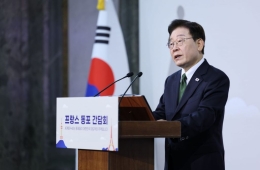
View original imageThe Financial Supervisory Service announced on September 9, 2026, that it held a "kickoff meeting for the permanent consultative body for dark pattern prevention" at its headquarters in Yeouido, Seoul, presided over by Deputy Governor for Consumer Protection Kim Uk-bae.
This meeting was convened to share the industry's findings and cases from a self-inspection related to the "online financial product sales dark pattern guidelines" implemented in April 2026, and to discuss the future direction of the permanent consultative body.
According to the Financial Supervisory Service, a total of 775 cases of dark patterns were identified in a self-inspection of 268 financial companies conducted by the industry.
By sector, the cases broke down as follows: banks (198 cases), securities firms (159 cases), card companies (118 cases), savings banks (91 cases), life insurance (81 cases), non-life insurance (63 cases), capital companies (49 cases), fintech (9 cases), and credit unions (7 cases).
In terms of type, misleading-type (455 cases), obstruction-type (223 cases), pressure-type (87 cases), and inducement-to-defraud-type (10 cases) were reported. Misleading-type and obstruction-type together accounted for 87.5% of all cases.
Misleading-type refers to designs that blur customers' judgment through improper hierarchical structures. A representative example is making the "agree" button larger and the "decline" button smaller for consumers who do not wish to receive product or service benefit information in mobile applications.
Obstruction-type includes cases such as hidden information, blocking or hindering cancellations/withdrawals, or creating click fatigue.
Deputy Governor Kim emphasized, "It is important not just to identify dark pattern cases on a one-off basis, but for the industry to make prompt improvements to deficient cases," adding, "For the eradication of dark patterns, it is essential for financial companies to operate internal governance systems for the prevention and rectification of these practices."
The Financial Supervisory Service explained that the self-inspection yielded several implications: while industry awareness is improving, it is necessary to strengthen internal controls for the prevention and response to dark patterns by financial companies to ensure prompt remediation, and to enhance the consistency in the interpretation and application of the guidelines.
Hot Picks Today
 "I'm Scared, Please Don't Go to Japan Right Now"... Tourists on High Alert as Deaths Occur and Trains Halt
- "Receiving 3.8 Billion Won and Claiming 'High Pay Prevents Bribes'... The Country with the World's Top-Paid Prime Minister Plans 64% Salary Hike"
- "Works at a Major Corporation and Wins the Lottery Too"...Is the 1.2 Billion Won Prize Claim by 30s Employee Real?
- "Hardly Eating, Only Napping After the Ordeal"...Cats Felt 'Fear' During Kumamoto Earthquake
- "Over 300 People Gathering to Read in Nightclubs? Why the World Is Embracing Social Reading, Even If It's Just for Show"
An official from the Financial Supervisory Service said, "We will call for the prompt correction of dark patterns identified in the self-inspection and discuss industry self-regulation measures such as the establishment of best practice codes," adding, "We will also provide Q&A information to ensure consistent application of the guidelines across different sectors."
© The Asia Business Daily. All rights reserved. Unauthorized AI training and use prohibited.