"International Standards Needed for Blue Carbon"... KMI Discusses Carbon Market Criteria in East Asia
Experts from Korea, China, and Indonesia Attend Onsite and Online
"Establishing Common Standards for Carbon Credit Calculation and Certification"
There have been calls for establishing international standards to unify the calculation methods for blue carbon absorption—methods that vary by country—in order to link blue carbon, which is gaining attention as a tool for climate change mitigation, to the carbon market.
The Korea Maritime Institute (KMI) jointly held the "International Expert Seminar on Blue Carbon Estimation and Credit Certification Standards" with the Partnerships in Environmental Management for the Seas of East Asia (PEMSEA) at the Felix Hotel in Busan on the 7th.
Over 40 blue carbon experts from East Asian countries attended the seminar both in person and online. They shared research achievements related to Korea's blue carbon carbon market policies and discussed ways to establish common calculation and certification standards that could be applied throughout the East Asian region.
Blue carbon refers to the carbon stored when coastal ecosystems such as mangroves, salt marshes, and seagrasses absorb carbon dioxide from the atmosphere. Alongside terrestrial ecosystems like forests, blue carbon is recognized as a major carbon sink and has recently drawn growing interest for its potential use in not just greenhouse gas reduction but also carbon market mechanisms.
East Asian seas, in particular, are home to globally significant blue carbon ecosystems. About one third of the world's mangroves are distributed in Southeast Asia. However, there have been ongoing concerns about the limitations of utilizing these ecosystems for carbon credits because the calculation methods for carbon absorption and economic value differ by country.
On this day, experts focused on the future development of the ‘Regional Blue Carbon Accounting Protocol (RBCAP),’ a set of standardized measurement and certification methodologies designed to systematize national approaches and legitimize blue carbon as a source of carbon credits.
Suggestions were made to expand the RBCAP’s application scope to include seaweed, peatlands, tidal flats, and subarctic marine zones. Discussions went beyond merely quantifying carbon absorption to evaluating and certifying the diverse values that blue carbon ecosystems provide—for example, biodiversity conservation and coastal protection.
Domestic research achievements were also shared.
Jung Yeojin, PhD at KMI, gave a presentation on the status of Korea’s blue carbon market policies and on ways to integrate Korea's salt marsh carbon methodology with international standards. This was followed by presentations from Professor Luchen Chen of Xiamen University in China, Dr. Rudy Pribadi of Diponegoro University in Indonesia, Dr. Milica Stankovic of Prince of Songkla University in Thailand, and Dr. Severino Salmo of the University of the Philippines, who introduced respective case studies and research results regarding the implementation of RBCAP in their countries.
During the panel discussion, participants discussed intergovernmental collaboration needed to establish international standards for blue carbon, as well as the responsibilities of research institutes in each country—including KMI.
This seminar marks the first of two roundtables jointly organized by KMI. Building on these discussions, KMI plans to develop policy directions to incorporate blue carbon into Korea’s Emissions Trading Scheme (K-ETS) and the voluntary carbon market, and to connect these efforts with broader blue carbon standardization initiatives throughout East Asia.
Hot Picks Today
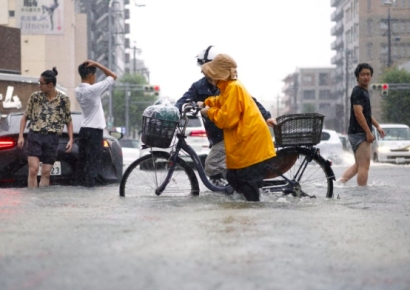 "I'm Scared, Please Don't Go to Japan Right Now"... Tourists on High Alert as Deaths Occur and Trains Halt
- "Receiving 3.8 Billion Won and Claiming 'High Pay Prevents Bribes'... The Country with the World's Top-Paid Prime Minister Plans 64% Salary Hike"
- "Works at a Major Corporation and Wins the Lottery Too"...Is the 1.2 Billion Won Prize Claim by 30s Employee Real?
- "Hardly Eating, Only Napping After the Ordeal"...Cats Felt 'Fear' During Kumamoto Earthquake
- "Over 300 People Gathering to Read in Nightclubs? Why the World Is Embracing Social Reading, Even If It's Just for Show"
Cho Jeonghee, President of KMI, stated, “Blue carbon possesses a wide array of values—not only as a carbon sink, but also for biodiversity conservation and coastal protection. Establishing a foundation for its assessment by internationally recognized standards, as well as its utilization in the market, is an important task for future ocean climate policy.”

The Korea Maritime Institute held a commemorative photo session on the 7th at Felix Hotel in Busan, jointly hosting the "International Expert Seminar on the Establishment of Blue Carbon Calculation and Credit Certification Standards" with the Partnerships in Environmental Management for the Seas of East Asia (PEMSEA).
View original image© The Asia Business Daily. All rights reserved. Unauthorized AI training and use prohibited.