"Some Win Lotto, Others Become Jeonse Refugees"... Why the 'Sejong Special Apartment Supply' Debate Has Rekindled [Gangwa in]
Special Privilege Controversy Rekindled Over 25,000 Apartment Units
Concerns Raised Over Effectiveness and the Need for Fundamental Housing Solutions
"Granting apartment pre-sale rights only to newly relocated institutions, without retroactive application to existing ministries, is a clear case of reverse discrimination and an act of deception."
This is the lament of a government employee working at the Government Complex Sejong, residing in Sejong City.
!["Some Win Lotto, Others Become Jeonse Refugees"... Why the 'Sejong Special Apartment Supply' Debate Has Rekindled [Gangwa in]](http://www.asiae.co.kr/news/img_view.htm?img=2026091010041123170_1789002251.png)
The administrative community of Sejong is abuzz amid discussions about a possible revival of the “Special Apartment Supply (hereafter, special supply) for employees of relocated institutions to Sejong City,” a policy abolished five years ago. As the second phase of relocation of central government agencies to Sejong approaches, calls for reintroducing the special supply program as a housing measure for transferring civil servants are resurfacing. The problem is that the benefits may only go to newly relocated institutions. This has inevitably sparked concerns about fairness among existing Government Complex Sejong employees who lost their chance at special supply or never received such benefits when the previous system was abolished.

A bird's-eye view of Sejong Umirin Center Park, sold by WooMi Construction in August 2026, located at Administrative City 5-2 Living Zone S1 Block. WooMi Construction.
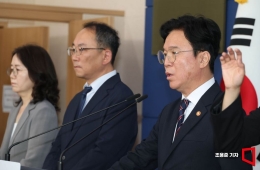
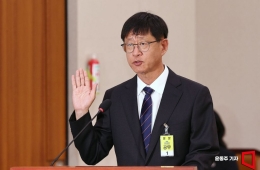
View original imageImmediately after the announcement of the second phase of relocations, Yoonduk Kim, Minister of Land, Infrastructure and Transport, stated, "A final decision will be reached after further discussion," while Sejong Mayor Sangho Cho confirmed, "We have formally proposed resuming the special supply system to the Multifunctional Administrative City Construction Agency (MACCA)." The scale of relocation is significant, with agencies under consideration including the Ministry of Justice, Ministry of Gender Equality and Family, National Police Agency, Prosecution Service, Ministry of Foreign Affairs, and Ministry of Unification, plus related personnel and support staff, totaling in the tens of thousands. This has led to renewed discussion of special supply as part of the housing policy toolkit.
However, the response from public officials in the Ministry of the Interior and Safety, the Ministry of Science and ICT, and the Ministry of SMEs and Startups—three ministries that did not fully benefit from the system—is far from positive. Based on the principle that special supply eligibility persists for five years after relocation, Interior and Science Ministry officials would have retained eligibility until April 2023, but with the Ministry of Land, Infrastructure and Transport abolishing the system in July 2021, nearly two years of eligibility were lost. Those who did not apply, or who applied but failed to secure an apartment, had their opportunities vanish. Even within ministries, the gap widened between those who gained asset increases through special supply and those who became “jeonse refugees,” worsening real estate inequality. The Ministry of SMEs and Startups, which moved to Sejong in August 2021, watched the system disappear without any officials being able to benefit. Moreover, for officials who joined the Government Complex Sejong after the abolition—in the second half of 2021 or later—the special supply system became nothing but a relic of the past.
!["Some Win Lotto, Others Become Jeonse Refugees"... Why the 'Sejong Special Apartment Supply' Debate Has Rekindled [Gangwa in]](http://www.asiae.co.kr/news/img_view.htm?img=2026090816153620506_1788851736.png)
The Sejong relocation special supply program was introduced in October 2010 to help stabilize civil servants in the new city, allocating up to 70% of new apartments to eligible applicants at first. However, along with controversy over windfall gains, violations of occupancy requirements, and illegal resale, the program faced repeated “patchwork” regulatory tightening for 11 years. A scandal in which the Korea Customs Appraisal Institute, not designated for relocation, built a “ghost office” to take advantage of the program led to its abrupt abolition in July 2021. During the system’s operation, a total of 25,995 apartment units were supplied through this special allocation to employees of relocated agencies.
Hot Picks Today
 "Why Is the Amount in My Account So Low?"... Why Pension Savings Subscribers Were Surprised
- "After Sleeping Well with Strangers"... Who Is the 24-Year-Old Woman Who Won 19 Million Won?
- "SK hynix to Hit 4.7 Million Won, Samsung 670,000 Won"... Why Nomura's Bold Forecast justifies it
- "Even Underwear Has to Be Cut Up with Scissors"... China Hit by Rise of "Trash Hunters" in an "If You're Slow, You're Out" Scramble
- "NPS loses 240 trillion won, 1990s-born get zero pension"... What's behind rumors spreading after the KOSPI plunge?
There are also criticisms that reviving the special supply system is not an effective immediate housing measure. Even with new allocations, it takes at least 3–4 years for construction and move-in, making it impractical for ministry employees who need to relocate as early as the first half of next year. Furthermore, since special supply benefits are limited to once in a lifetime, officials who already received them elsewhere, such as in the Seoul metropolitan area, would be ineligible even if the system returns. One Government Complex Sejong official commented, "A hasty revival of the special supply system would only further divide the public service and worsen the sense of relative deprivation," adding, "What is really needed are effective housing support policies, such as direct housing cost subsidies, expansion of temporary government housing, and increased public rental apartments for officials."
© The Asia Business Daily. All rights reserved. Unauthorized AI training and use prohibited.