College Engineers Attempt to Clear Clouds with Drones... Why Top U.S. Investor Chose Them [Tech Talk]
Meteoric: The Cloud-Clearing Drone Startup
Innovative Approach of Using Drones to Disperse Cloud Layers
Potential to Dramatically Boost the Economics of Solar Power Generation
Is it possible to fly drones and clear clouds from the sky? The idea may sound far-fetched, but Y Combinator, the top startup accelerator in the United States, has decided to invest. A clear, cloudless sky is not just visually pleasant. If humans could clear clouds only when needed, the economics of solar power could improve dramatically.
A Startup Selected by the Prestigious U.S. Institution Once Led by OpenAI CEO

Meteoric is a startup aiming to commercialize the idea of flying swarms of drones to clear clouds in the sky. Photo by Pixabay
View original imageY Combinator—widely considered the most authoritative startup accelerator in the U.S. and once headed by OpenAI CEO Sam Altman—runs a program that invests up to 500,000 dollars every summer in promising startups. This summer's selected startup is Meteoric. The company was founded by two engineers in their twenties, Mete Karslioglu and Eric Nielsen, both graduates of the University of Cambridge in the UK, and it currently consists of only the two founders.
This startup seeks to develop a "drone swarm that clears clouds." The concept is to fly drones into clouds to disperse them, allowing continuous sunlight. In a sense, this can be called weather modification tailored to human intentions, but since it does not involve releasing chemicals into the atmosphere, environmental impact can be minimized.
Controlling Weather with Drones that Penetrate Clouds...Maximizing Solar Power

A cloudless sky has the potential to maximize the efficiency of solar power generation. Y Combinator website
View original imageWhen an aircraft passes through a cloud, the cloud temporarily dissipates—a phenomenon known as a distrail. Although the dispersed cloud will eventually reform, what if multiple drones repeatedly passed through the cloud layer? Theoretically, it is possible to keep clouds away for several hours or more.
However, the founders of Meteoric did not start this drone company simply to enjoy a cloudless sky. Their ultimate goal is to maximize the efficiency of solar power generation through cloud modification.
Currently, due to low-cost Chinese-made products, solar panels are known as the cheapest source of eco-friendly energy. However, there is a critical drawback: intermittent power generation that changes with the amount of sunlight. Clouds have a negative impact on solar power generation; when the cloud layer blocks sunlight and casts shadows, power output decreases accordingly.
Meteoric has proposed a business idea to use artificial cloud management technology to simply remove cloud layers that form around solar power facilities. According to their own research, just clearing away cloud layers near solar facilities could boost solar energy generation efficiency across North America by at least 15% and up to 30%. Considering that companies invest enormous amounts in research and development to achieve even a 1 percentage point increase in solar panel efficiency, this idea has tremendous potential. While it may appear far-fetched on the surface, Y Combinator has recognized its strong economic possibilities.
The Ultimate Goal: Weakening Hurricanes

Turning a drone swarm that clears clouds into reality is an extremely challenging task, mainly because clouds—a natural atmospheric phenomenon—are enormous compared to drones, which are only a few dozen centimeters in size. To ensure the most effective drone deployment, technology is needed to analyze cloud properties and precisely forecast atmospheric dynamics.
CEO Karslioglu explained in a post on the Y Combinator homepage, "Through experiments, we've demonstrated a prototype capable of reducing clouds by 13%. We've also developed a model that quantifies how these drone-processed clouds affect specific solar power plants."
The founders’ ambitions go beyond simply removing clouds. Once the drone swarm technology for dispersing clouds is perfected, they plan to further expand their control technology, ultimately aiming to mitigate hurricanes early on.
Hot Picks Today
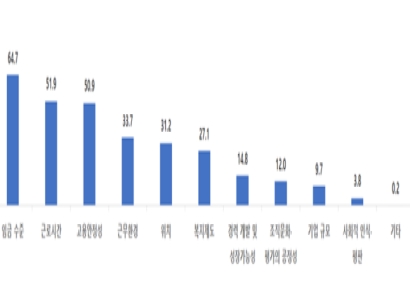 "Please Pay Me at Least 3 Million Won a Month": More Than Half of Young People Today Prioritize "Working Conditions" Over Company Size
- Selling Like Crazy Every Year... 30-Year-Old Hetbahn Takes on a New Challenge: Tastes Better Than "Mom's Home Cooking" [On-Site Report]
- Ran 18 km With 9-Year-Old Tied to Him at the Waist... "Man Banned From Competing for 3 Years"
- "Hey, Lady, Teach Your Kids to Behave!" ... 300,000 Won in Cash and a Bodily Injury Claim Demanded Over Child's Door Ding
- Beachgoer Finds 'Plastic' That Turns Out to Be Perfume Ingredient Worth More Than Twice as Much as Gold
"Removing overcast clouds is our first technical milestone," CEO Karslioglu said. "If this proves we can control large-scale cloud layers, the next step is to reduce the strength of storms and hurricanes. In just the first half of this year, the U.S. suffered 31.9 billion dollars in damages due to severe weather. We plan to launch our first storm response operation by the end of 2028."
© The Asia Business Daily. All rights reserved. Unauthorized AI training and use prohibited.





![[Market ING] KOSPI Seeks Rebound in Superweek Packed with Corporate Earnings and FOMC](https://cwcontent.asiae.co.kr/asiaresize/307/2026102514484873155_1792907327.jpg)