[Column] "The Strike Must Stop Immediately and Workers Must Return to Work"
![[Column] "The Strike Must Stop Immediately and Workers Must Return to Work"](http://www.asiae.co.kr/news/img_view.htm?img=2026090911455621652_1788921956.jpg)
My heart feels heavy as I look upon the industrial landscape of Gwangyang. As the steel industry faces unprecedented challenges, a strike by the POSCO labor union has become a reality. POSCO, which is a key pillar of the local economy, now risks seeing the consequences of this strike spread beyond the company itself to the whole city of Gwangyang.
The strike must be stopped immediately and workers must return to their jobs.
Korea’s steel industry right now cannot afford a struggle between labor and management. The continued oversupply and aggressive price competition from China persist, while countries around the world are raising protectionist barriers to safeguard their own industries. Domestic steelmakers are enduring capacity reductions and restructuring measures in order to survive.
The fact that several long-standing production facilities at the Pohang Works have recently been shut down is a grave sign of this reality. Gwangyang is no exception. As Gwangyang Works and its related industries are also facing growing difficulties, the amount of local income tax contributed by Gwangyang Works plummeted dramatically from 87.6 billion won in 2022 to 15.6 billion won last year.
This is clear evidence that the local economy has already suffered a significant shock.
In this context, the damage caused by a strike will certainly not be contained within POSCO. POSCO’s production disruptions lead to decreased business and sales volumes for its partners, growing job insecurity, and reduced income and consumption among workers, which in turn hits the local commercial sector. A shock that starts in one industry can ripple outward, affecting businesses, workers, small merchants, and the broader lives of citizens.
What is even more concerning are the irreversible aftereffects that a strike could bring.
The competitiveness of an industry is built up over decades of effort, but it can collapse in a much shorter time. Recovering weakened production bases and industrial ecosystems, and reviving depressed investment and employment, is never easy.
If the current strike leads to accumulated production losses and erodes POSCO’s competitiveness, the outcome will not simply be a matter of winning or losing a wage or collective bargaining negotiation. If jobs are lost, businesses relocate, consumption and investment contract, Gwangyang could face an irreversibly bleak future.
I call on the POSCO labor union: withdraw the strike immediately and return to work.
The legitimate rights and demands of workers must be respected. However, in today’s crisis in the steel industry, we must carefully consider whether halting production truly protects the future of workers and the community.
We should think first about what may be lost to a strike, rather than what could be gained.
POSCO, too, must approach negotiations with a sense of responsibility. It should take the union’s demands seriously and work in good faith to find reasonable solutions through sincere dialogue.
Winning or losing is not what matters at this moment. The priority is to protect POSCO’s competitiveness, employees’ jobs, the survival of partner companies, and the local economy of Gwangyang.
POSCO has grown together with Gwangyang. Since Gwangyang Works produced its first molten iron in 1987, countless companies, workers, and citizens have built today’s Gwangyang along with POSCO. Therefore, POSCO’s crisis is Gwangyang’s crisis, and the company’s competitiveness is directly tied to the survival of the regional economy. Both labor and management must never forget this point.
If the conflict drags on and production disruptions accumulate, not everything will return to normal simply by ending the strike.
Lost competitiveness, reduced employment, and diminished vitality in the regional economy are not easily restored.
The choice before us is not just about labor-management negotiations. It is a choice that determines the future of POSCO and the future of Gwangyang.
I urge the POSCO labor union to withdraw the strike immediately and return to the field. POSCO should take responsibility in negotiations, and labor and management must resolve this crisis through dialogue and compromise as quickly as possible.
No more choices can be made that the local economy cannot withstand. If you stop now, you can start over again. But if it’s too late, the consequences will fall not only on labor and management, but also on the businesses, workers, partners, small merchants, and all citizens of Gwangyang.
Now is not the time to defeat one another. It is the time to join together in protecting what must be protected.
Woo Gwangil, Chairman of the Gwangyang Chamber of Commerce and Industry
Hot Picks Today
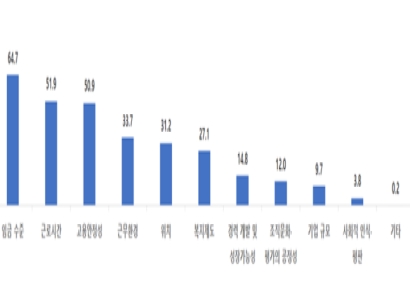 "Please Pay Me at Least 3 Million Won a Month": More Than Half of Young People Today Prioritize "Working Conditions" Over Company Size
- Selling Like Crazy Every Year... 30-Year-Old Hetbahn Takes on a New Challenge: Tastes Better Than "Mom's Home Cooking" [On-Site Report]
- I Thought Only 'Old Guys' Ate It... Young People Are Hooked on This 'Unusual Food' at Risk of Disappearing? [Delicious Stories]
- "Hey, Lady, Teach Your Kids to Behave!" ... 300,000 Won in Cash and a Bodily Injury Claim Demanded Over Child's Door Ding
- Beachgoer Finds 'Plastic' That Turns Out to Be Perfume Ingredient Worth More Than Twice as Much as Gold
< This article reflects the free and independent views of an external contributor for the purpose of healthy discourse and may not align with the editorial direction of this outlet. >
© The Asia Business Daily. All rights reserved. Unauthorized AI training and use prohibited.