Canada Joins Hands with EU amid Trump Pressure: "Reducing Dependence on U.S."
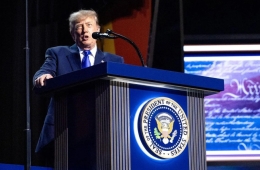
U.S. President Donald Trump has decided to exclude Canadian products from the federal procurement market. In response, Canada is seeking to reduce its dependence on the U.S. by establishing a comprehensive partnership with the European Union (EU) that spans trade and security. As tensions between the two countries have escalated following the breakdown of tariff negotiations, their political fortunes have diverged. Canadian Prime Minister Mark Carney’s approval rating has risen by double digits within the past month, while President Trump’s approval rating has dropped to its lowest levels.

On September 8 (local time), President Trump announced on his social networking service, Truth Social, “Until Canada provides full and fair reciprocity to American farmers and businesses, I have instructed the General Services Administration (GSA) to take all necessary steps—collaborating with the Office of the U.S. Trade Representative (USTR)—to exclude Canadian products from the GSA’s Multiple Award Schedule (MAS) program.”
The MAS is a procurement system that allows U.S. federal agencies to purchase goods and services they need from multiple pre-contracted suppliers. President Trump stated that the annual procurement volume through MAS exceeds $50 billion. However, he did not disclose the share occupied by Canadian products, the specific items to be excluded, or when the exclusion would take effect. Separately, the U.S. has also decided to ban imports of certain Canadian products, including dairy products, most alcoholic beverages, and motorcycles. These measures will take effect starting September 29.

The U.S. decision came immediately after Canada imposed retaliatory tariffs of 15%, 25%, and 50% on U.S. imports worth 27.6 billion Canadian dollars (approximately $20 billion). Canada’s measure was a direct response to the U.S. imposing tariffs of up to 50% on Canadian products of a similar value last month. With both countries rolling out tit-for-tat retaliatory measures after recent failed trade talks, the conflict is continuing to intensify.
In order to reduce its reliance on the U.S., Canada has decided to expand its engagement with Europe. The plan is to establish a comprehensive partnership with the EU, covering not only trade but also security, supply chains, and critical raw materials, thereby reducing dependence on the U.S. According to Bloomberg News, citing inside sources, Ursula von der Leyen, President of the EU Commission, is scheduled to announce these plans in her annual State of the Union address in Strasbourg, France on September 16. Prime Minister Carney will also attend the event and, on the following day, deliver a speech to members of the European Parliament.

A Canadian government official explained that Canada’s plan involves expanding cooperation with the EU in virtually every area except for formal EU membership. Discussions are underway to broaden the scope of cooperation not only in trade, supply chains, and critical raw materials, but also in strategic areas such as defense, space, and scientific research—ultimately aiming for a relationship with EU member states that is as close as possible.
This strategy is seen as a response to the rise of great power politics centered on the U.S. and China. Earlier this year at the World Economic Forum (WEF), Prime Minister Carney warned that the ‘rules-based international order’ had effectively ended, and urged so-called middle powers to help create a new global order in the face of major powers’ pressure and threats.
As the U.S. confronts its allies and Canada seeks new partnerships, the two leaders’ political fortunes are contrasting sharply. According to a new poll released by Canadian polling company Angus Reid Institute (ARI), 62% of Canadians said they support Prime Minister Carney’s leadership. This figure is up 11 percentage points from last month and is close to the all-time high of 63% reached after his WEF speech.
Hot Picks Today
 "Please Pay Me at Least 3 Million Won a Month": More Than Half of Young People Today Prioritize "Working Conditions" Over Company Size
- Selling Like Crazy Every Year... 30-Year-Old Hetbahn Takes on a New Challenge: Tastes Better Than "Mom's Home Cooking" [On-Site Report]
- I Thought Only 'Old Guys' Ate It... Young People Are Hooked on This 'Unusual Food' at Risk of Disappearing? [Delicious Stories]
- [Exclusive] Prosecution Service Overhauls Cartel "Leniency" Rules, Guarantees Reporting Firms' Legal Status from the Outset
- Beachgoer Finds 'Plastic' That Turns Out to Be Perfume Ingredient Worth More Than Twice as Much as Gold
In contrast, President Trump’s approval rating has dropped to its lowest level. The Financial Times (FT), citing a recent poll conducted with Focaldata among U.S. voters, reported that President Trump’s approval rating fell 3 percentage points from the previous month to 33%.
© The Asia Business Daily. All rights reserved. Unauthorized AI training and use prohibited.