U.S. Destroys 5 Iranian Oil Tankers... Oil Prices Near $100 Amid Houthi-Saudi Conflict (Comprehensive)
Iran Attempts to Attack U.S. Forces for Two Consecutive Days
U.S. Strikes Eight Iranian Oil Tankers in Four Days
Houthis Target Saudi Aramco Facilities
Tensions Rise at Both the Strait of Hormuz and Bab el-Mandeb
Brent Crude Hi
The U.S. military destroyed five Iranian oil tankers in response to Iran's attempted ballistic missile attack targeting a U.S. naval vessel. Following attacks by Yemen's Iran-aligned Houthi rebels on Saudi Arabian energy facilities, the armed conflict between the United States and Iran has once again intensified, pushing international oil prices close to $100 per barrel.

According to U.S. Central Command on the 8th (local time), U.S. forces attacked five oil tankers belonging to the Islamic Revolutionary Guard Corps (IRGC) of Iran. This operation was a retaliatory measure after Iran attempted ballistic missile attacks on a U.S. Navy ship for two consecutive days.
The U.S. military stated that the Iranian missiles did not hit the vessel and that there were no U.S. casualties. Additionally, they explained that they warned the crews of the tankers to evacuate before launching the attack.
During a visit to Colombia, U.S. Secretary of State Marco Rubio warned reporters, "If they attack or attempt to attack a U.S. Navy vessel, they will also be hit. Every time that happens, they will lose a tanker."

The U.S. military also attacked three IRGC oil tankers on the 5th after Iran fired ballistic missiles toward a U.S. aircraft carrier and a guided missile destroyer. As a result, the number of Iranian oil tankers destroyed or rendered inoperable by the U.S. military over the past four days has risen to eight.
The renewed hostilities between the United States and Iran come as the Trump Administration shifts the focus of its Iran strategy from military operations to economic pressure. On the same day, the U.S. Department of the Treasury announced additional sanctions on 36 entities, including 27 Iranian civilian airlines as well as individuals, companies, and institutions that have supported Iran's aviation industry.
However, the ongoing dispute over control of the Strait of Hormuz is expanding the scope of military clashes. The U.S. military's attacks on Iranian oil tankers took place near Kharg Island — where about 90% of Iran's oil exports are shipped — and off the coast of the southern port city of Jask.
The IRGC has vowed retaliation. They warned that Iranian forces could attack oil tankers docked at or navigating around piers near Kuwait and Bahrain where U.S. troops are stationed, urging crews to evacuate immediately. Iran also claimed to have launched ballistic missiles toward an airbase in Jordan, though it has not been confirmed whether there were any casualties or damages.
Escalating Saudi-Houthi Clashes... International Oil Prices Near $100

The conflict between Saudi Arabia and the Houthi rebels is also intensifying. The Houthis used drones and missiles to attack four southern Saudi regions: Khamis Mushait, Abha, Najran, and Jizan. The list of targets included Aramco's refinery and power facilities, as well as an air force base.
Saudi authorities said that a total of 73 civilians, including women and children, were injured in the attack. The Saudi Ministry of Energy explained that fires broke out at some energy facilities, temporarily halting operations. The Houthis claimed these attacks were retaliation for the 121 airstrikes conducted by the Saudi-led coalition on rebel strongholds in Yemen in recent days.
The United States has identified Iran as being behind the Houthi attacks. Secretary Rubio said, "The Houthis are Iran’s proxies in many respects," adding, "There is clearly an Iranian hand behind this situation."
With tensions rising simultaneously over the Bab el-Mandeb Strait — a crucial maritime artery connecting the Red Sea and the Gulf of Aden — and the Strait of Hormuz, international oil prices have surged. On the New York Mercantile Exchange, West Texas Intermediate (WTI) crude for October delivery rose by 1.69% to $93.03 per barrel. On the ICE Futures Exchange, November Brent crude closed at $97.92 per barrel, up 0.95%. Brent prices spiked as high as $99.46 per barrel during trading, the highest since July 24.
Before the outbreak of war between the United States and Iran, about one-fifth of the world’s crude oil and liquefied natural gas (LNG) passed through the Strait of Hormuz. The Bab el-Mandeb Strait, where the Houthis are seeking to expand their influence, is a critical shipping route linking the Red Sea with the Gulf of Aden. Now, with threats extending from the Strait of Hormuz to Saudi Arabia's Red Sea oil export corridors, concerns are growing that energy supply shocks from the Middle East could be prolonged.
Hot Picks Today
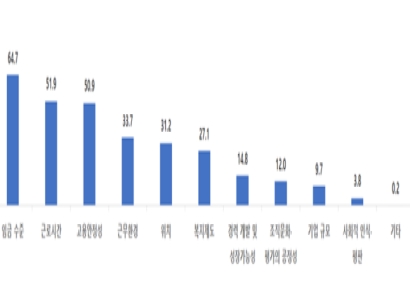 "Please Pay Me at Least 3 Million Won a Month": More Than Half of Young People Today Prioritize "Working Conditions" Over Company Size
- Selling Like Crazy Every Year... 30-Year-Old Hetbahn Takes on a New Challenge: Tastes Better Than "Mom's Home Cooking" [On-Site Report]
- "Is This Really Possible?" The World Is Watching... Could My Car Become a "Mobile ESS"? [Energy Odyssey] 15
- "Hey, Lady, Teach Your Kids to Behave!" ... 300,000 Won in Cash and a Bodily Injury Claim Demanded Over Child's Door Ding
- "Don't Trust This Woman": Documentary on 'Investment Scammer' Earns KRW 22 Billion in One Week
Tim Waterer, Chief Market Analyst at KCM Trade, commented, "Physical supply shortages, with tanker operations through the Strait of Hormuz running far below normal levels, are being reflected in oil prices along with geopolitical risk premiums. As long as confrontations around the Strait persist and diplomatic progress remains uncertain, oil prices are likely to stay elevated."
© The Asia Business Daily. All rights reserved. Unauthorized AI training and use prohibited.






![[Market ING] KOSPI Seeks Rebound in Superweek Packed with Corporate Earnings and FOMC](https://cwcontent.asiae.co.kr/asiaresize/307/2026102514484873155_1792907327.jpg)