"Secure Up to 20 Billion Won"… Jeonnam and Gwangju Go All Out to Attract 'Leading Educational Innovation Region' Status
A Unified Team of 34 Organizations Launches Bid for Ministry of Education Program
Special Local Talent Admissions to Be Expanded by 50%
Bold Move for the 'Talent Jisansiso' Initiative
The Jeonnam Gwangju Integrated Metropolitan Office of Education announced on September 9 that it has launched comprehensive cooperation with local governments, regional universities, and related organizations in an effort to be designated as a 'Leading Educational Innovation Region' led by the Ministry of Education.
The aim is to build an ecosystem referred to as 'talent jisansiso,' in which local talent nurtured in the region both contributes to and remains in local high-tech industries. The 'Leading Educational Innovation Region' project is a collaboration between the office of education, local governments, and the regional community to create and spread pioneering education innovation models tailored to local conditions. The program is divided into 'Type 1,' which targets regions with declining populations, and 'Type 2,' which targets metropolitan and integrated metropolitan areas outside the Seoul capital area.

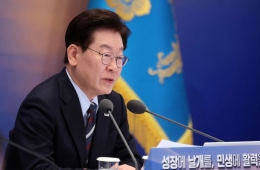
The Jeonnam Gwangju Unified Special City Office of Education has launched comprehensive cooperation with local governments, regional universities, and related organizations to secure designation as an 'Educational Innovation Leading Area' sponsored by the Ministry of Education. Provided by Jeonnam Gwangju Office of Education
View original imageIn the Jeonnam region, 16 counties except for Muan are applying for Type 1, while five cities including Mokpo and Yeosu, Muan County, and the entire Gwangju area are preparing to apply for Type 2. If finally designated as a leading region, Type 1 regions will receive annual support of 2 billion won, and Type 2 regions will receive annual support of 4 billion won, for up to five years (a total of 10 billion to 20 billion won), which will be used to reduce regional education gaps and strengthen linkages between universities and industries.
The Office of Education began preparations early, building consensus with the regional community, as this public offering is directly linked to 'talent jisansiso,' the key educational strategy for its fifth term of direct elections. In particular, the Gwangju area signed the 'Leading Educational Innovation Region Agreement' on September 1 with the Jeonnam Gwangju Integrated Metropolitan area, five autonomous districts, 18 universities, chambers of commerce, and a total of 34 organizations. On September 8, it held the 'Leading Educational Innovation Region Promotion Forum' at the Kim Dae-jung Convention Center, where concrete action plans were discussed.
The forum began with a keynote presentation by Lee Kuihyeon, Policy Director for the Five Regions Three Special Policies at the Presidential Committee for Balanced National Development, on the 'Government's Balanced Development Strategy and the Direction of the Leading Educational Innovation Region,' followed by an in-depth discussion. On site, the following four strategies were primarily presented as key approaches to being designated a leading region.
Additionally, various strategies were suggested for designation as a Leading Educational Innovation Region, including: expanding the special local talent admissions track based on the Jeonnam Gwangju Special Act by 50% to realize 'educational jisansiso,' establishing R&E and credit recognition systems linking high schools, universities, and industries, creating a youth settlement ecosystem through vocational education innovation districts, and narrowing growth gaps for youth from migrant backgrounds with a focus on the young people themselves.
The Gwangju area plans to gather citizens' and stakeholders' opinions through this forum and local councils, and submit an operational plan to the Ministry of Education by the end of September. The Jeonnam region is also preparing joint plans between local offices of education and local governments based on discussions within the Regional Education Innovation Council.
Hot Picks Today
 "Please Pay Me at Least 3 Million Won a Month": More Than Half of Young People Today Prioritize "Working Conditions" Over Company Size
- Selling Like Crazy Every Year... 30-Year-Old Hetbahn Takes on a New Challenge: Tastes Better Than "Mom's Home Cooking" [On-Site Report]
- I Thought Only 'Old Guys' Ate It... Young People Are Hooked on This 'Unusual Food' at Risk of Disappearing? [Delicious Stories]
- "Hey, Lady, Teach Your Kids to Behave!" ... 300,000 Won in Cash and a Bodily Injury Claim Demanded Over Child's Door Ding
- Beachgoer Finds 'Plastic' That Turns Out to Be Perfume Ingredient Worth More Than Twice as Much as Gold
Superintendent Kim Daejung said, "Building a virtuous cycle in which outstanding local talent nurtured in the region displays their capabilities in local companies and high-tech industries is essential for balanced national development," and added, "Based on the views expressed at this forum, we will further strengthen public-private-academic collaboration and do our utmost to secure designation as a leading educational innovation region and the settlement of local talent."
© The Asia Business Daily. All rights reserved. Unauthorized AI training and use prohibited.