Jeon Hyunhee of the Democratic Party Proposes Amendment to Expand Anti-Corruption Commission's Ombudsman System to Major Investigative Agencies
Expansion of the Current Police Ombudsman System
Assemblywoman Chun Hyunhee of the Democratic Party of Korea, who served as the Chairperson of the Anti-Corruption and Civil Rights Commission, announced on September 9 that she had sponsored a bill to amend the "Act on Anti-corruption and the Establishment and Operation of the Anti-Corruption and Civil Rights Commission." The amendment expands the scope of civil complaint investigations and processing by the Commission, which is currently limited to police investigations, to include all investigative and audit agencies, such as the prosecution, the Corruption Investigation Office for High-Ranking Officials, the Serious Crime Investigation Agency, the Prosecution Service, and the Board of Audit and Inspection.
The core of the amendment is to strengthen the ombudsman function of the Commission, enabling it to protect citizens' rights from the exercise of authority by investigative and audit agencies. The bill explicitly stipulates in law the range of civil complaints that may be handled, which are currently defined only by Presidential Decree, thus clarifying the scope of cases eligible for investigation and resolution.

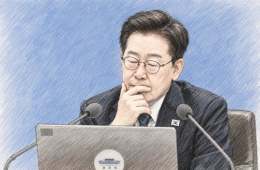
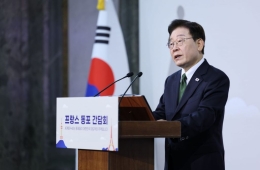
Hyunhee Jeon, Member of the Democratic Party of Korea. Photo by the member's office.
View original imageUnder the current system, despite the intention of the law to allow the Commission to handle civil complaints involving all administrative agencies, the Presidential Decree limits investigation subjects to the police. As a result, infringements on citizens' rights arising from investigations by the prosecution, the Corruption Investigation Office for High-Ranking Officials, and audits by the Board of Audit and Inspection, are excluded from review by the Commission.
Additionally, the amendment clarifies the legal basis for the Commission to request the provision of criminal justice information from relevant agencies and for those agencies to provide such information. This is intended to help the Commission conduct substantive investigations and swiftly process civil complaints.
Assemblywoman Chun stated, "Recent cases of police misconduct, such as the 'Jang Yunki case' and the 'Jeju missing person false closure case,' highlight that internal inspection alone is insufficient for restoring public trust. As the powers of investigative agencies continue to expand, it is essential to establish external safeguards to protect the public from illegal or unjust investigations."
Hot Picks Today
 "I'm Scared, Please Don't Go to Japan Right Now"... Tourists on High Alert as Deaths Occur and Trains Halt
- "Receiving 3.8 Billion Won and Claiming 'High Pay Prevents Bribes'... The Country with the World's Top-Paid Prime Minister Plans 64% Salary Hike"
- "Works at a Major Corporation and Wins the Lottery Too"...Is the 1.2 Billion Won Prize Claim by 30s Employee Real?
- "Hardly Eating, Only Napping After the Ordeal"...Cats Felt 'Fear' During Kumamoto Earthquake
- "Over 300 People Gathering to Read in Nightclubs? Why the World Is Embracing Social Reading, Even If It's Just for Show"
She continued, "If this amendment expands the ombudsman function of the Commission, it could become a robust external check on investigative and audit agencies from the public's perspective. I will continue to do my utmost to establish institutional safety measures so that citizens' rights are not infringed during investigations and audits in the future."
© The Asia Business Daily. All rights reserved. Unauthorized AI training and use prohibited.