[Blue House's Reversal Card]① Cabinet Reshuffle, Constitutional Revision, and Deployment... The Time Has Come to Resolve Ongoing Challenges
August 30 Cabinet Reshuffle Sparks Controversy Over Vetting and Nomination Process
Special Prosecutor for 'Fabricated Indictments' Escalates Into Dispute Over 'Withdrawal of Indictments'
Constitutional Amendment for Decentralization Also Stirs '

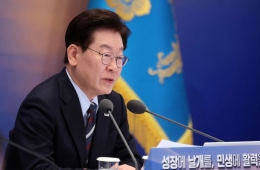
President Lee Jae-myung held a joint press conference with French President Emmanuel Macron at the Élysée Palace in Paris, France on September 8, 2026 (local time). Photo by Yonhap News
View original imageWhile President Lee Jae-myung is on a state visit to France, his approval rating has continued to decline for nearly two consecutive months, deepening concerns inside the Blue House. The situation has escalated as political strife intensifies over constitutional amendments to restructure the power structure, the push for special investigations into alleged fabricated indictments, the deployment of troops to the Strait of Hormuz, and—following the first major cabinet reshuffle—criticism and concerns over the personnel system and overall state governance.
According to the Blue House and ruling party officials as of September 9, there is active consideration for President Lee to address the public directly after his major overseas visits to lay out his position on key issues. This comes amid growing consensus that explanations from aides on individual matters are not sufficient to calm controversies, increasing the necessity for the president to step in personally to provide clarity. A Blue House official explained, "A decision on the timing and method has not yet been made," adding, "Various options are under review."
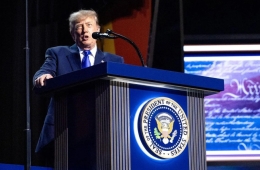
The political burden accompanying each issue facing President Lee is mounting. The cabinet reshuffle on August 30, aimed at renewing the administration, led to vetting controversies surrounding Minister of Justice nominee Kim Seung-won and Minister of Gender Equality and Family nominee Yong Hyein. Discussions on constitutional amendments have focused on embedding references to the May 18 Gwangju Democratization Movement and the Busan-Masan Uprising in the preamble and on power decentralization, evolving into debates about the president’s 'term extension.' The proposal for a special counsel to investigate allegedly fabricated indictments under the previous Yoon Suk-yeol administration has fueled disputes about the ‘dismissal of prosecution’ in President Lee’s own case. Externally, under pressure from U.S. President Donald Trump, the administration must now decide to what extent Korea will contribute to the freedom of navigation and security in the Strait of Hormuz.

Yong Hyein, nominee for Minister of Gender Equality and Family, is arriving at the office prepared for the confirmation hearing in Seodaemun-gu, Seoul on September 7, 2026. Photo by Hyunmin Kim
View original imageThis situation is directly reflected in the president's approval ratings. In a Realmeter poll, President Lee’s positive job performance rating dropped to 37.4%, marking his lowest point since taking office and falling for eight consecutive weeks (August 31 to September 4). A Gallup Korea poll also showed a historic low, with only 40% giving a positive evaluation and 51% expressing a negative opinion (September 1–3). Notably, Realmeter found that support among moderates fell to 35.9%, and Gallup Korea showed support among those aged 18 to 29 was just 25%. According to Gallup Korea, the top reasons for negative evaluations were real estate policy (23%), economy and people’s livelihoods (11%), and personnel (9%). Realmeter attributed negative perceptions of personnel and policy trust to controversies over minister nominees and confusion in real estate taxation and other policy areas. (※For more details on polling results, refer to the National Election Survey Deliberation Commission website.)
The hottest issue is the nominations of Yong Hyein and Kim Seung-won. On August 30, President Lee nominated candidates for six cabinet positions, including Deputy Prime Minister for Economic Affairs. Of these, the two nominees continue to face ongoing allegations and questions about their qualifications. Nevertheless, a Blue House official reiterated, "The nominees were selected through the personnel system," and emphasized that confirmation hearings in the National Assembly should come first.
Debates over a ‘term extension constitutional amendment’ and ‘prosecution dismissal’ now go beyond what aides’ explanations can resolve. On September 8, Hong Ikpyo, the Blue House policy chief, stated on the YouTube program "Kim Eo-jun's Humility is Power News Factory" that President Lee plans to clearly state his own position on a potential term extension at an appropriate time; nonetheless, concerns are growing even among more progressive circles.

Members of civic groups including the Solidarity for Social Transition are holding an urgent press conference condemning the deployment of the South Korean military to the Hormuz Strait in front of the Blue House in Jongno-gu, Seoul on September 7, 2026. Photo by Yonhap News
View original imageAmid these developments, U.S. pressure for Korean troop deployment to the Strait of Hormuz has intensified significantly. The Blue House has drawn a distinct line, saying that the government has not made a final decision regarding substantive or military contributions—including both combat and non-combat deployments. However, prevailing opinion is that the message being conveyed through the U.S. establishment is distinctly different from before. A government official reported, "Both more active and more cautious approaches are being considered, with additional discussions to follow President Lee’s return from France."
The period immediately following President Lee's trip to France is expected to mark a major turning point for resolving pending issues. Above all, ahead of the confirmation hearings starting on the 15th, how well the controversies surrounding the cabinet nominees can be settled is the first hurdle to reversing the downward trend in approval ratings. Similarly, since the controversies over constitutional amendment for term extension and dismissal of prosecution cannot be fully addressed by aides alone, there is growing need for President Lee to clearly state his position and draw boundaries on the political debate. Subsequently, with the potential for further dissent within the divided support base, President Lee will need to handle the complex dilemma posed by the Hormuz deployment—balancing the South Korea-U.S. alliance, national interest, and public opinion.
A figure close to the ruling party commented, "The key is whether the president can regain control over the government agenda and pace instead of being dragged along by a series of current issues. Because the causes of the approval rating decline are not limited to a single matter, there is no simple prescription for a turnaround. However, the personnel appointments must meet public expectations, political issues require clear messaging, and on diplomatic and security matters, the president must demonstrate communication with the public and decisions anchored in the national interest."
Hot Picks Today
![Selling Like Crazy Every Year... 30-Year-Old Hetbahn Takes on a New Challenge: Tastes Better Than "Mom's Home Cooking" [On-Site Report]](https://cwcontent.asiae.co.kr/asiaresize/93/2026102216175071025_1792653470.jpg) Selling Like Crazy Every Year... 30-Year-Old Hetbahn Takes on a New Challenge: Tastes Better Than "Mom's Home Cooking" [On-Site Report]
Selling Like Crazy Every Year... 30-Year-Old Hetbahn Takes on a New Challenge: Tastes Better Than "Mom's Home Cooking" [On-Site Report]
- A 12-Year-Old Girl Went to the Hospital After Her Blood Pressure Hit 225 and Was Stunned: "What Is This Coral Reef-Like Thing in Her Aorta?"
- "Hey, Lady, Teach Your Kids to Behave!" ... 300,000 Won in Cash and a Bodily Injury Claim Demanded Over Child's Door Ding
- "Americans Would Be Amazed If They Came": Wide-Eyed at a Sight They've Never Seen Before... Foreigners Also Fall for K-Baseball [K-Holic]
- Beachgoer Finds 'Plastic' That Turns Out to Be Perfume Ingredient Worth More Than Twice as Much as Gold
© The Asia Business Daily. All rights reserved. Unauthorized AI training and use prohibited.