NHIS Chief Kang Cheonghee: "Unnecessary Medical Expenses Should Be Reduced, Premium System Needs Reform"
At His First Press Conference, Kang Stresses
"Controlling Waste in CT and MRI Scans... Fee Adjustments Needed"
"Will Continue to Prove Harmfulness of Tobacco Even If the Lawsuit Is Lost"
Kang Cheonghee, Director of the National Health Insurance Service, announced plans to thoroughly review the health insurance expenditure structure and further strengthen coverage for areas directly linked to life, such as severe, rare, and intractable diseases. Rather than arbitrarily raising insurance premium rates, Kang aims to ensure the sustainability of the health insurance system by reducing unnecessary medical use and improper claims, and by increasing investments in prevention and care.

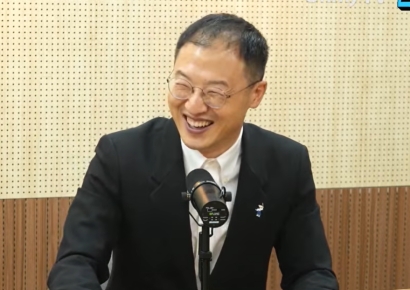
Kang Cheonghee, Director of the National Health Insurance Service, is speaking at a press conference held on the 8th at a restaurant in Gwanghwamun, Seoul. National Health Insurance Service
View original imageAt a press conference held on the 8th at a restaurant in Gwanghwamun, Seoul—his first since taking office over 50 days ago—Director Kang stated, “We must prepare now for the next 50 years of health insurance.” He presented three key directions: ▲transitioning the system to focus on citizens’ lives, ▲establishing an artificial intelligence (AI)-based health and welfare platform, and ▲ensuring sustainable health insurance.
Director Kang made it clear that he intends to fundamentally re-examine the financial expenditures of the health insurance system. He said, “We will reprioritize our programs based on whether the outcomes are sufficient compared to the financial input, whether we can increase efficiency through AI and digital transformation, and whether citizens tangibly experience the resulting improvements.”
Specifically, he identified excessive medical use and improper or fraudulent claims as targets for expenditure restructuring. “From an overall national medical cost perspective, there are instances where people use medical services unnecessarily,” he pointed out, “and this warrants a closer review.” Regarding expensive imaging tests such as CT and MRI, Kang also mentioned the need to control waste and discussed the potential adjustment of related fees.
Conversely, he stated that financial resources would be concentrated in areas where coverage is essential. Kang assessed that previous health insurance coverage enhancement policies were too focused on the coverage rate target, emphasizing, “We must prevent tragic outcomes where people do not receive truly life-critical treatments in time.” Accordingly, he pledged to prioritize raising coverage rates for severe, rare, and intractable diseases—those directly connected to life.
He also considered issues such as low-income and elderly individuals postponing treatments or tests due to medical expenses to be a major focus for expanded coverage. "If treatment is delayed, total medical costs may increase even more, so we need to invest health insurance resources in prevention and health promotion,” Kang explained. “Care must also be designed to focus on preventing frailty.”
Regarding the health insurance premium rate, Kang expressed the view that while raising premiums helps secure financial resources, it is undesirable to do so excessively at the cost of greater burdens on the public. On the possibility of raising the legally capped premium rate above 8%, he drew a clear line, saying, “At this stage, that is not under consideration.” Instead, Kang said he would first examine ways to reduce unnecessary expenditures and allocate funds more efficiently within the existing financial framework. At the Health Insurance Policy Deliberation Committee held on this day, the premium rate for next year was frozen at the current level of 7.19%.
Regarding government financial support for health insurance, Kang argued that rather than relying solely on an expansion of government funding, it is necessary to improve the income structure through a reformed premium levy system. In particular, he pointed out issues with the current imposition system that reflects both assets and income, signaling plans to refine the collection system to more accurately assess income.
Another major challenge Kang identified is breaking down the boundaries between health insurance, medical services, and care. Instead of operating health insurance, long-term care insurance, and community-based integrated care as separate systems, the plan is to connect them based on the citizen’s life course—creating a continuum of prevention, health management, treatment, and care. Especially in care, Kang proposed integrating medical and data technology to detect and prevent frailty early, leveraging data and linking regional medical, nursing, and care resources through a unified system. In the long term, he suggested applying technologies like robotics to caregiving and care services to improve quality and reduce costs.
Additionally, Kang expressed commitment to one of the Service’s long-cherished goals: the introduction of special judicial police (investigative officers). He stated, “Even if the prosecutor’s investigative command authority is abolished as a result of amendments to the Criminal Procedure Act, I believe there will be no problems thanks to continued cooperation with the prosecution and the right to request supplementary investigations.” He added, “We will establish safeguards and an educational system to prevent the abuse of investigative power and protect human rights.”
Hot Picks Today
 "Following President Lee's Advice, Invested Entire Assets in Funds"...Sangwook Kim's Wealth Jumps by 1.2 Billion Won in 4 Months
Regarding the tobacco litigation that the National Health Insurance Service has pursued since 2014, Kang evaluated its significance not only in terms of the amount claimed, which totals 55.3 billion won, but also in proving the harmfulness of tobacco and raising public awareness. He added, “Even if future litigation results are not favorable, there is a need to continue legal action by establishing further evidence of the harm tobacco causes for various diseases.”
© The Asia Business Daily. All rights reserved. Unauthorized AI training and use prohibited.

!["Failed Even With Net Assets of 400 Million Won?"... Six Criteria That Define 'The Real Middle Class' [Data Pick]](https://cwcontent.asiae.co.kr/asiaresize/307/2026092809144741876_1790554486.jpg)