Youth Employment Support Extended to Age 34... Government Expands Labor Market Entry
The government is expanding the age eligibility for youth employment support policies from the current 29 years old and under to 34 years old and under. To more actively support young people entering the labor market, the legal definition of youth will be standardized to those aged between 15 and 34 years old.
On September 8, the government reviewed and approved a proposed revision to the Enforcement Decree of the Act on the Promotion of Youth Employment, administered by the Ministry of Employment and Labor, during a cabinet meeting. The revised enforcement decree will go into effect on September 18.
Previously, the enforcement decree defined youth as those between the ages of 15 and 29. However, as a result of amendments to the Act on the Promotion of Youth Employment, the legal age criteria for youth have now been extended to those aged between 15 and 34. Accordingly, the previous age limit stipulated in the enforcement decree has been removed, and relevant regulations have been updated.
The government expects that this adjustment will allow it to apply a consistent standard for youth policy eligibility and more proactively support young people as they enter the labor market.

Members of the Korea Public Service and Transport Workers' Union (Public Transport Union) hold a press conference on the results of a survey on irregular workers in the public sector in front of the Blue House in Jongno-gu, Seoul on the 24th. Yonhap News
View original imageMeanwhile, the government will officially launch the Public Service Employees Committee to discuss improvements to the working conditions of non-regular workers in the public sector, including public service permanent workers, fixed-term employees, dispatched, consignment, and contract workers. The start date is also set for September 18.
The enforcement decree for the Public Service Employees Committee contains specific provisions required for the efficient composition and operation of the committee. The committee serves as a consultative framework between labor and government for discussing ways to improve the treatment of non-regular workers in the public sector, such as permanent workers, fixed-term workers, dispatched, consignment, and contract employees.
According to the enforcement decree, procedures for convening meetings and other related processes are defined. The working committee will consist of up to 30 members, the development council up to 20 members, and each sectoral council up to 15 members. Details regarding appointment and designation of members, as well as other operational specifics for the committee, are also included in the decree.
Hot Picks Today
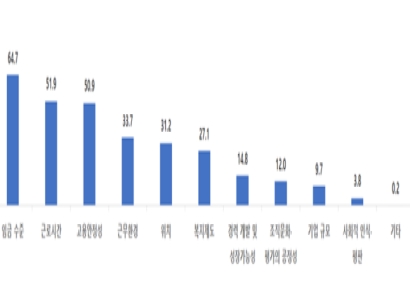 "Please Pay Me at Least 3 Million Won a Month": More Than Half of Young People Today Prioritize "Working Conditions" Over Company Size
- Selling Like Crazy Every Year... 30-Year-Old Hetbahn Takes on a New Challenge: Tastes Better Than "Mom's Home Cooking" [On-Site Report]
- "It's so popular you can't get it": 'Legendary liquor' returns after 11 years, causing a stir... 'Newtro' craze takes over convenience stores [How We Shop Today]
- "Hey, Lady, Teach Your Kids to Behave!" ... 300,000 Won in Cash and a Bodily Injury Claim Demanded Over Child's Door Ding
- Beachgoer Finds 'Plastic' That Turns Out to Be Perfume Ingredient Worth More Than Twice as Much as Gold
Through these measures, the government aims to eliminate discrimination against public service employees and improve both job quality and the standard of public services.
© The Asia Business Daily. All rights reserved. Unauthorized AI training and use prohibited.





![[Market ING] KOSPI Seeks Rebound in Superweek Packed with Corporate Earnings and FOMC](https://cwcontent.asiae.co.kr/asiaresize/307/2026102514484873155_1792907327.jpg)