Second Quarter Nominal GDP Growth Hits 47-Year High... Per Capita National Income Nears $40,000 (Comprehensive)
Semiconductor super-boom drives growth
Net exports and consumption add to gains... Real GDP up 0.6%
Real GDI jumps 15.7%, surpassing GDP
Total savings rate at 45.6% signals greater consumption capacity
Semiconductor 'income effect'
The nominal economic growth rate of South Korea continued its strong momentum in the second quarter of this year, nearly reaching double digits as it had in the previous quarter. On a year-over-year basis, this is the highest figure in 47 years. The primary driver behind this explosive growth has been improved profitability among semiconductor export companies. The super-boom in the semiconductor market and the resulting sharp price hikes have propelled the nominal growth rate upward.
According to preliminary figures, real Gross Domestic Product (GDP) grew by 0.6% quarter-on-quarter and 3.7% year-on-year, unchanged from the earlier advance estimates. Real Gross Domestic Income (GDI), which adds changes in real net trade income to real GDP, showed a year-on-year increase of 15.7%, 0.1 percentage points higher than the initial estimate. The probability that this year’s per capita Gross National Income (GNI) will surpass 40,000 dollars has become extremely high.
Nominal GDP Grows 26.4% Year-over-Year—Highest in 47 Years

On September 8, the Bank of Korea stated that nominal GDP in the second quarter grew 9.2% quarter-on-quarter and 26.4% year-on-year. While the quarter-on-quarter growth rate was lower than in the first quarter (10.5%), it remained close to double digits, outpacing real GDP growth (0.6%) by a wide margin. Compared to the same period last year, this is the highest growth since the third quarter of 1979 (27.7%)—a span of over 47 years.
Nominal GDP is an indicator that reflects market price changes on top of real GDP, which removes the effects of inflation. Whereas the real growth rate shows the true increase in the production of an economy, nominal growth provides a vision of the overall scale of the national economy.
The sharp rise in the nominal growth rate in the second quarter was largely due to gross operating surplus—one of its key components— which surged 18.5% quarter-on-quarter, led by manufacturing and the financial and insurance sectors. The second quarter’s gross operating surplus reached its highest level since the data started being released in the second quarter of 2010. This result illustrates that nominal corporate profits, especially among major exporting corporations like semiconductor manufacturers, increased remarkably. The robust growth in both nominal GDP (9.2%) and nominal GNI (8.8%) was effectively driven by higher corporate operating profits. As gross operating surplus (corporate share) jumped, employee compensation (household share) also increased by 1.9% quarter-on-quarter, continuing its growth after a 4.0% gain in the previous quarter.
GDP Deflator Rises 21.9%—Export Prices Soar

Rising export prices also boosted the nominal growth rate. The GDP deflator, a broad gauge of domestic inflation, soared 21.9% year-on-year in the second quarter—the highest since the fourth quarter of 1980 (26.6%). Breaking it down further: the export deflator, driven by semiconductors, jumped 56.6% over the same period. The domestic demand deflator also rose by 3.6%, reflecting the impact of the Middle East war. The domestic demand deflator marked its highest point since Q1 2023 (4.0%).
Kim Hwayong, Director-General of the National Income Statistics Division 2 at the Bank of Korea, commented, “Such an expansion in nominal GDP growth signifies improvements in corporate profitability, centered on the semiconductor industry. This will initially be reflected in increased corporate operating profits and is expected to subsequently translate into higher government and household incomes.”
He also pointed out that in the second quarter, not only did operating profits in semiconductor manufacturing rise sharply, but that the trend of improving performance spread gradually to other sectors, including chemical products, transportation equipment manufacturing, and services. Kim explained, “Chemical manufacturing improved due to increased exports of pharmaceuticals and cosmetics, machinery and equipment manufacturing saw gains from higher semiconductor equipment investment, and shipbuilding benefited from growth in exports of high-value-added ships. The resulting surge in corporate operating profits leads to increases in household income (through bonuses and dividends) and government income (through corporate, earned, and dividend taxes), which, with a lag, is expected to boost domestic demand.” He added that growth in household income can impact private consumption, while government income can influence both government consumption and private consumption via public transfers and investment.
The Bank of Korea expects that from the second half of this year, the redistribution of corporate profits to government and households will become more observable, particularly through interim corporate tax payments, Samsung Electronics’ cash dividends, and associated dividend and dividend income taxes. Kim projected, “As household income continues to rise, we expect to see a subsequent increase in private consumption, albeit with some time lag.”
Real GDI, which measures the real purchasing power of income earned through production, increased by 15.7% year-on-year in the second quarter, substantially outpacing real GDP growth (3.7%). This, too, was driven by higher semiconductor prices.
Real GDP Grows 0.6%—Net Exports Make Positive Contribution
After adjusting for price factors, real GDP rose 0.6% quarter-on-quarter, and 3.7% over the same period last year, matching the earlier advance figures.
Looking at contributions to GDP growth in the second quarter: despite the Middle East war, expanded global artificial intelligence (AI) investment boosted exports of semiconductors and related machinery and equipment, so net exports continued to make positive contributions. On the domestic side, private consumption maintained its positive influence, and investment—centered around intellectual property products—also contributed to growth. Yang Junseok, professor of economics at Catholic University, said, “If 0.6% growth is sustained for a year, that’s 2.4% annual growth. Although the pace has slowed, it is still a high growth rate.”
If the current trend continues, the annual growth rate projected last month (3.3%) is likely to be comfortably achieved. Kim explained, “Arithmetically, if quarterly growth in the second half averages 0.2–0.3%, a full-year growth of 3.3% is achievable.” Last month, the Bank of Korea projected growth rates of 0.3% for the third quarter and 0.5% for the fourth quarter.
In the second quarter, real GNI rose 3.1% quarter-on-quarter and 15.6% year-on-year. Although real net foreign factor income (income earned abroad by Koreans minus income earned domestically by foreigners) fell from 11.6 trillion won to 7.9 trillion won, improved terms of trade lifted real net trade gains from 38.7 trillion won to 58.5 trillion won. As a result, the growth rate of real GNI outpaced that of real GDP (0.6%).
Paek Nosun, professor of economics at Sogang University, commented, “Since the first quarter, terms of trade have improved dramatically due to semiconductors, but the key is whether this trend will continue. One must remember that this is not a phenomenon that cuts across every industry—there is a sort of optical illusion centering around the semiconductor sector. The government should take this fully into account when formulating economic stabilization or fiscal policy.”
Record-High Gross Savings Rate—Per Capita GNI Approaches USD 40,000

The gross savings rate reached a record high of 45.6% since statistics began in the first quarter of 1970. The gross savings rate represents the share of gross national disposable income not consumed and left as savings. It includes not only household savings, but also government and corporate (retained earnings) savings. The household net savings rate climbed 0.9 percentage points to 9.7% quarter-on-quarter.
Kim explained, “The gross savings rate is the portion of income left after consumption. Although income increased, consumption did not rise by as much, so the ability to spend in the future has improved. This could affect future private consumption and investment.”
By contrast, the gross domestic investment rate was 24.2%, its lowest since the third quarter of 1975 (22.0%). Kim said, “Although domestic investment increased in the second quarter, particularly in facility investment, overall income rose more, causing the domestic investment rate to fall. As profitability improves, companies are continuing to increase facility investment, so there is potential for the domestic investment rate to rise further in the future.”
Hot Picks Today
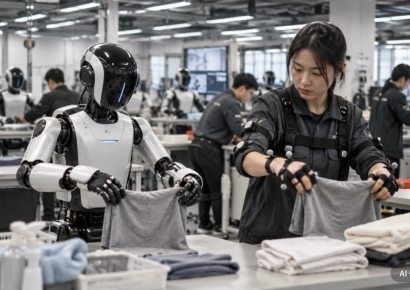 “Washing Dishes and Folding Clothes 200 Times a Day”... China’s “Robot Trainers” Earn Up to 1.2 Million Won a Month
- "Even New York Taxi Drivers Are Talking About the KOSPI; South Korean Market to Top 9,000 Again Within a Year"... 'Wall Street's Stock-Picking Ace' Names His Picks
- “Made 2 Billion Won in One Year in Prison,” PPP Lawmaker Retorts: “If You’re Jealous, Go There Yourself”
- City Bus Driver Who Fell Asleep at the Wheel While 'Drunk' Bought Meth via 'Drop-Off'... Sentenced to 2 Years and 6 Months
- Idol Member Posts Letter Saying "Suspending Activities Due to Pregnancy"... Turns Out She's AI?
South Korea is now one step closer to achieving per capita GNI of 40,000 dollars this year. Kim commented, “Nominal GNI grew 21.8% in the first half of this year. Barring any unexpected shocks in the second half, if nominal GNI maintains its current level and the exchange rate remains stable, the likelihood that per capita GNI will surpass 40,000 dollars this year is very high.”
© The Asia Business Daily. All rights reserved. Unauthorized AI training and use prohibited.