Kim Seungwon New Drug Solicitation Allegation Case Assigned to Yeongdeungpo Police Station
Charges Include Abuse of Authority and Violations of the Improper Solicitation and Graft Act
The police are reopening the investigation into the alleged "COVID-19 new drug solicitation" case involving Kim Seungwon, nominee for Minister of Justice.

Kim Seungwon, nominee for Minister of Justice, is arriving at the office prepared for the confirmation hearing on the 7th at Jeokseon Hyundai Building in Jongno-gu, Seoul. Photo by Jo Yongjun
View original imageThe Seoul Metropolitan Police Agency announced on September 8 that the case against nominee Kim, who was accused of violating the Improper Solicitation and Graft Act, abuse of authority, and dereliction of duty, has been assigned to Yeongdeungpo Police Station. The core of the allegation is that in 2021, at the request of Yang, a broker, nominee Kim allegedly exerted undue influence by asking Kim Ganglip, then Commissioner of the Ministry of Food and Drug Safety, to expedite the clinical trial approval process for Genencell, a company developing COVID-19 treatments.
Previously, former Seoul Metropolitan Council member Lee Jongbae from the People Power Party and the Civil Society Committee for Peoples’ Livelihood separately filed complaints with the Seoul Metropolitan Police Agency regarding these allegations. Former councilman Lee and others argued that an investigation was needed to determine whether nominee Kim, by leveraging his position as a lawmaker, delivered a solicitation related to clinical trials for a specific company’s new drug. They also stated that the allegation Kim had agreed to accept donations in exchange should be investigated.
Hot Picks Today
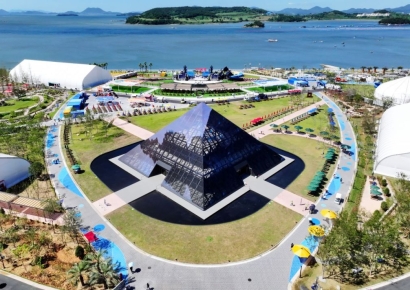 "70 Billion Spent, But Just a 'Luxury Greenhouse'? ... A Disappointing First Weekend at the Yeosu Islands Expo"
- "Even on the Way to Work, There Are Lines at the 'Yellow Sign'... Mega MGC Coffee Achieves KRW 400 Million Sales Per Store with KRW 1,500 Coffee"
- "The Smart Newcomer Never Stops Working... This 'Rookie' Is Intimidating [Click e-Industry]"
- Yeouido Station Exits at 7 p.m. Surge 31 Times... What Caused the Spike?
- Waddling in a Vest With "Deadly Cuteness"... Penguin Quick to Heal After Wearing It
These allegations had already been investigated by prosecutors in December 2024, resulting in a suspension of indictment. A suspended indictment is a type of non-prosecution disposition, where charges are not brought to trial even if there is evidence of a crime, taking various circumstances into account. Unlike a final court judgment to which the principle of double jeopardy applies, the same matter can be reinvestigated.
© The Asia Business Daily. All rights reserved. Unauthorized AI training and use prohibited.