[Editorial] Semiconductor Income Must Fuel the Next Generation of Growth
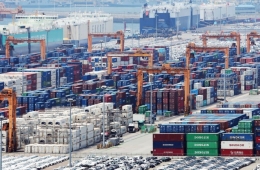
Thanks to the semiconductor boom, the nominal Gross Domestic Product (GDP) growth rate in the second quarter reached its highest level in 47 years. According to the preliminary national income data released by the Bank of Korea on September 8, nominal GDP increased by 26.4% compared to a year earlier, and real Gross National Income (GNI) also grew by 3.1% compared to the previous quarter. This achievement is particularly significant given the high degree of uncertainty in the global economy, as it reflects the competitiveness of our key industries.
Of course, an increase in nominal GDP does not necessarily mean the entire economy has grown by the same extent. The real growth rate in the second quarter was 0.6%, and a significant portion of the nominal increase resulted from rising prices. Notably, it is worth paying attention to the fact that the surge in export prices had a greater impact than that of domestic prices. As the value of products sold overseas increased, more income was earned from the same level of production, and the resulting growth in export earnings has contributed to upward pressure on the Korean won. Continuing this trend, it is highly likely that per capita national income—which surpassed 30,000 dollars in 2014 but remained stagnant for over a decade—will exceed 40,000 dollars this year.
The problem lies in the fact that no one can guarantee how long the semiconductor supercycle will last. Whether this leap to 40,000 dollars per capita is a one-time event or marks the beginning of a new stage of growth depends on how this income is used. Demands from labor groups that focus solely on increasing immediate gains through wages and bonuses, and approaches from the political sphere that encourage this for electoral purposes, should be viewed with caution. Companies must reinvest earnings into boosting productivity and technological capabilities, and the government must create an environment in which new businesses and facility expansion can proceed smoothly within Korea. Bold investments are required not only in semiconductors, artificial intelligence (AI), and advanced manufacturing, but also in the power grid and research and development talent that support them.
Hot Picks Today
 "Even on the Way to Work, There Are Lines at the 'Yellow Sign'... Mega MGC Coffee Achieves KRW 400 Million Sales Per Store with KRW 1,500 Coffee"
- "I Sold My Face for Just 100,000 Won"... My Likeness Appears as a Gangster or Adulteress Amid China Craze
- A 5 Million Won Proposal? Now "It's Identical for Only 800,000 Won”… Mines Shut Down En Masse
- "Will This Really Become Another Jamboree?" 70 Billion Won Spent, but Just "Luxury Vinyl Greenhouses"?... Yeosu Islands Expo Opening Weekend Falls Flat
- "It’s a Place I Frequented"... Before Body Found in Cafe Freezer, 'Normal Operations Resume Tomorrow' Shocks Netizens
While achieving a per capita national income of 40,000 dollars is certainly something to celebrate, stopping there would risk repeating past cases where temporary peaks were followed by stagnation. Only by directing today’s gains toward fostering future generations’ industries and productivity enhancement can the current semiconductor boom serve as a launchpad for the Korean economy’s next leap forward.
© The Asia Business Daily. All rights reserved. Unauthorized AI training and use prohibited.