[Good Morning Market] Focus on U.S. Rates... KOSPI Expected to Pause After Short-Term Surge

The domestic stock market is expected to show sectoral differentiation, influenced by profit-taking following the previous session's more than 4% surge in the KOSPI, movements in U.S. Treasury yields, and news related to the U.S. and Iran.
The New York stock market was closed the previous day due to Labor Day. European stock markets showed mixed trends amid a wait-and-see attitude regarding European Central Bank (ECB) monetary policy. The German DAX index fell 0.2%, while the UK FTSE index dropped 0.1%. In contrast, the French CAC index rose 0.3% and the Euro Stoxx 50 index gained 0.2%.
The domestic stock market is also likely to pause for breath after the sharp gains of the previous session. The KOSPI closed at 6,995.39 on the previous day, up 4.61%. The KOSDAQ also gained 1.07% to finish at 822.19.
Semiconductor stocks, led by Samsung Electronics and SK hynix, were the main drivers behind the index's rise. Samsung Electronics soared 5.7%, and SK hynix surged 8.3%. This is understood to be largely due to the launch of OpenAI's GPT-6 Astra, which greatly improved investor sentiment toward artificial intelligence (AI) related stocks.
Kiwoom Securities predicted that profit-taking may emerge in response to the recent short-term rally. Movements in U.S. 10-year Treasury yields during the session, as well as developments in news related to the U.S. and Iran, were also cited as major variables expected to affect the Korean market.
Notably, the leading sectors in the stock market have shifted since September. In August, IT appliances, IT hardware, non-ferrous metals & lumber, chemicals, and cosmetics recorded high returns. In contrast, securities, retail & distribution, semiconductors, and shipbuilding performed relatively poorly.
However, the atmosphere changed this month. Sectors that had been strong in August, such as cosmetics, IT appliances, chemicals, and non-ferrous metals & lumber, fell to the bottom in terms of returns due to the emergence of profit-taking. Conversely, semiconductors, which had been sluggish in August, rose 5.2% in September, ranking among the top performers following energy stocks.
Beyond simple rotational buying, a shift in the market’s view of AI investment is also cited as a key factor behind the semiconductor stock rebound. Until now, even though companies like Nvidia and Broadcom repeatedly posted results surpassing expectations, semiconductor stocks saw only limited gains. This is because there were considerable doubts as to whether large-scale investments in AI would actually translate into final demand and profits, rather than just strong earnings by AI-related companies.
Kiwoom Securities assessed that GPT-6 Astra helped alleviate some of these concerns. With AI increasingly likely to evolve from simple question-and-answer services to autonomous, agent-type AI capable of handling complex work, visibility for demand for graphics processing units (GPUs) and high-performance memory has improved. In particular, expectations for demand in high-bandwidth memory (HBM) and server DRAM have acted as new catalysts for semiconductor stocks.
Foreign investor inflows are also an important point to watch. On the previous trading day, net buying by foreigners in the KOSPI market reached about 2.6 trillion won, of which around 2.3 trillion won was concentrated in the semiconductor sector. While individuals engaged in large-scale selling, foreign investors absorbed a significant portion of this, thereby supporting the index's rise.
However, because share prices have risen sharply in a short period, there remains a possibility of a temporary pullback led by semiconductor stocks. Ultimately, whether net buying by foreigners continues is seen as the key variable that will determine the future direction of the market.
There is also interest in whether, as semiconductors pause, buying momentum will spread to AI infrastructure-related stocks such as IT hardware and power equipment. If rotational buying continues into sectors like consumer goods and shareholder return-oriented industries, the upward trend in the stock market could be sustained more stably.
Hot Picks Today
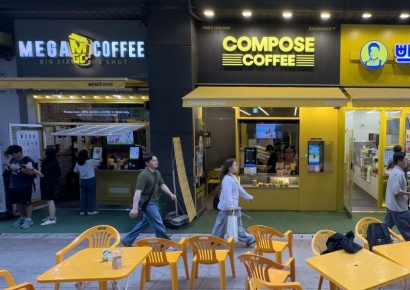 "The Biggest Beneficiary of High Inflation"... Mega MGC Breaks 400 Million Won Per Store with 1,500 Won Coffee
- "Five Dresses for Travel at 40,000 Won"...After the Perfect Photo, Straight to the Trash
- "Once a Dream Job With 1,000-to-1 Competition, Now on the Verge of Becoming an Unpopular Career in China"
- [Click e-Stock] "Humanoid Robot Supply Chain Restructuring... DKT, a Key Beneficiary of China Decoupling"
- "The Smart Newcomer Never Stops Working... This 'Rookie' Is Intimidating [Click e-Industry]"
Jiyoung Han, an analyst at Kiwoom Securities, commented, “In the short term, there is room for profit-taking and a price pullback in the KOSPI centered on semiconductors. Still, it is worth watching whether rotational buying emerges in other AI infrastructure sectors such as IT hardware, power equipment, consumer goods, or shareholder return segments as semiconductors take a breather for a day or two.” He added, “If such a virtuous cycle of sector rotation continues, the KOSPI is likely to break through and settle above the 7,000 mark in September, reinforcing a recovery path with higher lows.”
© The Asia Business Daily. All rights reserved. Unauthorized AI training and use prohibited.